
Reviewed · MUSEUMS
Paris: Entrance Ticket to the Chocolate Museum
Paris has museums for art, war, perfume, and now chocolate. This one follows cocoa from ancient rituals to the glossy pralines and ganaches you taste today. I like the hands-on tastings and the clear story of how chocolate changed from a bitter ceremonial drink into a global treat. I also like the children’s treasure hunt, which gives younger visitors a reason to read the displays.
The main drawback is size. Some people move through in less than 30 minutes, while others spend up to three hours reading, watching demonstrations, and sampling. At $21 per person, the value depends on how much time you give it and whether you care about the history as well as the chocolate.
Key points to know before you go
- 4,000 years of cocoa history: Follow the story from the Olmecs, Mayas, and Aztecs to European chocolate-making.
- More than 1,000 artifacts: See antique chocolate tools, serving pieces, containers, and other objects linked to cocoa.
- Expert chocolate demonstration: Watch a virtual presentation with two Meilleurs Ouvriers de France, France’s highly honored craft specialists.
- Samples included: Taste chocolate made with beans from places such as Costa Rica, Peru, and Vanuatu, along with praline and ganache.
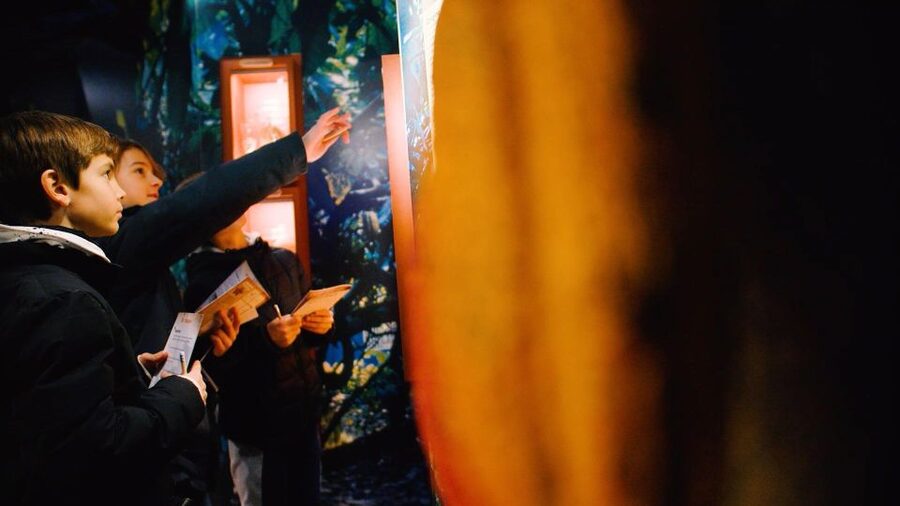
- Useful for families: Children can take part in a treasure hunt and receive a booklet or activity material.
- Easy central stop: The museum is at 28 Boulevard de Bonne Nouvelle and is wheelchair accessible.
A small Paris museum with a very tasty subject
Le Musée Gourmand du Chocolat occupies about 850 square meters, or 2,789 square feet. That makes it a modest museum by Paris standards, but the subject gives it an advantage: you do not need to be a serious museum person to enjoy the visit.
I would treat it as a relaxed stop rather than a major half-day attraction. The museum works well after a morning of sightseeing, especially if your group includes children, someone who dislikes formal museums, or anyone who needs a lighter break from paintings and monuments.
The visit is self-guided. Panels are written in English, French, and Spanish, so you can read at your own pace. An audioguide is available at the welcome desk for €3 per person in English, French, German, Dutch, Spanish, Italian, and Portuguese. I would consider the extra cost if you want more explanation without stopping at every panel.
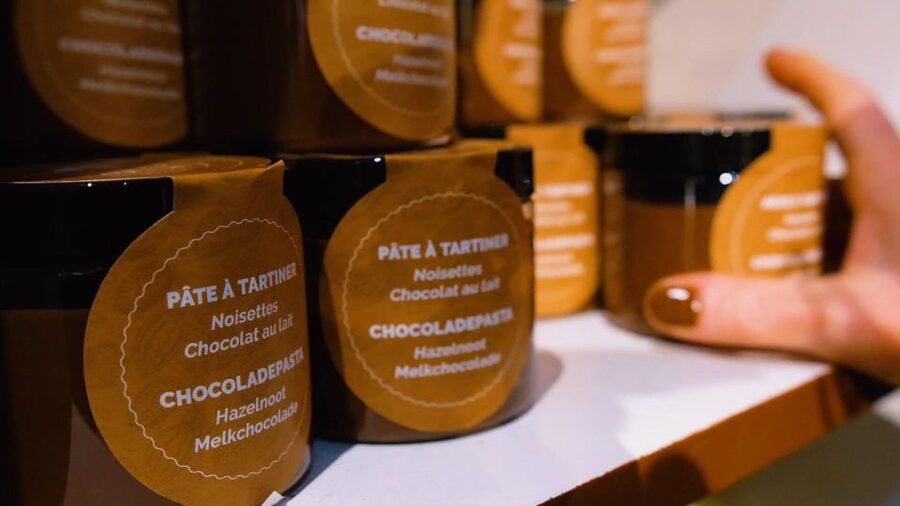
The museum also has a shop, where you can browse chocolate products, books, souvenirs, and chocolate-making items. It is a practical place to pick up a small gift, though the shop should not be the reason you pay admission.
More pastry and chocolate tours in Paris:
- Paris: Day or Sunset Cruise with Drink, Ice Cream or Dessert
★ 4.4 · 4,225 reviews - Paris: Montmartre Cheese, Wine & Pastry Guided Walking Tour
★ 4.8 · 2,255 reviews - Award-Winning Paris French Bakery Experience — Le Marais, 4th Arr
★ 4.5 · 1,186 reviews
From ancient rituals to Europe’s first taste
The opening section places cocoa in the cultures that first used it. You learn about the Olmecs, Mayas, and Aztecs, and about cocoa’s role in ceremonies and mystical rituals. This part matters because it corrects the simple idea that chocolate began as a sweet bar.
For ancient cultures, cocoa was tied to status, ritual, trade, and belief. The museum explains those uses through objects, text, and displays rather than presenting chocolate as a single straight line from bean to candy.
The story then moves into the 1500s. Montezuma is connected with the introduction of cocoa to Europe, while Christopher Columbus is identified as the first European to taste the drink known as tchocoatl. He did not like it and paid little attention to it. That small historical twist is memorable: one of Europe’s most famous explorers encountered chocolate and failed to see its potential.
You will see how later European interest changed the drink and the trade around it. The display helps explain why chocolate eventually became easier to make, easier to transport, and far more widely consumed.
More than 1,000 objects, from tools to pretty tableware
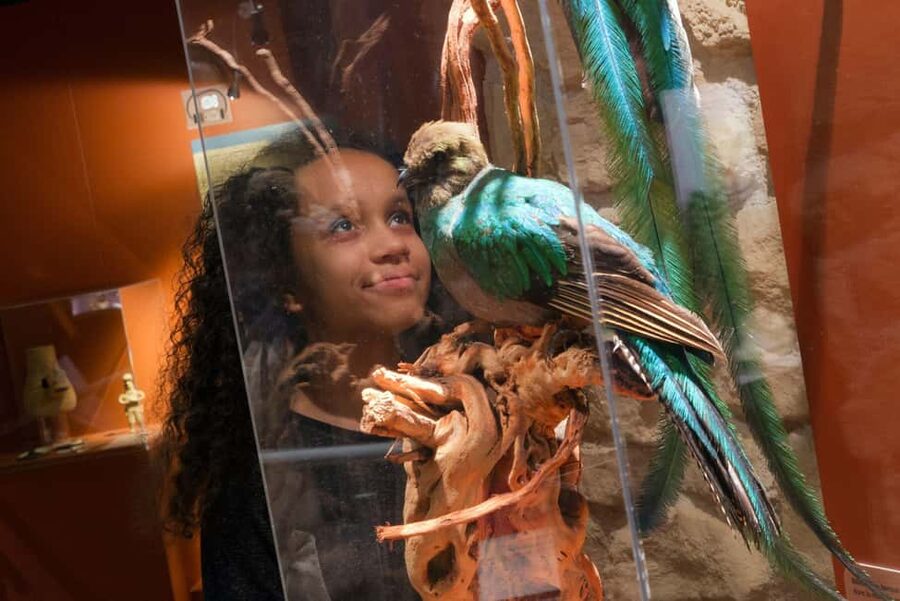
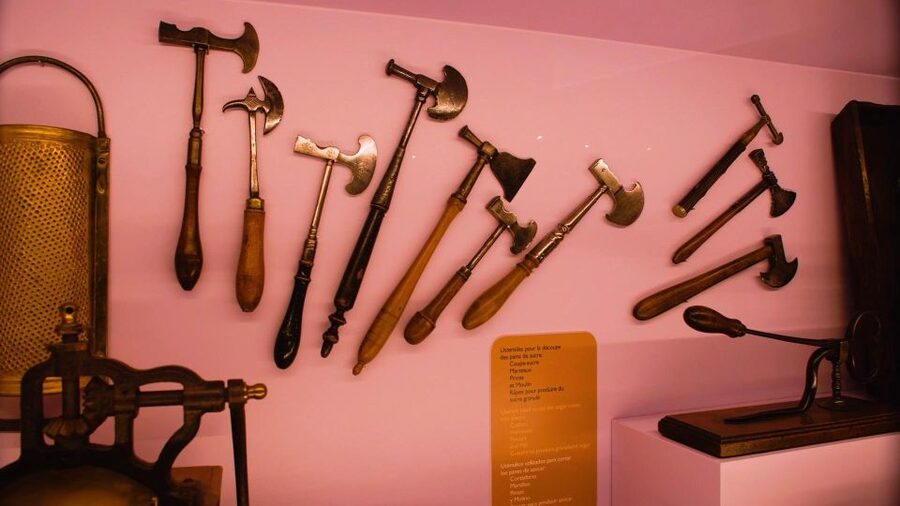
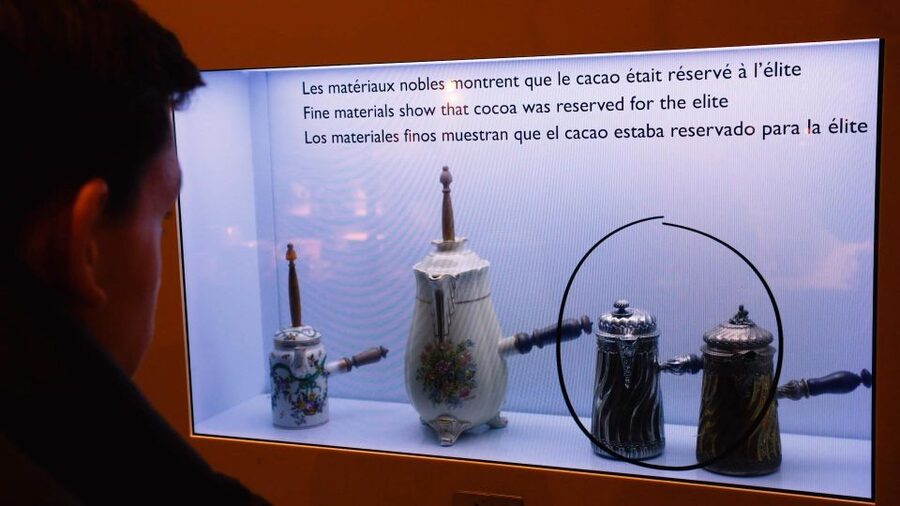
The museum’s collection includes more than 1,000 chocolate-related artifacts. Some show the practical side of production, while others reveal how chocolate was served and enjoyed.
The antique chocolate utensils and containers are particularly appealing if you like household history. They show that chocolate was not only food. It also shaped manners, presentation, equipment, and social habits.
This is one place where the optional audioguide can help. If you simply walk past the objects, you may see attractive old pieces without understanding their purpose. The written panels are available in three languages, but the audioguide gives you another way to follow the story.
The museum is not built around grand rooms or famous masterpieces. Its strength is the collection’s focus. You see how a single ingredient affected farming, trade, technology, ritual, and daily life.
Watching chocolate become shiny and smooth
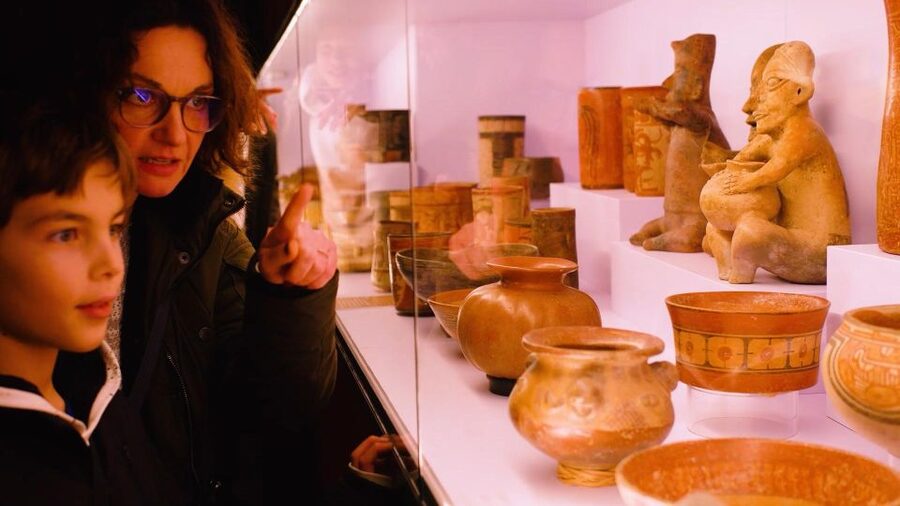
The modern section explains how chocolate production became more streamlined. You also learn about the process behind the glossy outer coat seen on many finished chocolates.
A virtual demonstration with two Meilleurs Ouvriers de France shows the care involved in making chocolate sweets. These are not simply videos about cocoa farming. The presentation focuses on the craft of turning chocolate into attractive, smooth, finished products.
The demonstration is important because it connects the historical displays with what you taste later. You can look at a praline or ganache and better understand why texture, temperature, and finishing matter.
Scheduling can affect this part of the visit. The information describes demonstrations as part of the experience, but one family reported missing a demonstration because a school group was using the area. If the presentation is central to your plans, ask the staff when you arrive.
The supplied description also refers to live demonstrations, while the included feature is listed as a virtual demonstration. Expect an expert-led visual presentation rather than assume you will join a full chocolate workshop. Some past admission options and experiences may differ, so check exactly what your booking includes.
More museums and galleries in Paris:
- Paris: Louvre Museum Timed-Entrance Ticket
★ 4.6 · 71,977 reviews - Louvre Museum Masterpieces Guided Tour with Access
★ 4.5 · 12,023 reviews - Paris: Louvre Museum Entry Ticket With Host and River Cruise
★ 4.6 · 9,926 reviews - Les Invalides: Napoleon’s Tomb & Army Museum Entry
★ 4.6 · 9,185 reviews
The tastings are the museum’s strongest practical benefit
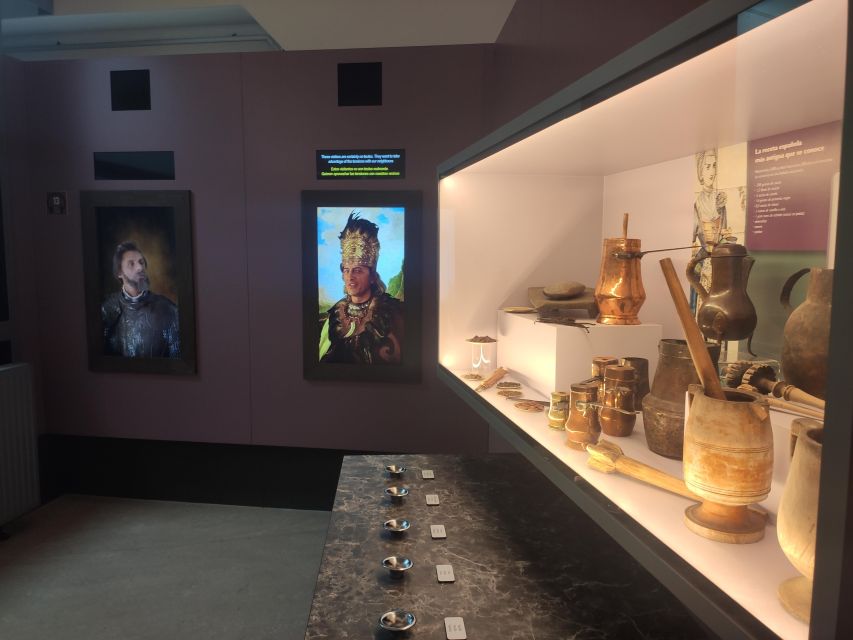
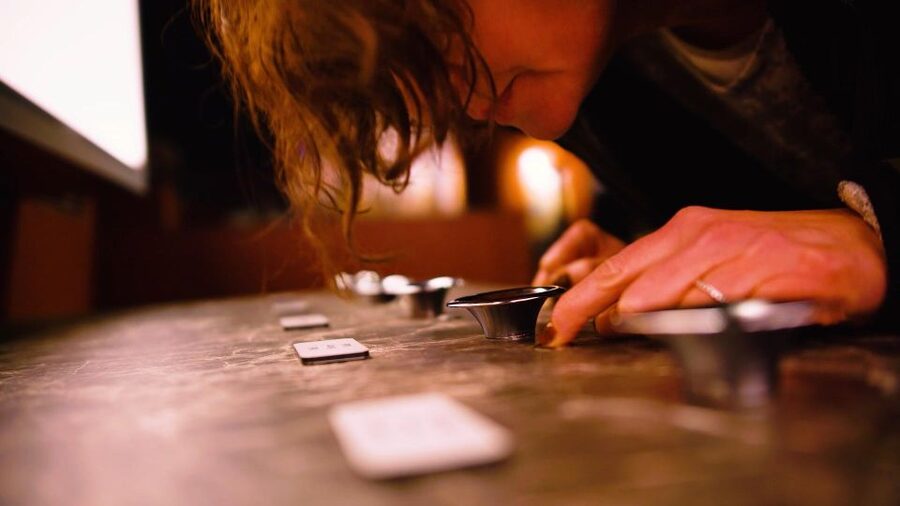
Chocolate samples are included, and tasting stations appear along the route. This keeps the visit active and gives you a reason to pause at different parts of the display.
You may taste chocolate from different cocoa-growing regions, including Costa Rica, Peru, and Vanuatu. The descriptions point to a milky smooth Costa Rican chocolate, a fruity Peruvian chocolate, and sweet aromas from Vanuatu beans. The point is not to declare one country best. It is to notice how beans from different places can produce different flavors.
You also learn how to make chocolate sweets and taste a praline and a ganache. Those samples give you a useful contrast. A praline usually brings a nutty, textured character, while a ganache is smoother and softer. Here, the tasting is tied to the display instead of being a separate snack at the end.
Hot chocolate is another highlight, but check the cost. Several people expected it to be included and found that it required an additional €3 per cup. The hot chocolate has received especially strong praise, yet you may already feel full from the samples. I would decide at the end rather than order it immediately.
The word unlimited has appeared in descriptions of the tasting experience, but portion arrangements can change. The reliable point is that chocolate samples are included. Do not assume every drink or workshop is part of the $21 admission.
Why children tend to enjoy this museum
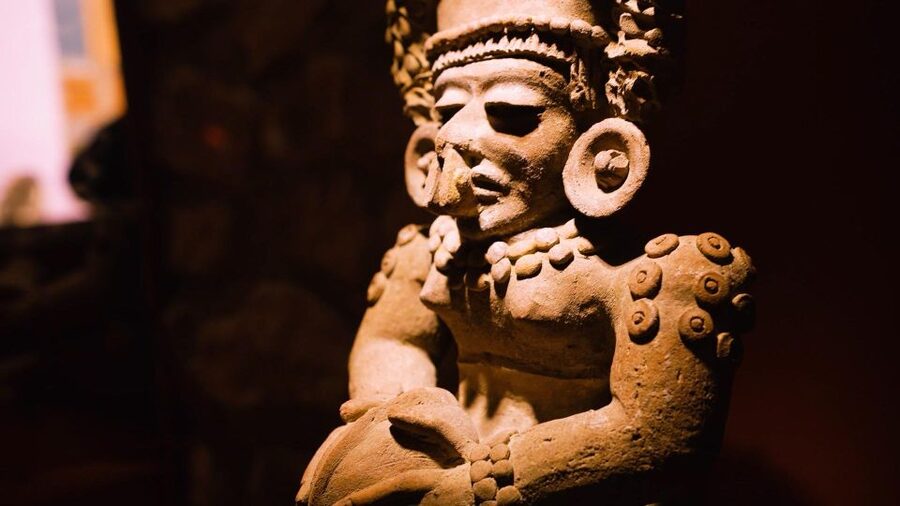
The children’s activity is more than a token sheet handed over at the door. A treasure hunt helps children look closely at the displays, and past family visits have included booklets, stickers, and a prize at the end.
That matters in a museum where much of the information is written. A five-year-old may not follow the full history of cocoa, but can search for objects, answer questions, and look forward to the next sample. Older children can use the displays to connect the clues with the wider story.
Families with children aged five, eight, nine, and eleven have found the activity useful. That does not mean every child will stay engaged for several hours. It means the museum offers something concrete for children to do while adults read about history and chocolate-making.
I would choose this for a family that wants a low-pressure indoor activity. It also works for adults alone, but the children’s materials are one of the clearest reasons to bring younger family members.
How long should you plan for?
The ticket is valid for one day, but no fixed visit length is given. Actual time can vary sharply.
A quick visit focused on the main objects and tastings may take less than 30 minutes. If you read the panels, listen to the audioguide, wait for the demonstration, take part in the tastings, and browse the shop, you could spend much longer. One past visit lasted about three hours.
I would avoid scheduling the museum between two tightly timed attractions. Give yourself flexible time, especially if you are visiting with children or want the demonstration. The last admission is at 4:30 PM, so do not arrive near closing and expect a leisurely visit.
Because the attraction is self-guided, you can set the pace. That is useful if you want a short chocolate break. It is less useful if you expect a guide to lead you from room to room and explain every object in person.
Location, access, and simple planning advice
The museum is at 28 Boulevard de Bonne Nouvelle, 75010 Paris, in the Île-de-France region. The meeting point and entrance are the museum itself, Le Musée Gourmand du Chocolat.
The site is wheelchair accessible. Large bags and luggage are not allowed, so do not arrive with a suitcase or bulky shopping bags. This is especially worth remembering if you are fitting the museum around a hotel change or train journey.
Book ahead if you want the option to cancel up to 24 hours before the visit for a full refund, or to reserve now and pay later. Availability and starting times should be checked for your chosen date, even though the museum visit is self-guided.
I would arrive earlier rather than later in the day if the demonstration and tastings are important. The final admission time is 4:30 PM, and a crowded school visit or busy period could make the demonstration area harder to access.
Is $21 a fair price?
At $21 per person, this is not the cheapest small museum in Paris. The value comes from the combination of entry, tastings, the expert demonstration, family activity, and the chance to spend as little or as much time as you wish.
The price feels more reasonable if you use the museum as a full activity. Read the historical panels, compare samples from different regions, watch the demonstration, and let children complete the treasure hunt. A quick walk-through focused only on free chocolate makes the admission feel less attractive.
Older admission information has listed lower door prices, including one past account of €11 at the museum plus €3 for hot chocolate. Prices can change, so do not use those old figures as a current guarantee. The important lesson is to compare the booking price with the current door price if you are already nearby, and to confirm whether hot chocolate or any workshop is included.
For a family, the museum can be good value because children and adults have separate ways to enjoy it. For an adult who wants a serious museum about food production, the small size may feel limiting.
Who should book this experience?
I would recommend it to chocolate fans, families, and anyone looking for a short indoor activity with food built into the visit. It is also a good choice for a companion who normally avoids museums, since the displays lead to tastings and a hot chocolate option.
The museum suits you best if you enjoy reading labels and learning how ordinary foods developed. It is less suitable if you want a large-scale attraction, a long hands-on workshop, or a fully guided tour.
The tastings are the main pleasure, but the history gives them meaning. You are not simply eating sweets. You are seeing how a bitter ceremonial drink became a polished modern product, then testing the results yourself.
Should you book the Chocolate Museum Paris?
Book it if you want a family-friendly museum with chocolate samples, a clear historical thread, and an optional audioguide. The treasure hunt, stickers, and prize can keep children involved, while adults get antique objects, cocoa history, and a look at modern chocolate craft.
Think twice if your schedule is tight or if $21 feels high for a small museum. You may finish quickly, and hot chocolate costs extra. For the best value, arrive before the 4:30 PM final admission, allow time for the demonstration, and treat the museum as a relaxed tasting and learning stop rather than a major Paris landmark.
FAQ
Where is the Chocolate Museum Paris?
It is at Le Musée Gourmand du Chocolat, 28 Boulevard de Bonne Nouvelle, 75010 Paris.
How much does admission cost?
The listed price is $21 per person. Prices at the door and for optional items may differ, so check the current amount when booking.
How long does the visit last?
The ticket is valid for one day, but the visit has no fixed duration. Some people finish in less than 30 minutes, while others spend about three hours reading, watching demonstrations, tasting, and browsing.
Is the tour guided?
No. The visit is self-guided. An audioguide is available at the welcome desk for €3 per person.
Which languages are available for the audioguide?
The audioguide is available in French, English, German, Dutch, Spanish, Italian, and Portuguese.
Are the museum panels available in English?
Yes. The descriptive panels are written in English, French, and Spanish.
Are chocolate samples included?
Yes. Chocolate samples are included with admission, including products connected with the museum’s demonstrations and tastings.
Is hot chocolate included?
Hot chocolate may require an additional €3 per cup. It is not included in the basic admission price described here.
Is the museum suitable for children and wheelchair users?
Yes. Children can take part in a treasure hunt, and the museum is wheelchair accessible. Large bags and luggage are not allowed.
Just added around Paris
- Paris: Croissant Baking Class with a Chef★ 5.0 · 201 reviews
- Cooking Class with a Parisian Chef★ 5.0 · 46 reviews
- Cocktails lessons in Speakeasy★ 4.5 · 72 reviews
- Paris: Choux Pastry and Chocolate Éclair Making Class★ 4.9 · 50 reviews
- Paris: Classic Sites Tour by Vintage Citroen 2CV★ 4.6 · 189 reviews
- Paris: Cheese and Wine Class in a 17th Century Cellar★ 4.8 · 91 reviews
- Paris: Romantic Photoshoot for Couples★ 4.9 · 131 reviews
- Paris: Bread and Croissant-Making Class★ 4.8 · 206 reviews
Museums, compared.
Louvre Museum Masterpieces Guided Tour with Access
Read our review →
Louvre Museum Entry Ticket With Host and River Cruise
Read our review →
Les Invalides: Napoleon’s Tomb & Army Museum Entry
Read our review →
Louvre Museum – Exclusive Guided Tour (Entry Included)
Read our review →
Louvre Museum Hosted Entry and Mona Lisa Audioguide
Read our review →
Louvre Museum Tour Mona Lisa & Iconic Masterpieces
Read our review →
Browse the lists this tour appears in