
Reviewed · HISTORICAL TOURS
Historic Paris Walking Tour in English
Paris makes a strong first impression, but its grand façades can blur together until someone explains what happened behind them. This 150-minute walk links the Louvre, Notre-Dame, Sainte-Chapelle, Pont des Arts, the Seine, and Tuileries Gardens with stories of kings, revolution, art theft, Napoleon, and daily Parisian life.
I like the way the tour gives you a useful first orientation without asking you to spend the day inside a museum. I also like the guide-led storytelling: Tom, Thomas, Harry, Yazid, Francesca, and others have been praised for humor, clear explanations, and keeping different ages engaged. The main consideration is pace. You cover a lot of central Paris on foot, and the tour is primarily an outdoor introduction, not an in-depth visit inside every monument.
Key points at a glance
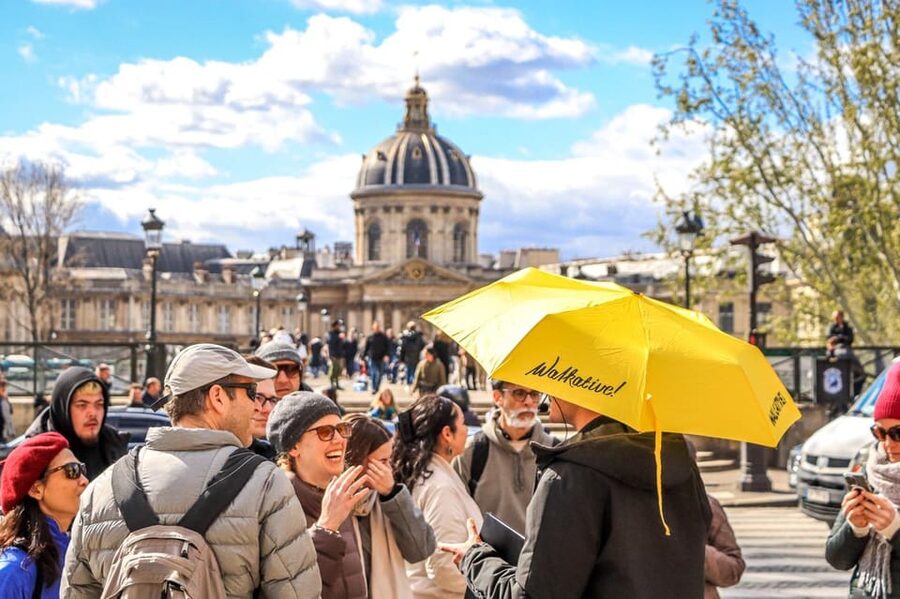
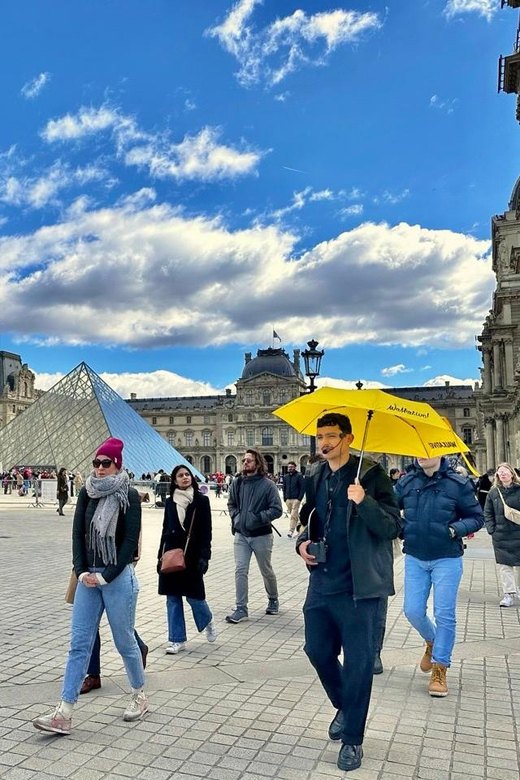
- Hotel de Ville starting point: Meet outside the Metro at exit 5, under a yellow umbrella.
- A broad Paris story: Follow the city from its Parisii beginnings through Rome, monarchy, revolution, Napoleon, and 19th-century rebuilding.
- Major sights in one walk: See Notre-Dame, Sainte-Chapelle, the Louvre, Pont des Arts, elegant boulevards, bridges, and Tuileries Gardens.
- Stories beyond dates: Hear about Quasimodo, the Mona Lisa theft, Napoleon, Hitler, love, revenge, and Parisian rebellion.
- Good first-day choice: The route helps you understand central Paris before choosing museums, churches, gardens, and neighborhoods to explore later.
- Straightforward value: The $31 price covers the booking fee and the guide’s payment, with free cancellation up to 24 hours before the start.
Starting at Hotel de Ville, where Paris begins to make sense
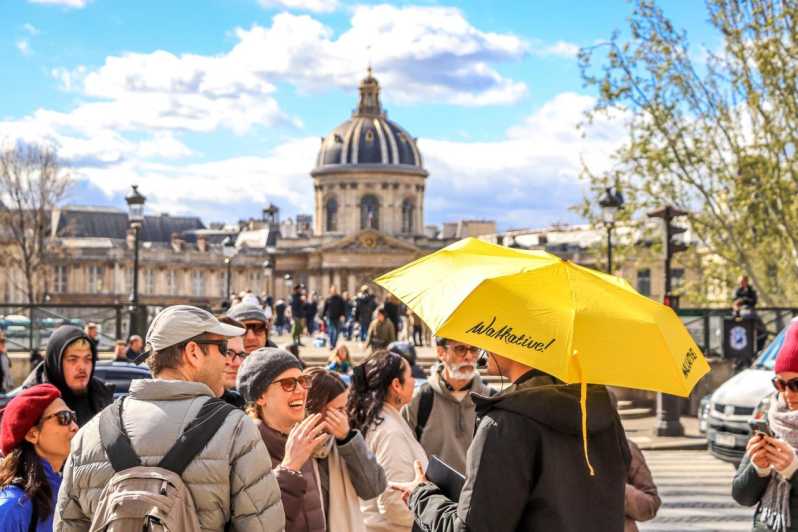
Your meeting point is outside the Metro at Hotel de Ville exit 5, marked by a yellow umbrella. Arrive 10 minutes early. This is practical advice, not fussiness. Central Paris has several exits, nearby streets, and plenty of visual distractions, so giving yourself a few spare minutes prevents a rushed start.
Hotel de Ville is a sensible place to begin. You are close to the Seine, Île de la Cité, the Marais, and the historic center. From here, the guide can place Paris in context before the famous monuments begin competing for your attention.
The opening story reaches back to the Parisii, the Gallic people who settled on marshy ground around the Seine. Rome later took the settlement, and Paris eventually became the capital of the Franks. That long opening matters because the city can otherwise feel like a collection of attractive buildings. You begin to see it as a place shaped by water, power, religion, trade, war, and repeated rebuilding.
This is also where the tour’s tone becomes clear. You should expect history delivered as a narrative rather than as a string of dates. The city’s reputation for style and confidence gets attention, but so do poverty, inequality, religious conflict, revolt, and the practical reasons behind Paris’s broad streets and grand planning.
More Historical Tours in Paris
- Paris: Louvre Museum Entry with History of Mona Lisa
★ 3.9 · 2,823 reviews - Paris: Dark History and Ghostly Guided Walking Tour
★ 4.7 · 1,000 reviews - Le Marais/Paris – The Historic, Trendy, Jewish, LGBT district
★ 5.0 · 341 reviews
Notre-Dame and Île de la Cité: the city’s medieval heart
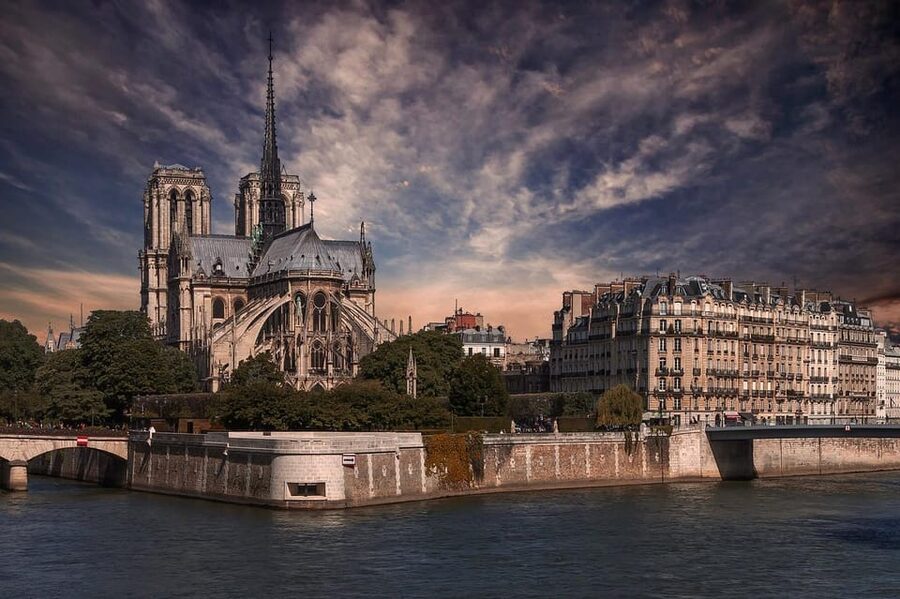
The route includes Notre-Dame Cathedral, one of the key sights in Paris and a natural stop for a historical walking tour. Here, the guide can connect the cathedral to the medieval city, religious life, and the stories that turned Paris into the political and spiritual center of France.
The value of seeing Notre-Dame with a guide is not simply learning when it was built. You get the broader setting: medieval Paris was already one of Europe’s largest cities, with a population said to have reached around 200,000. The cathedral was part of a dense urban world where religion, royal authority, education, and commerce were tightly packed together.
Sainte-Chapelle is also included among the sights to see. Its name may be familiar from photographs of stained glass, but the more important point on this walk is its place in the royal and religious history of Île de la Cité. You should treat this as an exterior and historical stop unless your booking information says otherwise. The tour is designed as a city walk, not as a ticketed interior visit to every church and museum on the route.
The Quasimodo story adds a lighter, more dramatic thread. It helps explain how Notre-Dame became more than a place of worship. Literature, architecture, popular imagination, and the city’s own sense of drama all gather around it.
The Louvre from palace to museum
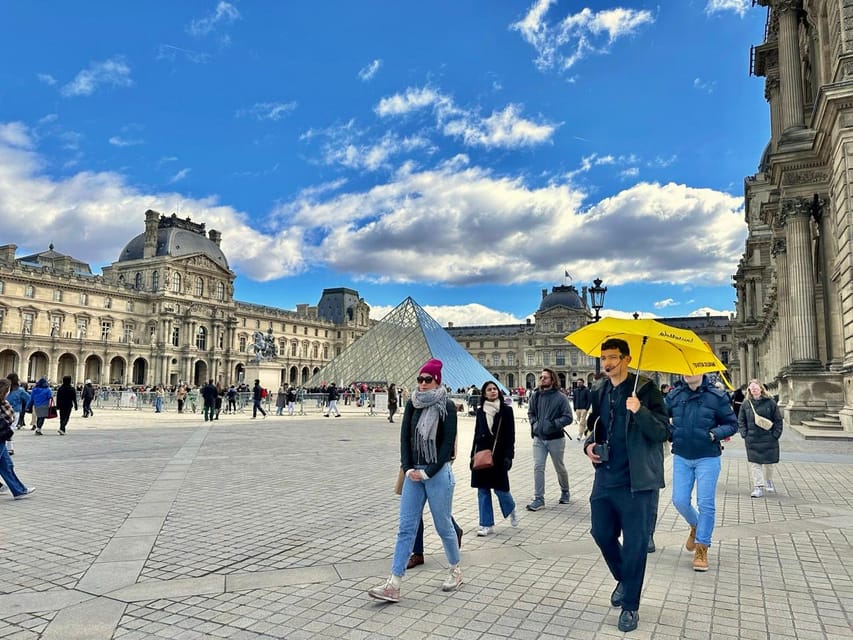
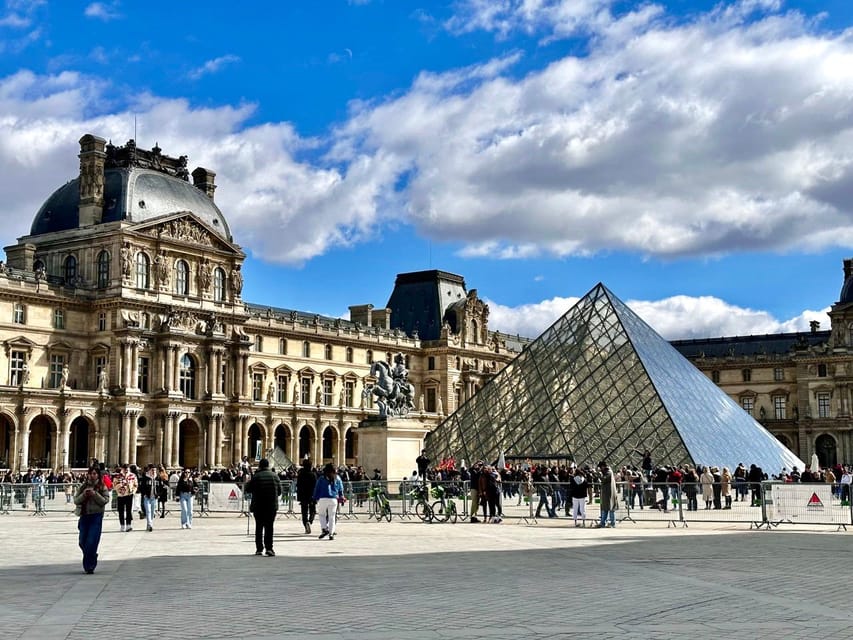
The Louvre is one of the tour’s main subjects, and the focus is its transformation from a royal palace into one of the world’s great art museums. That change tells you a lot about Paris itself.
The Louvre was tied to monarchy and state power before it became a public home for art. The tour connects the building to royal ambition, political upheaval, and the later idea that culture should belong to the public. You will not get the full experience of the museum’s collections in a short outdoor walk, but you will gain a framework that makes a later visit more rewarding.
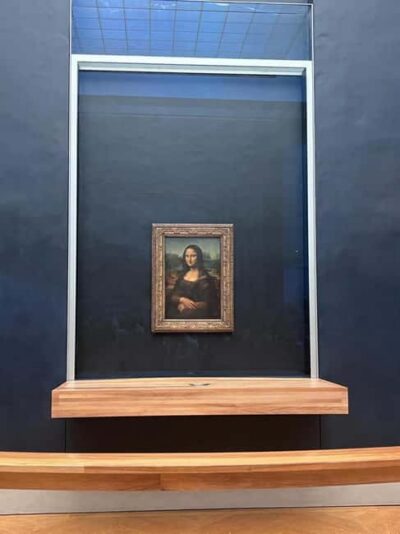
This is where the famous Mona Lisa theft story enters the route. It is a useful reminder that the Louvre’s fame is not only about paintings, sculptures, and architecture. It is also about crime, publicity, obsession, and the way a single artwork can become a global symbol.
If you plan to visit the Louvre separately, take notes during the walk. The guide’s historical explanation can help you decide how much time to set aside inside. The museum is enormous, and a first-time visitor can easily lose half a day without a plan. This tour will not replace a museum visit, but it can help you approach one with better questions.
Pont des Arts and the Seine
Pont des Arts brings the walk back to the river and offers a change of scale. Instead of standing before a palace or cathedral, you get a bridge, water, changing views, and a chance to understand how the Seine organizes Paris.
Bridges are not just photo stops here. They connect the city’s historic districts and help explain why Paris developed as it did. Along the river, the guide can tie together the political center, royal buildings, artistic institutions, and the everyday movement of people across the city.
This part of the route should also give you a breather between heavier historical subjects. The tour covers wars, massacres, revolution, poverty, and authoritarian power, so a walk beside the Seine adds some visual calm.
The experience is still weather-dependent. A crisp winter morning can make the route feel clear and comfortable, while summer heat or rain will affect how much energy you have left. Wear comfortable shoes and bring weather protection. The walk is described as good exercise but not strenuous, though standing and walking for two and a half hours is still more demanding than a short sightseeing loop.
More Walking Tours in Paris
- Paris Top Sights Half Day Walking Tour with a Fun Guide
★ 5.0 · 2,893 reviews - Montmartre Hidden Gems and Scenic Highlights Walking Tour
★ 5.0 · 2,684 reviews - Montmartre Hill French Gourmet Food and Wine Tasting Walking Tour
★ 5.0 · 2,588 reviews - Paris Île de la Cité and Notre-Dame Walking Tour With Crypt
★ 5.0 · 2,272 reviews
Tuileries Gardens and the making of modern Paris
The Tuileries Gardens provide one of the tour’s most pleasant settings. Their formal design fits the image of elegant Paris, but the gardens also belong to the city’s political story. They sit beside the Louvre and help show how royal space, public space, and national identity changed over time.
This is a good place to think about the difference between old Paris and modern Paris. The city you see today was reshaped heavily in the 19th century, with wide boulevards, parks, aqueducts, and sewers. The changes improved movement and sanitation, but they also made it harder to build barricades during uprisings.
That political motive gives the broad Parisian avenues a sharper edge. They are beautiful, but they were not designed only for beauty. The tour presents modernization as a response to repeated revolt, especially in a city with a long habit of challenging authority.
The Eiffel Tower is also included among the sights associated with the walk. Its story fits the tour’s theme perfectly. Built for the 1889 Universal Exposition, it was initially disliked by many Parisians and became beloved only later. You get a useful reminder that landmarks now treated as timeless symbols were once controversial, temporary-looking, or simply unwanted.
Revolution, Napoleon, and the city’s rebellious character
The French Revolution receives major attention, and rightly so. Paris was not a passive stage for the overthrow of the monarchy. Poverty, inequality, new political ideas, and public anger helped push the city toward one of the most important political breaks in European history.
The tour also follows the rise of Napoleon, whose connection to Paris is wrapped up with ambition, war, power, and the reshaping of France. These stories give the grand boulevards and official buildings more weight. You begin to see them not only as scenic backdrops, but as places connected to national drama.
The guide also tells stories involving Hitler, which adds a more modern and darker layer to the city’s past. The mix of military history, art history, architecture, and social change is one of the walk’s strengths. It is broad rather than narrowly academic, so you are likely to hear a little about many subjects instead of spending the entire time on one period.
That broad approach suits first-time visitors and people with only a passing interest in history. If you already know Paris well or want a specialist study of medieval architecture, the route may feel less detailed than you would like.
What the guides add to the experience
The guide is the most important variable on a walking tour. The written route can be strong, but delivery determines whether two and a half hours feels lively or long.
The guides connected with this experience have included Tom, Thomas, Harry, Yazid, Francesca, Tank, and others. The strongest pattern is clear storytelling with humor and enthusiasm. Tom was praised for answering questions and making a first visit comfortable for a solo participant. Thomas was described as able to suit both serious history fans and people who are less interested in kings, wars, and revolutions.
Harry’s storytelling style was singled out for making the past feel close. Yazid’s background in art history suited the Louvre and Paris’s cultural subjects. Francesca was praised for helping the group notice less obvious details, while another guide used illustrations to support explanations of architecture, revolution, and Parisian character.
Guide quality can never be guaranteed from one departure to the next, but the range of positive comments points to an experience built around personality rather than a recorded script. Ask questions as you go. The tour is likely to be more useful if you treat it as a conversation instead of standing silently at the back.
The group size is not fixed in the information provided. One account described a group of fewer than 20 that never felt cumbersome, but you should allow for variation. A larger group can make it harder to hear and gather at narrow points, while a smaller group usually makes questions easier.
Is $31 a fair price for 150 minutes?
At $31 per person, the cost is reasonable for a guided introduction to central Paris, especially if you use the walk to plan the rest of your stay. The fee covers the reservation and the guide’s payment. Although the experience is connected to a general pay-as-you-wish format, you are not expected to work out a separate payment on the day for the guide’s basic service.
The value comes from the range of sights and the explanation between them. You get a route covering major landmarks, a local English-speaking guide, and a historical framework in one session. You do not get hotel pickup, museum admission, or a private tour.
That distinction matters. If you want to enter the Louvre, Sainte-Chapelle, or Notre-Dame, you should arrange those visits separately and check the current entry conditions. This walk is best viewed as a guided orientation through the historic center.
Free cancellation up to 24 hours before the start also reduces the risk of booking early. You can reserve and pay later, which helps if your Paris schedule is still changing.
Who should book this Paris walk?
I would choose this tour early in a first Paris visit, ideally on the first or second day. You can use the route to decide which areas deserve more time, which museums need advance planning, and where to return for a slower look.
It suits:
- First-time visitors who want the major central sights explained.
- Solo visitors who prefer an organized activity at the start of a trip.
- History fans who enjoy connections between architecture, politics, art, and war.
- Couples and families who need a lively guide to keep different interests together.
- Visitors with only a short stay who want a broad introduction in 150 minutes.
It may not suit you if you want a private pace, extensive time inside monuments, or a narrow academic focus on one period. It also requires you to be comfortable walking outdoors for two and a half hours.
Practical ways to get more from the walk
Arrive 10 minutes early at Hotel de Ville, exit 5, and look for the yellow umbrella. Wear shoes you can walk in comfortably, since the route links several central sights rather than staying in one square.
Keep your plans flexible after the tour. You may finish with ideas for the Louvre, Notre-Dame, Sainte-Chapelle, the Tuileries, or another part of central Paris. The guide can help you understand what deserves a return visit, but the exact advice will depend on the day’s guide and your questions.
Do not expect a quiet, slow photo tour. The route covers a lot, and the guide has a substantial story to tell. If you want good photographs, take them when the group stops, then rejoin promptly.
Should you book it?
Book this tour if you want a lively historical map of central Paris, not a museum ticket or a private sightseeing session. The strongest reasons are the range of landmarks, the clear English narration, and the guide style that has worked well for solo visitors, families, history fans, and people with only a casual interest in the past.
The only real caution is breadth. You will see and discuss many famous places, but you will not explore each one in detail. For $31, that tradeoff is fair. I would book it near the beginning of a Paris stay, arrive early, ask questions, and use the walk as a springboard for the rest of your time in the city.
FAQ
How long does the Historic Paris Walking Tour last?
The tour lasts 150 minutes, or two and a half hours.
What language is the tour conducted in?
The tour is conducted in English with a live English-speaking guide.
Where is the meeting point?
Meet outside Hotel de Ville Metro station at exit 5. Look for the yellow umbrella.
How early should I arrive?
You should arrive 10 minutes before the activity begins.
What sights are included?
The tour covers or discusses the Louvre, Notre-Dame Cathedral, Sainte-Chapelle, Pont des Arts, the Seine, the Tuileries Gardens, elegant boulevards, bridges, and the Eiffel Tower.
Is hotel pickup included?
No. Hotel pickup and drop-off are not included.
Can I cancel the booking?
Yes. You can cancel up to 24 hours before the activity for a full refund. You can also reserve now and pay later.
Just added around Paris
- Guided and Private Tour of Paris by Golf Cart★ 5.0 · 33 reviews
- Guided Tour of Sacré-Coeur and Montmartre★ 3.5 · 74 reviews
- Paris – Guided Visit & Tasting in a Royal Wine Cellar★ 4.5 · 221 reviews
- Paris E-Scooter Tour with fun & informative guide (small groups)★ 5.0 · 184 reviews
- Paris Pass with over 90 Top Attractions including Notre Dame Tour★ 3.0 · 121 reviews
- 10+ tastings Gourmet Food & Wine Tour in the Heart of Paris★ 5.0 · 88 reviews
- Seine River Direct Access Guided Cruise★ 4.0 · 188 reviews
- Paris Like a Local: Full-Day Custom Tour with Private Guide★ 5.0 · 62 reviews
Historical Tours, compared.
Louvre Museum Entry with History of Mona Lisa
Read our review →

Vieux Lyon Cultural & Historical Walking Guided Tour (English)
Read our review →

Toulouse Food & History Tour with a Chef (in English)
Read our review →
Small-Group Full-Day Tour of Côte de Nuits, Côte de Beaune Vineyards and Beaune Historical District
Read our review →
Browse the lists this tour appears in