
Reviewed · MUSEUMS
Cave Museum Village Troglodyte of Rochemenier Admission Ticket
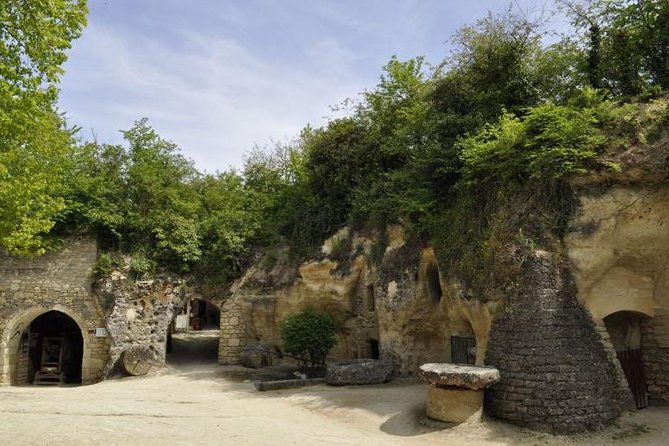
Rochemenier is not just a museum with a few holes in the ground. It is a former village carved into sandstone, with 250 underground rooms spread across about 40 farms. You walk through two abandoned farmsteads and see the practical, close-to-the-earth life of the people who lived there.
I like the freedom of the self-guided format, and I like the way ordinary objects, from furniture to tools and photographs, make rural French history easy to picture. The main drawback is language: the leaflet comes in 18 languages, but the scheduled guided visit is French only.
Key points at a glance
- 250 underground rooms: Rochemenier developed into a sizable village beneath the surface, not a single cave attraction.
- Two preserved farms: The public route shows homes abandoned around the beginning of the 20th century.
- Sandstone with sea shells: The rock was also useful to farmers, who spread it on fields to reduce soil acidity.
- Self-guided and flexible: Plan on roughly one to three hours, depending on how closely you study the displays.
- Cool underground rooms: Bring a sweater, even in warm weather.
- Small visitor capacity: The activity lists a maximum of 15 participants.
Rochemenier is a village beneath your feet
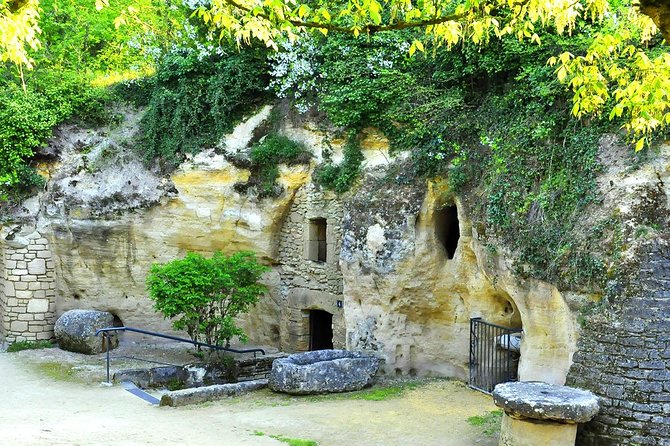
The first surprise is the scale. Rochemenier was excavated into sandstone over many centuries, creating homes, work areas, storage rooms, and other spaces below ground. The oldest known habitation apparently dates from the 13th century, and the village continued to grow until the 19th century.
That growth tells you something important. These were not novelty caves made for curious sightseers. They were working homes shaped by need. As the population increased, more rooms were cut from the rock. The result is a village that grew inward and downward instead of spreading across open fields.
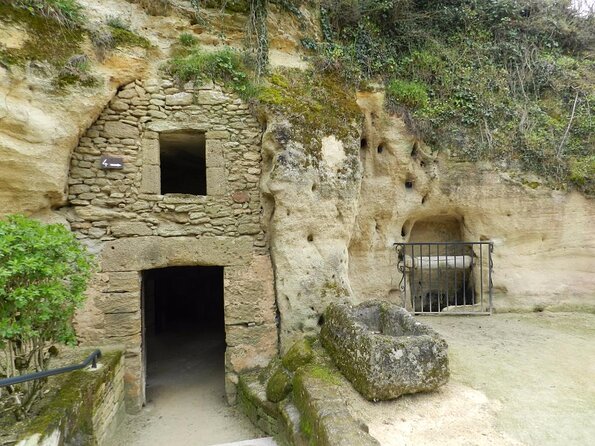
You can explore part of this underground community at the Cave Museum, officially known as the Village Troglodytique de Rochemenier. The visit centers on two farms that were abandoned near the start of the 20th century. They opened to the public in 1967, giving you a chance to see the spaces as a record of local life rather than as a modern reconstruction.
I find this setting more useful than a standard museum room because the building itself explains the story. The walls, ceilings, and passageways show how people adapted their homes to the local rock. You are not simply looking at objects in glass cases. You are seeing the spaces where those objects were used.
More museums and galleries in France:
- Paris: Louvre Museum Timed-Entrance Ticket
★ 4.6 · 71,977 reviews - Louvre Museum Masterpieces Guided Tour with Access
★ 4.5 · 12,023 reviews - Paris: Louvre Museum Entry Ticket With Host and River Cruise
★ 4.6 · 9,926 reviews
Two farms that explain everyday rural life
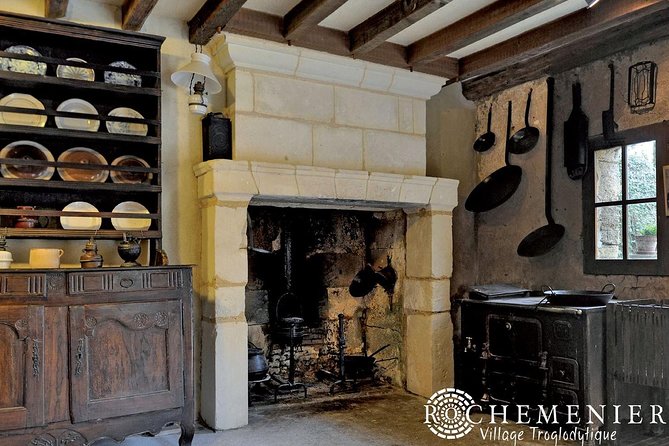
The main route takes you through the preserved farm buildings and their underground rooms. Furniture, tools, and photographs belonged to the last residents, so the displays focus on practical life rather than grand historical events.
You might see how rooms were arranged for work, rest, storage, and family use. The exhibits help connect the objects to their setting. A tool means more when you can picture it being used beside a carved wall or in a low underground work space.
The photographs are especially useful because they bring the final inhabitants into view. The village was still part of lived rural France before it became a museum. These images help bridge the gap between the older origins of the site and its more recent past.
This is a good stop for families because the setting gives younger visitors something concrete to explore. Instead of asking them to follow a long sequence of dates, you can point out the underground rooms and ask how daily tasks might have worked there. Older children may also enjoy the unusual idea of a village built into rock.
The museum suits adults who like social history, architecture, farming traditions, and local customs. It is less suited to someone looking for a large collection of art or a highly dramatic attraction. The appeal lies in quiet observation and practical details.
The sandstone has its own story
The rock at Rochemenier is sandstone containing sea shells. It is a kind of calcareous sand, and local farmers used it to neutralize acidity in the soil.
That detail adds another layer to the visit. The underground setting was not only a place to live. The material removed from the rock also had value in agriculture. The village, its homes, and the surrounding farms were tied together through the same local geology.
I like this kind of explanation because it links nature and daily work without making the subject complicated. The stone shaped the houses, and the stone also helped improve farmland. You begin to see the village as part of a working rural system, not an isolated oddity.
The attraction does not present a full account of every period in French history, and it should not be approached with that expectation. Instead, it gives you a focused look at one local way of living. In one to three hours, you can learn how geology, farming, population growth, and household routines met in one place.
A self-guided visit gives you control
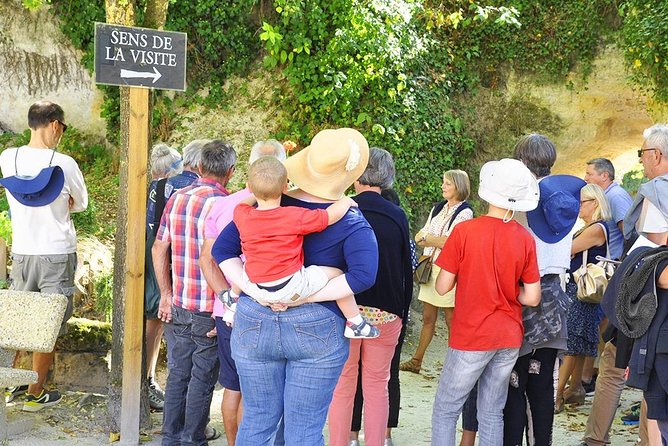
Your admission includes a self-guided tour and an explanatory leaflet available in 18 languages. That makes the visit practical for international visitors, especially if you prefer reading at your own speed.
You can pause over a photograph, spend extra time in a farm room, or move along when a display is less interesting to you. This matters in an underground museum, where the pace can feel different from a conventional gallery. Some people will finish in about an hour. Others will take closer to three hours by reading carefully and looking at the objects.
The scheduled guided visit is available in French only. There is no guided visit in English included, so English speakers should plan to use the leaflet rather than expect spoken interpretation. If you understand French, the timed visit may add useful explanation. If you do not, the self-guided route is the dependable option.
The listing describes the activity as suitable for people of all ages, and most visitors can participate. Strollers are allowed through the site, although the underground chapel is the exception. Service animals are permitted.
The group limit is 15 people. That is a modest maximum, which should help keep the underground spaces from feeling too crowded, though the actual atmosphere can depend on the number of people arriving at the same time.
A few more France half-days worth comparing
- Disneyland® Paris 1-Day Ticket
★ 4.6 · 49,412 reviews - Paris: Versailles Palace and Gardens Full Access Ticket
★ 4.6 · 41,579 reviews - Paris: Eiffel Tower Entry Ticket with Optional Summit Access
★ 4.4 · 20,035 reviews - Paris: Moulin Rouge Cabaret Show Ticket with Champagne
★ 4.7 · 16,088 reviews
Allow one to three hours underground
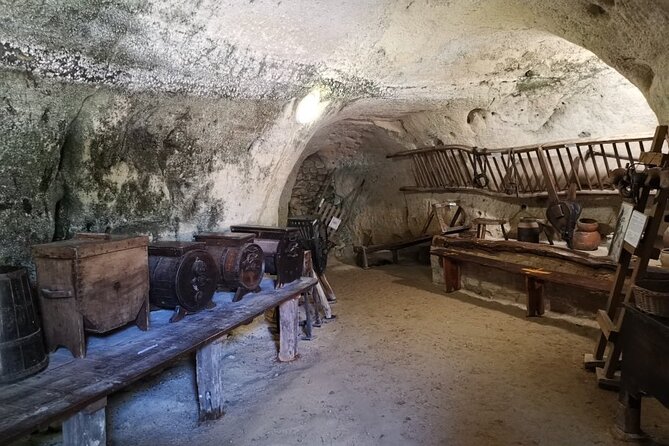
The advertised duration is approximately one to three hours. I would treat one hour as a quick visit and three hours as a careful one, not as a promise that you will be occupied for a fixed length of time.
A short visit works if you are combining Rochemenier with other sights in the area. You can walk through the two farms, read the main explanations, look at the photographs, and get a clear sense of the village without making it an all-day commitment.
Give yourself more time if you enjoy household history or want to compare the rooms closely. The underground layout rewards a slower pace. You may want to consider how a family used each area, how tools fit into farm work, and how the carved spaces changed as the village grew.
The visit is also easy to fit into a mixed-age day. Children may move through the rooms faster than adults, while anyone interested in rural traditions can stop and read. The self-guided format lets each person follow a suitable pace without holding up a formal group.
The underground temperature is part of the experience
Bring a sweater. The museum specifically warns that the underground rooms are cool, and that freshness will be noticeable even when the weather above ground is warm.
This is a small practical point, but it can affect your enjoyment. A light layer makes it easier to linger over the displays instead of rushing through the rooms. Comfortable shoes are also sensible for any visit involving underground passages, although the provided information does not specify the exact walking surface or number of steps.
Stroller access is possible, with the underground chapel as the one stated exception. If you need to bring a stroller, plan to see that chapel without it. The information does not give further detail about wheelchair access, so visitors with specific mobility needs should confirm conditions directly before booking.
What the $10.26 ticket delivers
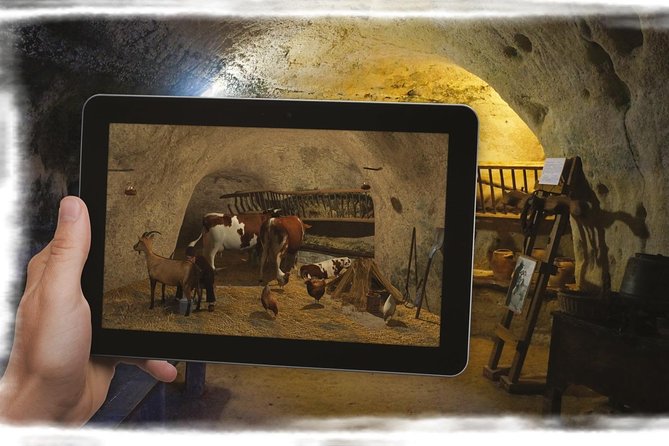
At $10.26 per person, the ticket is priced as an affordable cultural stop rather than a major full-day attraction. The value comes from the combination of the site and the interpretation: you are paying to enter preserved underground farms, see authentic household objects, and use a leaflet in one of 18 languages.
The price works especially well if you are already visiting the surrounding region and want a focused stop that adds local character. You do not need to commit to a full guided excursion, and food and drinks are not part of the ticket, so you can control the rest of your spending.
The value is less obvious if you want a long, highly scripted tour in English. There is no English-speaking guide included. You are paying for access and self-guided interpretation, not for a personal lecture.
The attraction has an overall rating of 4.4 out of 5 from 143 ratings, and 90 percent of customers recommend it. The strongest praise centers on the museum’s presentation and its informative content. One published five-star assessment describes it as a fantastic, interesting, and informative visit, with the museum immaculately presented. That matches the kind of value this ticket offers: careful preservation and clear displays rather than flashy entertainment.
Opening times change with the season
The museum is open Tuesday through Sunday from January 2 through April 15, 2026, with hours of 10:00 a.m. to 5:00 p.m. It is open every day from April 16 through September 15, 2026, from 9:30 a.m. to 5:30 p.m.
From September 16 through November 20, 2026, it returns to Tuesday through Sunday hours, 10:00 a.m. to 5:00 p.m. These seasonal changes matter if you are planning a Monday visit or arriving near opening or closing time.
I would check the date carefully before setting out, especially outside the main April to September period. The attraction is not listed as open every day all year. A confirmation is provided when you book, and the experience provider is the Troglodyte Village of Rochemenier.
Who will enjoy Rochemenier most
I would choose this visit if you enjoy places that explain how ordinary people lived. It is a good fit for:
- Families looking for a manageable historical stop with rooms to explore.
- Adults interested in rural traditions, farming, architecture, and local history.
- Visitors who prefer to read at their own pace.
- Anyone planning a flexible one to three hour activity.
- People who want an affordable attraction with a strong sense of place.
I would hesitate if your priority is an English-speaking guide. The leaflet solves the language issue for many people, but it does not provide the conversation and added detail of a live English tour.
I would also set expectations about scale. Rochemenier is unusual and well presented, but it is a specialized museum. It focuses on two preserved farms and the story of underground rural life. If you want a broad survey of French history, this will feel too narrow. If you want one clear window into a particular community, it makes sense.
Booking and cancellation details worth knowing
The experience is generally booked about 16 days in advance, which gives you a rough idea of how far ahead people plan it. You receive confirmation at the time of booking.
Free cancellation is available if you cancel at least 24 hours before the local start time. Cancellations made less than 24 hours before the start time are not refunded, and changes within that same period are not accepted.
There is no food or drink included, so plan those separately. The ticket covers admission and the self-guided materials. A timed guided visit is available in French only, not English.
Should you book this cave museum visit?
Book it if you want an affordable, unusual museum where the building is part of the story. Rochemenier gives you preserved underground farms, local objects, photographs of former residents, and a clear explanation of how a rural village grew inside sandstone.
The best reason to go is the setting’s authenticity. You are not looking at a generic cave. You are following the spaces of a former community and seeing how geology shaped work and home life.
Skip it if you need an English-speaking guide, dislike self-guided visits, or want a major attraction that fills most of a day. For everyone else, especially families and history-minded visitors already exploring the area, the $10.26 ticket offers a useful and distinctive stop. Bring a sweater, allow at least an hour, and let the underground rooms set the pace.
FAQ
How much does admission to the Cave Museum Village Troglodyte of Rochemenier cost?
The listed price is $10.26 per person.
How long does the visit take?
The visit takes approximately one to three hours, depending on how quickly you move through the rooms and how closely you read the displays.
Is the visit self-guided?
Yes. Admission includes a self-guided visit with an explanatory leaflet available in 18 languages.
Is a guided tour available in English?
No. A guided visit is offered at a specific time in French only. An English guided visit is not included.
What can I see at Rochemenier?
You can explore part of the underground village, including two former farms with furniture, tools, and photographs connected with the last inhabitants. The site also includes an underground chapel.
Is the museum open every day?
It is open every day from April 16 through September 15, 2026. From January 2 through April 15 and September 16 through November 20, it is open Tuesday through Sunday.
Can I bring a stroller?
Strollers are permitted, but the underground chapel is not accessible for strollers.
Can I cancel for a refund?
Yes. You can cancel up to 24 hours before the experience start time for a full refund. Cancellations or changes made less than 24 hours before the start time are not accepted for a refund.
Just added around France
- Paris at the First Lodges – Ducasse sur Seine dinner cruise★ 4.0 · 165 reviews
- Paris at the First Lodges – Ducasse sur Seine Lunch Cruise★ 4.5 · 70 reviews
- Disneyland® Paris 1 Day with Round-Trip Train Tickets from Paris★ 4.0 · 50 reviews
- Explore speakeasies and hidden bars, sip meet & socialize★ 4.5 · 47 reviews
- Disneyland® Paris Express Shuttle with Admission Ticket from Central Paris★ 3.5 · 172 reviews
- Paris Cheeses and Wines Tour de France with Tasty Games★ 5.0 · 32 reviews
- Musée Orsay Highlights Tour – Best of Impressionism & Hidden Gems★ 5.0 · 27 reviews
- Private Tour: Discover Paris with Local, 3 hours on a Segway★ 5.0 · 71 reviews
Museums, compared.

Louvre Museum Masterpieces Guided Tour with Access
Read our review →
Louvre Museum Entry Ticket With Host and River Cruise
Read our review →
Les Invalides: Napoleon’s Tomb & Army Museum Entry
Read our review →
Louvre Museum – Exclusive Guided Tour (Entry Included)
Read our review →
Louvre Museum Hosted Entry and Mona Lisa Audioguide
Read our review →
Louvre Museum Tour Mona Lisa & Iconic Masterpieces
Read our review →
Browse the lists this tour appears in