
Reviewed · FULL-DAY
DDay American Beaches and US Airborne Full Day Tour from Bayeux
The most moving part of this D-Day tour from Bayeux is the way it links famous battle sites with small, personal stories. You stand at Omaha Beach, look across the water, then follow the campaign inland to Sainte-Mère-Église and the little church at Angoville-au-Plain, where two medics treated about 80 wounded men.
I like the small group of no more than seven and the way guides such as Sophie, Chloe, Gwen, Yannick, and Mickael use maps, photographs, dates, and individual stories to make the battle easier to follow. I also like the efficient route, which covers both American beaches, Pointe du Hoc, the cemetery, and the airborne sector in one day.
The trade-off is time. This is a full 8.5-hour outing with several long drives and major stops, so you get a strong overview rather than a slow, museum-heavy study of every site. Lunch is not included, and the exact amount of free time can depend on the group and guide.
Key points to know before booking
- The group is capped at seven people, making it easier to ask questions and hear the guide inside the minivan.
- Omaha Beach and the American Cemetery are paired well, giving you both the battlefield and its human cost.
- Pointe du Hoc remains a striking battlefield, with bomb craters, bunkers, and dugouts still visible.
- Sainte-Mère-Église adds the airborne story, including the famous paratrooper caught on the church tower.
- Angoville-au-Plain provides the tour’s most intimate moment, centered on two medics who treated American, German, and civilian casualties.
- The $169.31 price includes transport and a certified guide, but not lunch or any separately charged museum admission.
Why this Bayeux tour works well for first-time visitors
Normandy has an awkward shape for independent sightseeing. The landing beaches stretch across a large section of coast, while the American airborne sites lie inland. You can drive yourself, but you will need to plan the order, understand what happened at each location, and find the small sites that are easy to miss.
This tour removes that strain. You meet at Place du Québec in central Bayeux at 9:00 a.m., then ride in an air-conditioned minivan. The route is built around the American campaign, so the day has a clear thread: the landings at Omaha and Utah, the attack at Pointe du Hoc, the airborne assault around Sainte-Mère-Église, and the medical aid station at Angoville-au-Plain.
The guide is the key part of the experience. Sophie is repeatedly praised for her clear explanations and visual aids, while Chloe is noted for bringing the sites to life with personal stories of soldiers. Gwen, Yannick, Mickael, Corinne, and Sofia have also led this outing, with strong feedback about their English, warmth, and ability to answer questions.
I especially like the use of handheld maps and photographs. D-Day sites can look deceptively peaceful. Without a map, it is hard to understand where landing craft came in, where German defenses were placed, or how far troops had to move under fire. A guide who explains the ground before you walk onto it changes the experience.
A few more Bayeux half-days worth comparing
- Normandy American D-Day Beaches Full Day Tour from Bayeux
★ 5.0 · 2,103 reviews - Normandy American D-Day Experience – Group tour from Bayeux
★ 5.0 · 1,566 reviews - Normandy Beaches Half-Day Afternoon Trip from Bayeux (A2)
★ 4.5 · 1,116 reviews
Omaha Beach: starting with the hardest landing
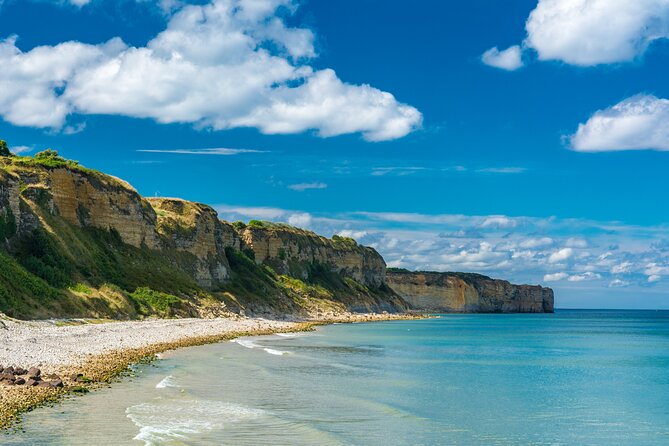
After roughly 30 minutes from Bayeux, the first stop is Omaha Beach. This is where the American 1st and 29th Infantry Divisions came ashore on June 6, 1944.
You have about 40 minutes here. That is enough time to look across the broad beach, hear how the German defenses were arranged, and picture the first waves trying to move inland. The guide uses maps and photographs to explain why Omaha became the most difficult American landing sector.
The beach itself is wide and open. That openness is part of the lesson. From the sand, you can begin to understand how exposed the troops were and how difficult it was to reach cover. The guide’s explanation matters more here than a long list of dates, because the physical setting shows the basic problem at once.
This stop is not designed for a leisurely beach walk. The schedule gives you a focused visit before moving on to the cemetery. If you want time for a long independent exploration, photographs, or a museum visit, you would need more than this single tour day.
The American Cemetery at Colleville-sur-Mer
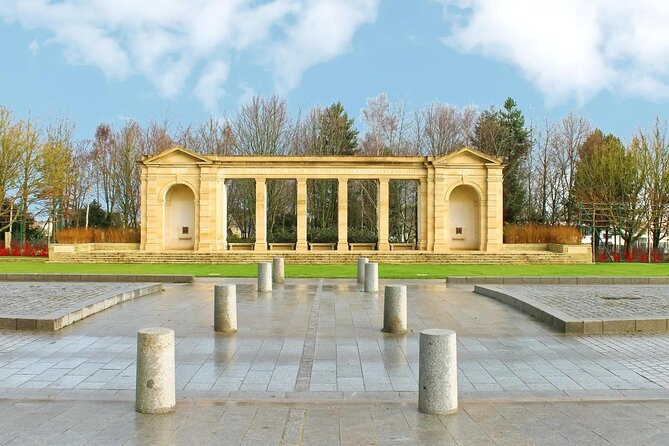
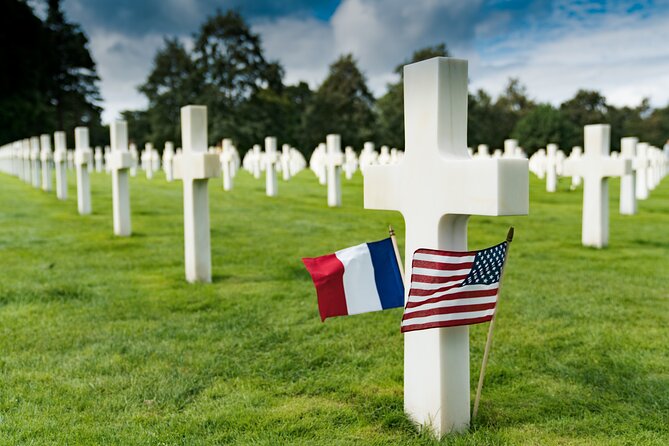
The American Cemetery is behind Omaha Beach, and the tour allows about one hour. More than 9,000 American servicemen and women are buried here, and the site is maintained by the American Battle Monuments Commission.
This is usually the quietest and most solemn part of the day. The rows of white markers make the scale of the losses visible, but the cemetery also gives you space to consider individual lives. One person on the tour even used the visit to locate a relative buried there, a reminder that this is not only a military site but also a place tied to family memory.
I recommend keeping your pace slow here. The guide provides context, but the cemetery itself asks for a different kind of attention. You may want to listen, walk among the markers, and take in the view toward the sea.
The one-hour allocation is useful, though it can feel short if you want to examine every section. Still, placing the cemetery immediately after Omaha is smart. You first see the beach where the men landed, then the final resting place of many who never made it farther.
Pointe du Hoc and the Ranger assault
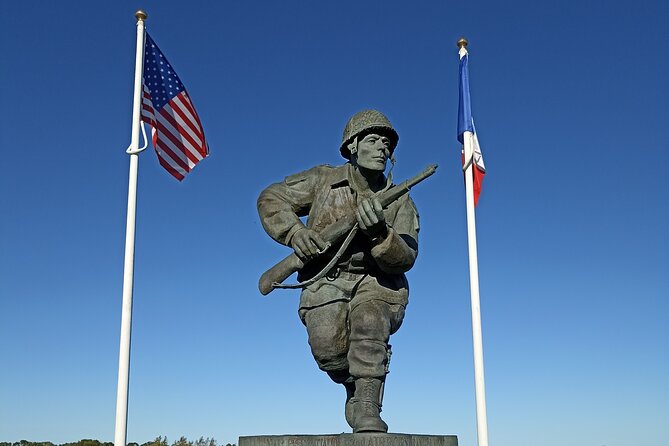
Pointe du Hoc gives you a different kind of battlefield. Instead of a broad beach, you walk among cliffs, bomb craters, bunkers, and dugouts connected with the 2nd U.S. Ranger Battalion.
The Rangers, led by Lieutenant Colonel James E. Rudder, scaled the cliffs to destroy a German gun battery that threatened the landing operation. The physical terrain makes the attack easier to grasp. You can see why the cliffs presented such a serious obstacle and why the position mattered to the beaches below.
The stop lasts about one hour. Wear shoes with a firm sole, since the ground around the craters and bunkers can be uneven. The supplied information does not promise a specific level of walking difficulty, so anyone with mobility concerns should ask the operator before booking.
Pointe du Hoc is also a good place for a guide’s visual material. A map can show the relationship between the gun position and the surrounding beaches, while photographs help explain what the site looked like during the assault. Without that context, the craters and concrete structures can seem like scattered ruins.
After this visit, the minivan makes the longer drive toward Sainte-Mère-Église. The tour information allows around 30 minutes for the drive, though actual road conditions can affect the timing.
Same trip, a completely different kind of day:
- Omaha and Band Of Brothers Full Day Tour
★ 5.0 · 1,104 reviews - Omaha Beach D-Day Experience – Afternoon group tour from Bayeux
★ 5.0 · 1,088 reviews - Omaha and Utah beaches
★ 5.0 · 1,085 reviews - Normandy Battlefields Tour – American Sites (A3)
★ 5.0 · 876 reviews
Sainte-Mère-Église and the airborne campaign
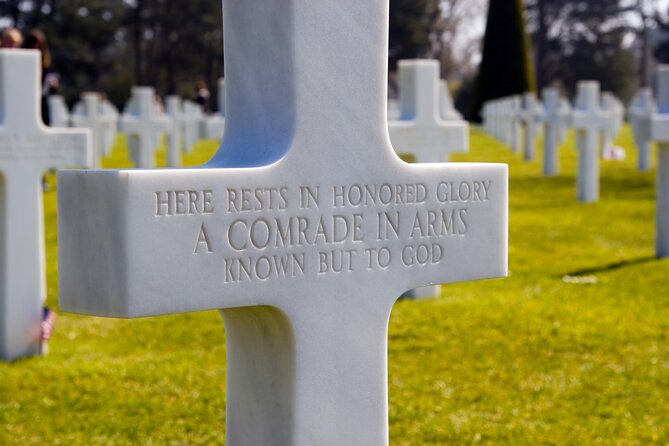
Sainte-Mère-Église was the first town captured by American paratroopers. It is best known for the story of a paratrooper who became caught on the church tower during the night of the invasion.
The tour spends about two hours in this area, making it one of the day’s longest stops. Your guide explains the airborne operation and the risks faced by the men who landed behind German lines. The town gives you a useful contrast with the beaches: here, the fighting involved confusion, scattered drops, nighttime movement, and attempts to seize roads and villages.
Several accounts of the day mention time for the Airborne Museum in Sainte-Mère-Église. The provided tour details do not clearly state whether museum admission is included in the $169.31 price, so confirm that point before booking if the museum is important to you. The itinerary itself specifically includes the town and the airborne story.
This part of the tour suits anyone who wants more than a beach visit. The airborne operation can be hard to picture from a shoreline, but Sainte-Mère-Église places you inside the inland phase of the invasion. It also gives the day some variety after the beaches and cemetery.
Utah Beach and General Theodore Roosevelt Jr.
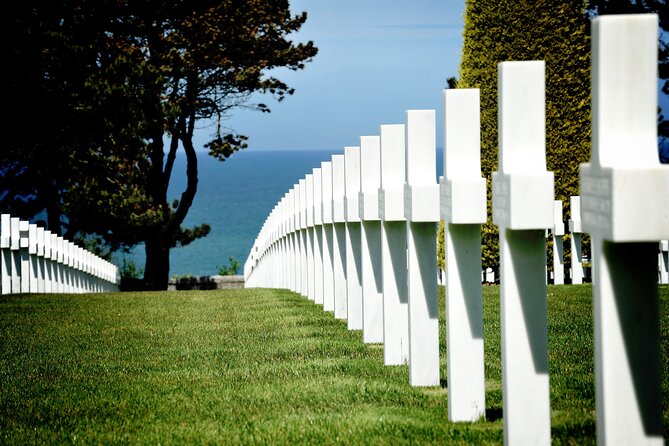
The route then continues to Utah Beach, about 20 minutes away. You have around two hours here, making it another major section of the tour.
At Utah, the guide explains how the 4th Infantry Division breached the German defenses. The landing began at 6:30 a.m., led by Brigadier General Theodore Roosevelt Jr., who later received the Medal of Honor.
Utah feels different from Omaha in both the story and the result. The guide can show you how the landing unfolded and why the operation made progress more successfully here. The value is not simply seeing another beach. It is comparing two American landing sectors and understanding why their experiences differed.
Two hours gives you room for a fuller explanation and some independent time. The day still moves at a steady pace, but this is not a quick roadside photo stop. If the beach and airborne museum are both important to you, ask how the guide plans to divide the time.
Lunch is not included. The supplied schedule does not give a fixed restaurant or lunch location, so bring that into your planning. You may need to purchase food during the stop or rely on whatever break the guide arranges.
Angoville-au-Plain: a small church with a large story
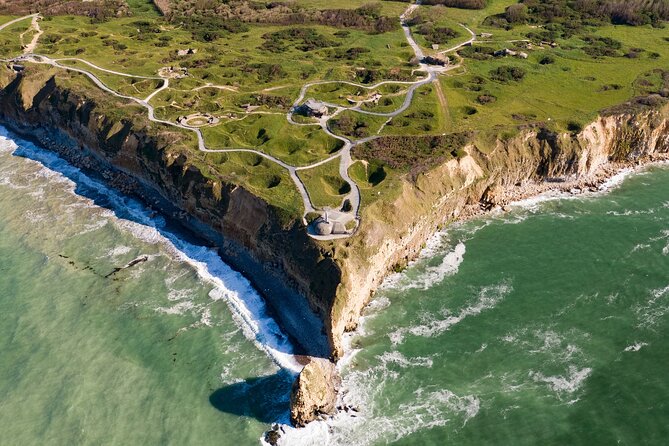
The final scheduled visit is Angoville-au-Plain, reached after about 15 minutes from Utah Beach. The tour allows 45 minutes in the area, with about 30 minutes listed for the church visit itself.
The church served as an aid station during the battle. Two young medics treated about 80 wounded soldiers over two days. Their patients included American and German soldiers, as well as civilians.
This is one of the best choices on the route because it brings the war down to a human scale. Beaches and cemeteries show the size of the campaign. The church shows what happened in one small place, where medical care depended on courage, endurance, and basic compassion.
The story also widens the focus beyond battlefield success. You hear about suffering, care, and the treatment of wounded people on both sides. It is a fitting final stop before the ride back to Bayeux, which takes about 35 minutes.
What the $169.31 price really covers
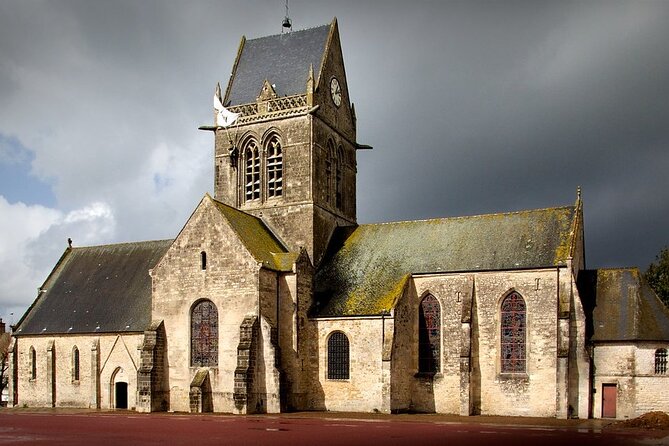
At $169.31 per person, this is not the cheapest way to see Normandy. The value comes from combining transport, route planning, and a certified English-speaking guide across a full day.
A rental car may appear cheaper for two or more people, but driving does not provide the maps, battle explanations, or personal stories. It also leaves you responsible for parking and navigation. One person specifically appreciated a guide helping with a car parking problem, which shows how practical local help can be.
The small group improves the value. With a maximum of seven people, you can ask about a relative, a unit, a date, or a tactical detail without trying to speak over a large coach group. The minivan is air-conditioned, and the return to central Bayeux keeps the day simple.
The price does not include lunch. It also does not clearly identify admission to the Airborne Museum or any other museum as included, so check before you book if museum entry is central to your plan.
Who should book this full-day outing?
I would choose this tour if you are staying in Bayeux and want a clear introduction to the American D-Day sectors without driving. It is also a good fit if you care about military history but want the guide to explain the human stories, not just recite troop movements.
It suits couples, families with older children, solo visitors, and small groups who like asking questions. Most people can participate, and the tour is near public transportation at the meeting point, but the day includes movement around beaches, cliffs, cemeteries, and historic sites.
This is less suitable if you want a slow day at one beach, long museum visits, or time for every American and British landing site. The route is focused on the American beaches and airborne operation. It gives you a strong framework, but a second day would be useful if you want Caen, Pegasus Bridge, the British and Canadian sectors, or more museums.
Book as early as practical if your dates are fixed. The experience is often reserved about 90 days ahead, which makes sense given the seven-person limit.
Should you book the D-Day American Beaches tour?
Yes, if you want an efficient and thoughtful introduction to the American campaign from Bayeux. Omaha, the cemetery, Pointe du Hoc, Utah, Sainte-Mère-Église, and Angoville-au-Plain form a well-chosen sequence, moving from the scale of the invasion to the actions of individual soldiers and medics.
The best reason to book is the guide. Sophie, Chloe, Gwen, Yannick, Mickael, Corinne, and Sofia are all named in connection with strong experiences, especially for their maps, personal stories, clear English, and willingness to answer questions.
Skip it only if you already know the sites well or want to set your own pace. For a first visit, the cost buys much more than a ride between beaches. It gives you a practical route and the context needed to understand what you are seeing.
FAQ
Where does the D-Day tour begin?
The tour begins at Place du Québec, Pl. du Québec, 14400 Bayeux, France.
What time does the tour start?
The scheduled start time is 9:00 a.m.
How long does the experience last?
The tour lasts approximately 8 hours and 30 minutes and returns to the meeting point in Bayeux.
How many people can join the tour?
The tour has a maximum of seven travelers.
Is transportation included?
Yes. Round-trip transportation from central Bayeux is provided in an air-conditioned minivan.
Is lunch included?
No. Lunch is not included in the tour price.
Is the tour offered in English?
Yes. The experience is offered in English and includes an experienced, certified guide.
Can I cancel for a full refund?
Yes, if you cancel at least 24 hours before the local start time. Cancellations made less than 24 hours in advance are not refunded. If poor weather or an insufficient number of bookings causes the operator to cancel, you are offered another date or experience, or a full refund.
Just added around Bayeux
- Normandy U.S. D-Day Sites Half Day Tour From Bayeux★ 5.0 · 325 reviews
- WW2 Jeep or Dodge truck tour of the Omaha Beach site★ 5.0 · 51 reviews
- Private Walking Guided Tour of Historic Bayeux English or French★ 5.0 · 36 reviews
- Mont Saint Michel Experience – Shuttle Service from Bayeux★ 5.0 · 194 reviews
- Private guided Allied D-Day Tour from Bayeux★ 5.0 · 45 reviews
- Private Full day American D-Day Guided Tour in Bayeux★ 5.0 · 133 reviews
- Private American landing beaches tour from Bayeux★ 5.0 · 36 reviews
- Private tour landing beaches from Bayeux★ 5.0 · 82 reviews
Full-Day, compared.
Normandy American D-Day Beaches Full Day Tour from Bayeux
Read our review →

From Paris: Full-Day Loire Valley Chateaux Tour
Read our review →
The Best of the French Riviera Full Day Tour
Read our review →


Saint-Emilion and Medoc Full-Day Wine Experience
Read our review →Browse the lists this tour appears in