
Reviewed · D-DAY BEACHES TOURS
From Paris: Normandy D-Day Landing Beaches Full-Day Tour
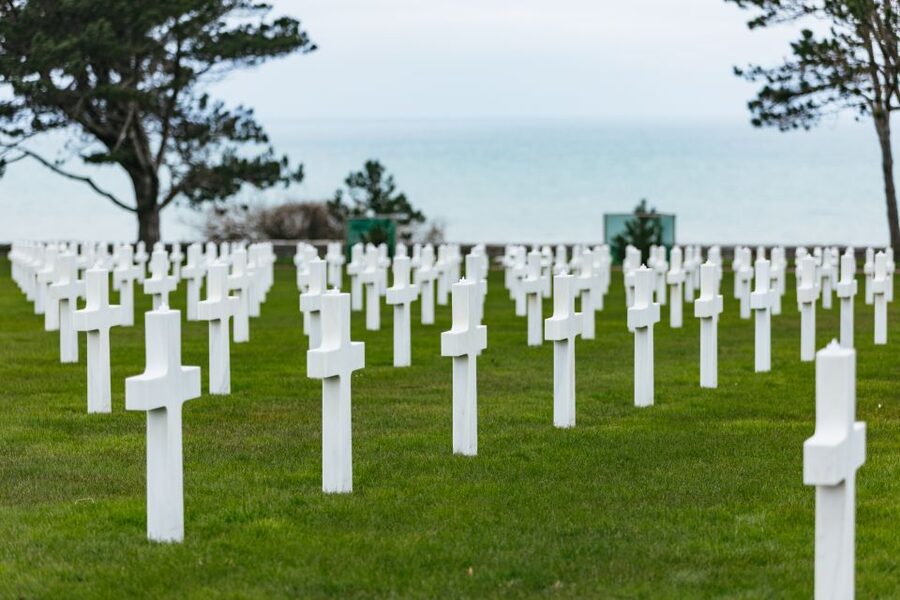
Normandy’s D-Day beaches are not just places to look at. They are broad, exposed stretches of coast where soldiers had almost nowhere to hide. Standing at Omaha Beach and then seeing the rows of white crosses at the American Cemetery gives you a clearer sense of the human cost than any screen documentary can.
I like the small group of no more than eight and the way the guides use military maps, old photographs, news broadcasts, and sometimes letters from soldiers. I also like the carefully chosen mix of battlefield stops, museum displays, and quiet time for reflection. The drawback is the long day: roughly 12 hours, with about five hours spent traveling between Paris and Normandy.
Key points to know before booking
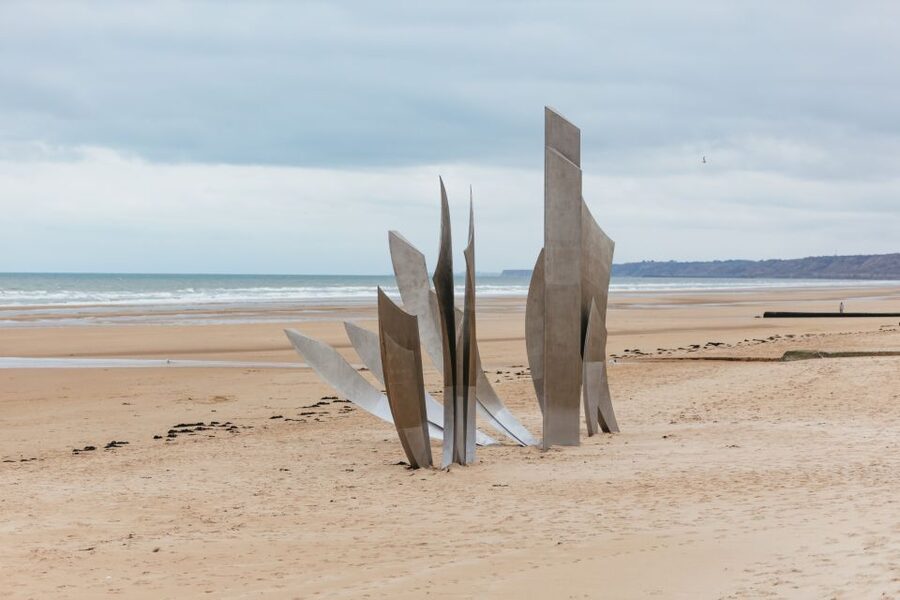
- Omaha Beach makes the scale of the assault plain: The wide beach and open approach help you understand why the landing was so dangerous.
- The American Cemetery is the emotional center: More than 10,000 white crosses mark fallen American service members.
- The eight-person minivan matters: You get easier stops, more guide interaction, and less time waiting than on a large coach.
- The Overlord Museum adds useful detail: Vehicles, weapons, photographs, plans, and personal objects give structure to the day.
- The cider stop divides opinion: Some people enjoy the local connection and brief tasting, while others would trade it for more time at the museum or cemetery.
- The tour is excellent value for a single day from Paris: At $312, you pay for transport, a guide, and museum entry, but lunch and drinks cost extra.
Why this Normandy day trip has such an effect
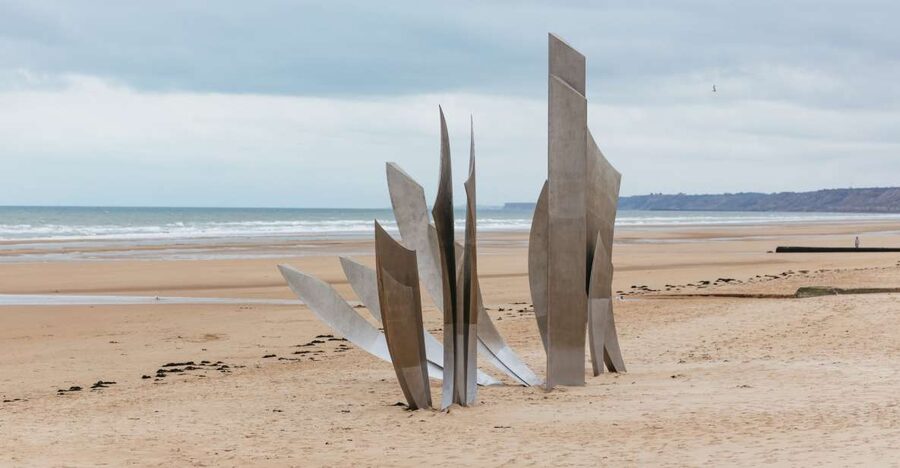
The D-Day campaign began on June 6, 1944, when Allied forces landed along the Normandy coast. The operation opened a western front against Nazi Germany and helped lead to the liberation of France and the eventual end of the war in Europe.
A day trip cannot cover every beach, museum, battery, and memorial in Normandy. It can, however, give you a strong framework. This route moves from German defenses to the beaches, then to a museum, a key artillery position, and the cemetery where the day’s human cost becomes impossible to ignore.
I especially like that the guide does more than recite dates. Guides including Enzo, Oliver, Augustin, G, Will, and Carlyle have been praised for explaining geography, adjusting the order of stops, and giving people time to think. Some guides use photos and recorded news reports in the van, which helps connect the quiet countryside outside the window with the events of 1944.
The small group also changes the mood. You are not part of a huge crowd following a flag. You can ask questions, hear the guide clearly, and sometimes adjust the schedule for weather, tide, or ceremonies. This is still a tightly timed excursion, but it feels more personal than a standard coach tour.
More D-Day landing beach tours:
- Normandy D-Day Sites & Cemetery Day Trip from Paris with Lunch
★ 5.0 · 6,877 reviews - Normandy D-Day Small-Group Day Trip with Omaha Beach, Cemetery & Cider Tasting
★ 5.0 · 2,786 reviews - Normandy D-Day Beaches and American Cemetery Day Trip from Paris
★ 4.5 · 2,673 reviews
Leaving Paris for the Normandy countryside
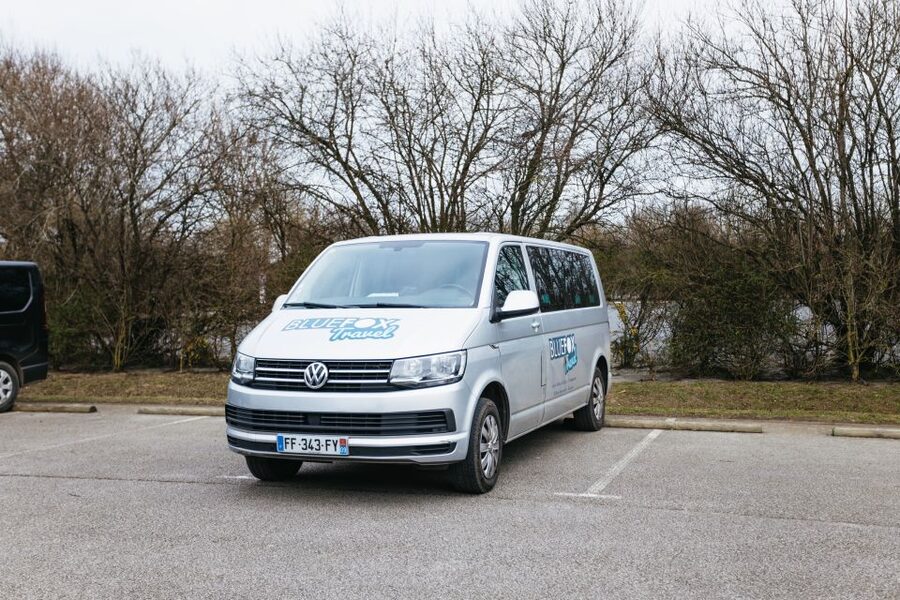
The meeting point is 6 Avenue de Wagram, where your guide arrives in a gray minivan about 10 minutes before departure. The drive to Normandy takes about two and a half hours, and the return trip takes a similar amount of time.
That travel time is the main practical cost of making Normandy a day trip from Paris. You lose a good part of the day on the road, but the minivan is a more pleasant way to cover the distance than changing trains and arranging local transport on your own.
The countryside gives you a useful change of pace after several days in central Paris. Your guide may explain the route, the campaign, and the places ahead while you drive. Some tours have included wartime radio broadcasts, visual aids, and battlefield photographs inside the van.
Bring water, dress for wind and rain, and wear shoes that can handle uneven ground. The tour runs in poor weather as well as good weather, and Normandy can feel cold and exposed even when Paris is comfortable.
Longues-sur-Mer and the German battery
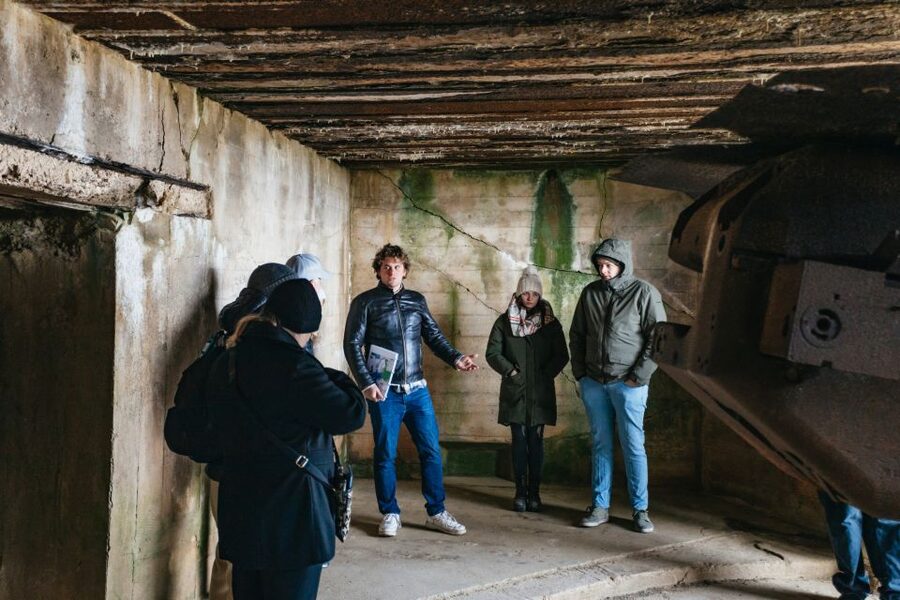
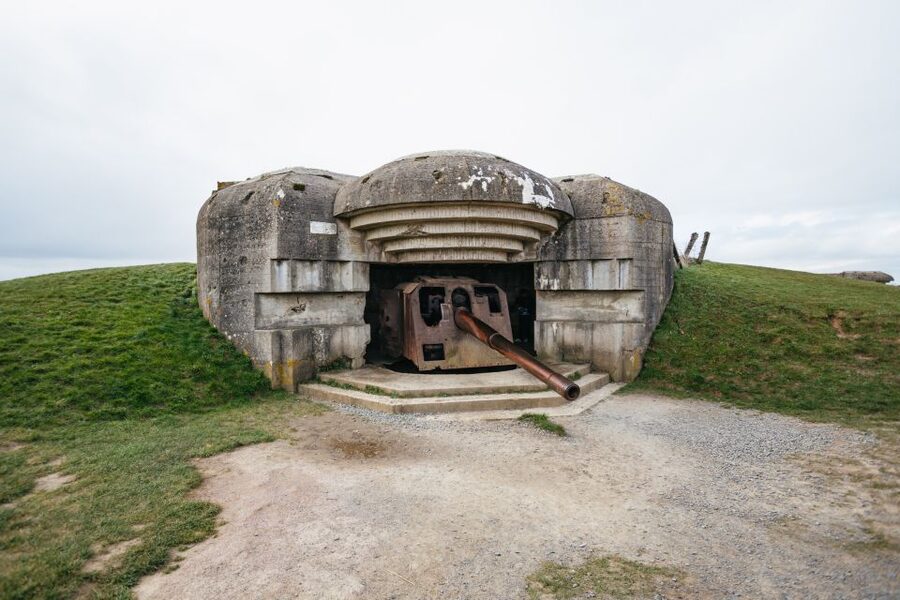
The first major stop is the German battery at Longues-sur-Mer, with about 30 minutes to explore. This is a useful opening because it puts you on the defensive side of the battle before you walk onto the beaches where Allied troops landed.
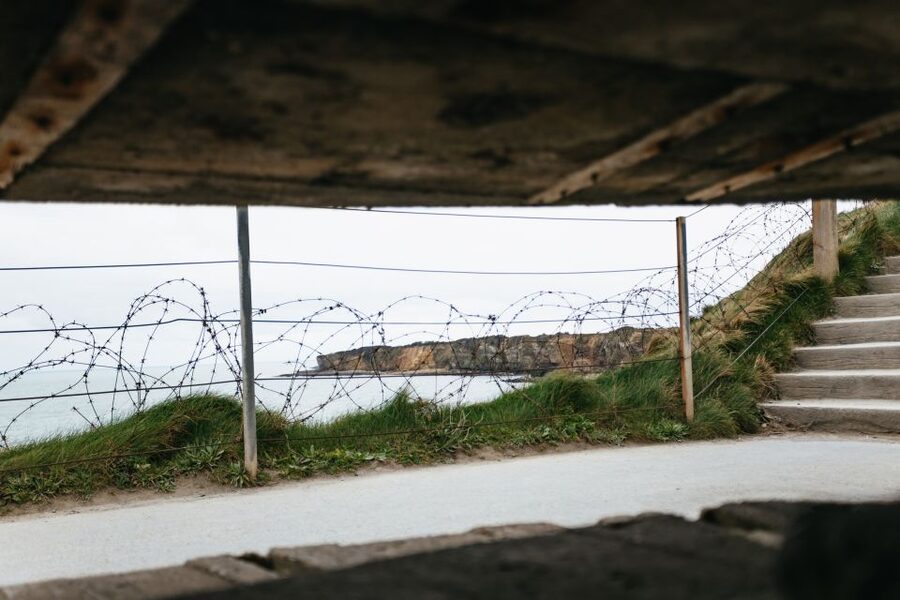
You see one of the concrete gun positions that had to be neutralized during the invasion. The bunkers help explain how much planning and danger went into the assault. They are not just ruins to photograph. They show the physical strength of the defenses and the problem facing soldiers approaching from the sea.
Thirty minutes is enough to see the site and listen to the guide, but not enough for a long, unhurried exploration. That is typical of this day. The tour aims to show you several important places rather than give you a full morning at one location.
Omaha Beach and the exposed approach
Omaha Beach is usually the moment when the campaign becomes easier to picture. You have about 30 minutes here, enough to walk, look toward the water, and hear how the terrain affected the landing.
The beach is broad and open. At low tide, it becomes even easier to see the distance soldiers had to cross before reaching safety. One guide rearranged the schedule to reach Omaha at the lowest tide, and that choice gave the group a stronger sense of the approach. If your guide can make a similar adjustment, it is worth appreciating.
The stop is brief, so you should not expect a long beach walk or time for every nearby memorial. Still, the physical setting does important work. Maps and diagrams can show military objectives, but standing on the sand lets you grasp the exposure, distance, and slope in a more direct way.
This is also a place where the guide’s storytelling matters most. The best guides connect the broad operation with individual soldiers, medics, and units. The tone is serious, but the experience need not feel like a lecture.
A few more Normandy half-days worth comparing
- Day Trip to Mont-Saint-Michel from Paris
★ 4.5 · 4,876 reviews - Mont Saint Michel Day Trip from Paris with English Speaking Guide
★ 4.5 · 2,750 reviews - From Paris: Giverny Day Trip with Audio Guide or Live Guide
★ 4.3 · 2,372 reviews - From Paris: Giverny, Monet’s House, & Gardens Half-Day Trip
★ 4.5 · 2,174 reviews
The Overlord Museum in 45 focused minutes
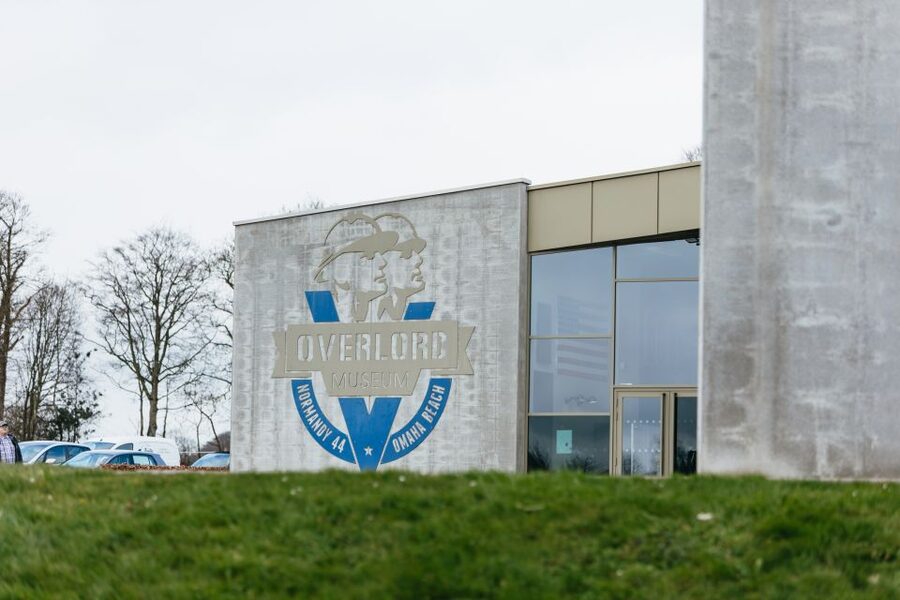
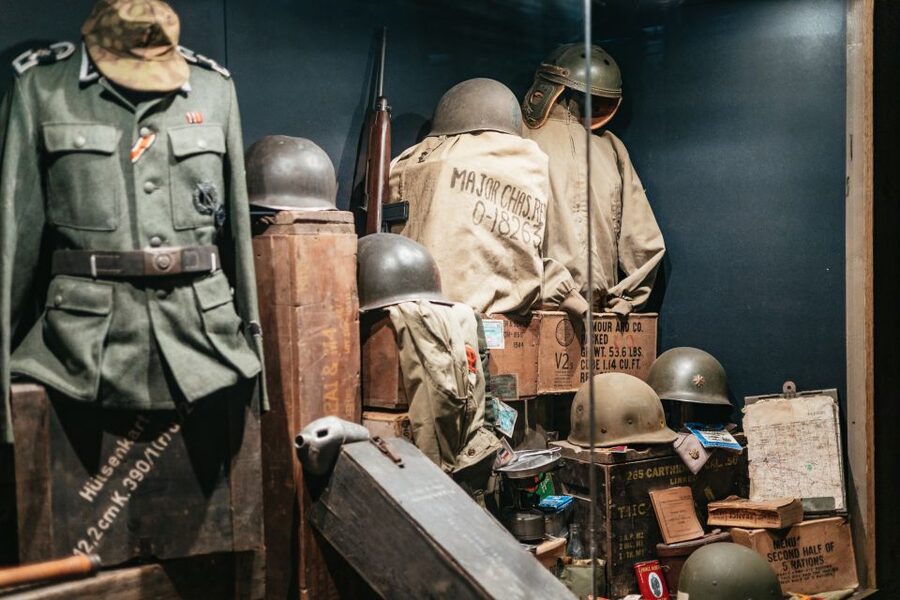
The Operation Overlord Museum is included in the price, and the planned visit lasts about 45 minutes. The museum helps fill in the gaps between the beach, the bunkers, and the cemetery.
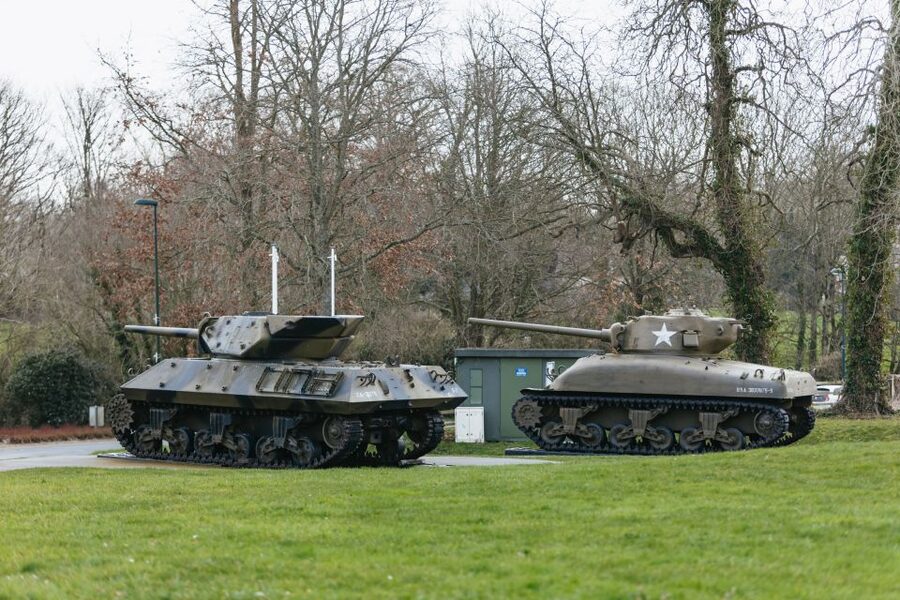
You can expect displays connected with the D-Day campaign, including military equipment, photographs, plans, and artifacts. The collection gives you a wider view of the operation, from preparation and logistics to the fighting that followed the landings.
Forty-five minutes is useful but limited. If you are a serious military-history enthusiast, you may want much longer with the exhibits. The advantage of this short visit is that it keeps the day moving and gives you context before Pointe du Hoc and the cemetery.
The museum also offers a break from the open coast. On a rainy or windy day, that matters. In the event of an exceptional closure, the American Cemetery Visitor Center may replace the museum, so the exact indoor portion can change.
Lunch and the short local tasting stop
Lunch lasts about 75 minutes and is not included in the $312 price. The meal is arranged at a local restaurant rather than as a simple snack between stops, and the timing gives you a proper pause in a long day.
Several guides have taken groups away from the most crowded tourist spots for lunch. That is a small but worthwhile detail. You get time to eat, use the restroom, and reset before the afternoon sites.
The itinerary also includes a 15-minute cider or wine tasting stop. Some people enjoy this because it connects the day to Normandy’s local food traditions. One stop has been at a family property with several generations of cider-making behind it, and the short visit can include time to buy cider or other local products.
Still, this is the least essential part of the tour. Some people found 15 minutes too brief and would rather spend that time at the museum or cemetery. If you are mainly coming for military history, treat the tasting as a pleasant extra, not a core reason to book.
Pointe du Hoc and the hard climb to the cliffs
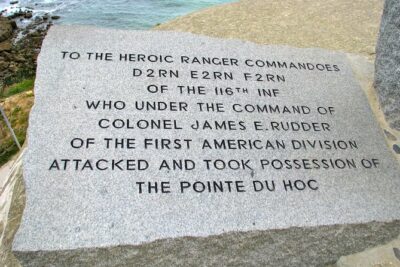
Pointe du Hoc receives about 45 minutes. This position is important because of the cliffs, German bunkers, and the Allied effort to capture artillery that threatened the landing beaches.
The site gives you another kind of battlefield view. Omaha shows the danger of crossing open sand. Pointe du Hoc shows the challenge of reaching defensive positions above the coast. The ground and concrete structures help you understand why the position mattered.
Expect some walking and uneven surfaces. The tour is not suitable for wheelchair users, and children under seven cannot join. Some guides are attentive to slower walkers and adjust their pace, but you should still be comfortable getting around on your own.
This stop benefits from the maps and photographs used by the guide. Without that context, bunkers and shell craters can be hard to interpret. With a good explanation, the site becomes a clear part of the larger plan rather than an isolated ruin.
The Normandy American Cemetery
The Normandy American Cemetery is the emotional center of the day. You have about 45 minutes to walk among more than 10,000 white crosses marking American service members who died in the campaign.
The setting is orderly and quiet, but the number of graves is difficult to absorb. After seeing the beach where men came ashore, the cemetery puts names and lives behind the military operation.
The timing can make this stop even more meaningful. Guides have arranged schedules so groups could see the flag lowering ceremony or hear Taps at about 4 p.m. That is not guaranteed on every departure, so ask your guide about the day’s timing, but it shows why schedule flexibility can matter.
Forty-five minutes is enough to walk through part of the cemetery and pause at the memorial areas. It is not enough to search for every name or read every marker. If the cemetery is your main reason for visiting Normandy, a two-day trip would allow more time. For a one-day excursion, this stop is still handled with the right degree of seriousness.
How the guide shapes the day
The guide is the most important variable in an experience like this. The route is fixed, but the quality of the explanation, pacing, and driving affects every stop.
Names that have drawn especially strong praise include Enzo, Oliver, Augustin, G, Will, Carlyle, Alex, Julien, Bruno, Antoine, and Jean-Baptiste. Their reported strengths vary, but the common thread is clear: you want a guide who can explain the military plan, connect it to the terrain, and leave you quiet when the place calls for quiet.
A few practical differences may occur. Some guides use sound recordings and photo sets in the van. Some add surprise stops when time allows. Some change the order to avoid crowds, reach Omaha at low tide, or arrive at the cemetery for a ceremony.
English is the tour language. One person found a guide difficult to understand, so accents and speaking styles can vary. That is a fair consideration, especially if you are not fully comfortable listening to English for a full day.
Is $312 a fair price?
At $312 per person, this is not a cheap side trip. The cost covers the English-speaking guide, minivan transport, and entry to the Overlord Museum, but not lunch, drinks, or tips.
I think the price can make sense if you want Normandy in one day and do not want to rent a car, manage several train and taxi connections, or build the route yourself. A group limited to eight people also gives you a better chance to ask questions and avoid long waits.
The value is weaker if you prefer to travel slowly. You will spend about five hours in transit and only 30 to 45 minutes at several major sites. A two-day Normandy stay would offer more time at the beaches, museums, and cemetery, but it would require more planning and extra hotel costs.
The high rating of 4.8 from 698 ratings reflects the tour’s strongest feature: the combination of a polished route and passionate guides. It does not remove the basic tradeoff. You see a lot, but you cannot see everything.
Who should book this experience?
You should consider this tour if you are staying in Paris, have one free day, and want a guided introduction to D-Day sites. It suits first-time visitors, families with children over seven, solo travelers, and anyone who wants transport and history handled in one package.
It is especially good for you if a small group matters. The minivan keeps the day more manageable, and guides can sometimes adjust the schedule for weather, tide, ceremonies, or the pace of the group.
Think twice if you need wheelchair access, dislike long drives, or want several hours at each museum. You should also avoid packing another major evening activity in Paris, since the return is around 8 p.m. and traffic can make the day longer.
Should you book this Normandy tour?
I would book it for a first visit to Normandy from Paris, especially if you have only one day. The route covers German defenses, Omaha Beach, Pointe du Hoc, the Overlord Museum, and the American Cemetery, while the small group keeps the experience personal.
Go in knowing that it is a long and emotionally heavy day. Bring practical clothing, budget for lunch, and view the cider stop as optional flavor rather than essential history. If you want a strong first look at the D-Day battlefields without driving yourself, this is a well-balanced choice. If you want time to study every site, stay in Normandy for at least one night instead.
FAQ
Where does the tour start?
The meeting point is 6 Avenue de Wagram in Paris. Your driver and guide arrive in a gray minivan about 10 minutes before departure.
How long does the tour last?
The experience lasts about 12 hours. The return to Paris is expected around 8 p.m., depending on traffic.
How many people are in the group?
The tour has a maximum of eight participants and uses a minivan.
What language is the tour conducted in?
The live tour guide speaks English.
Which D-Day sites are included?
The route includes Longues-sur-Mer battery, Omaha Beach, the Operation Overlord Museum, Pointe du Hoc, and the Normandy American Cemetery.
Is lunch included?
No. Food is not included in the tour price. The schedule includes about 75 minutes for lunch.
Is the Overlord Museum entry included?
Yes. Entry to the Operation Overlord Museum is included.
Is the cider or wine tasting included?
The itinerary includes a short 15-minute tasting stop. The supplied details do not specify separate tasting charges, so check the booking conditions if this matters to you.
Can children or wheelchair users join?
Children under seven are not permitted, and the tour is not suitable for wheelchair users.
Just added around Normandy
- From Le Havre: D-Day Beaches Shore Trip with Packed Lunch★ 4.9 · 101 reviews
- Bike tour from Vernon to Giverny with local guide★ 4.7 · 47 reviews
- Bayeux: Normandy D-Day Landing Beaches Full-Day Guided Tour★ 4.8 · 158 reviews
- Bay of Mont Saint-Michel : Quicksands And Discovery★ 4.9 · 168 reviews
- Bayeux: 2-hour tour of the D-Day beaches, by vintage sidecar★ 4.9 · 64 reviews
- Bayeux: Band Of Brothers Full-Day Tour★ 4.9 · 53 reviews
- From Paris: 2-Day Normandy & Brittany Tour★ 4.5 · 93 reviews
- Small-Group Giverny and Van Gogh’s Room in Auvers from Paris★ 4.9 · 168 reviews
D-Day Beaches Tours, compared.

Normandy D-Day Sites & Cemetery Day Trip from Paris with Lunch
Read our review →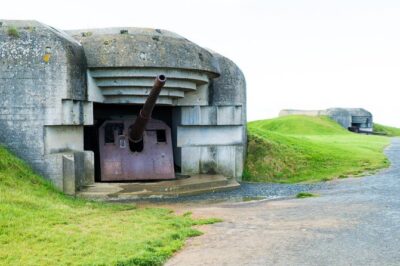
Normandy D-Day Small-Group Day Trip with Omaha Beach, Cemetery & Cider Tasting
Read our review →
Normandy D-Day Beaches and American Cemetery Day Trip from Paris
Read our review →
Normandy American D-Day Beaches Full Day Tour from Bayeux
Read our review →
Normandy American D-Day Experience – Group tour from Bayeux
Read our review →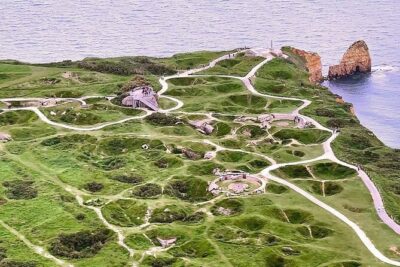
Omaha Beach D-Day Experience – Afternoon group tour from Bayeux
Read our review →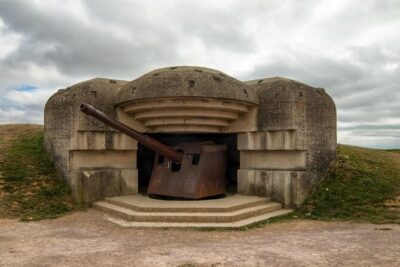
Browse the lists this tour appears in