
Reviewed · DORDOGNE TOURS
Dordogne Day Tour : Prehistory and The Art of the Caves from Sarlat
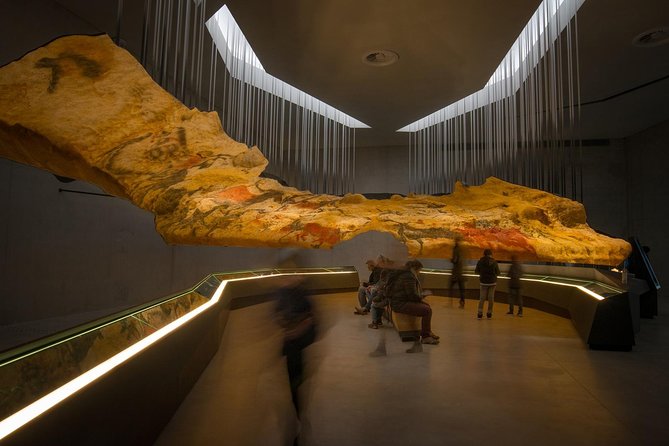
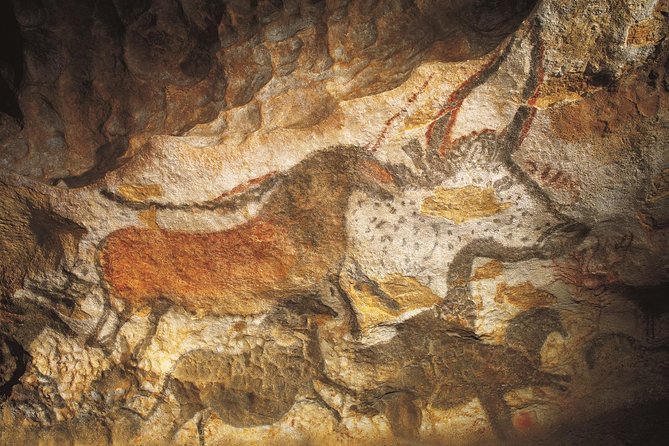
The most powerful part of this day is the contrast between real prehistoric sites and careful modern reconstructions. At the National Museum of Prehistory, you get the timeline and tools first. Later, at Lascaux IV, painted animals and mysterious signs bring that old story to life. The cliff dwellings at La Roque Saint-Christophe add another layer, showing how people adapted to the Dordogne’s limestone walls.
I like the small group, capped at eight, and the guides who make the subject approachable. Benoit, Martin, Anne, Marion, Florence, and others have been praised for their clear explanations and strong local knowledge. I also like that the entrance fees are included, since cave tickets and timed visits can be awkward to arrange alone.
The main drawback is that the route information needs checking before you pay. The scheduled stops name La Roque Saint-Christophe, while several past descriptions refer to Rouffignac Cave instead. Lascaux tours in English are limited, and the cave visit may be in French, with your guide explaining the details before and after.
Key points to know before booking
- Lascaux IV is a full-scale replica: You see the famous paintings in a protected reconstruction, not the fragile original cave.
- The museum comes first: The National Museum of Prehistory helps you understand the tools, human species, and art you encounter later.
- Small groups matter: With no more than eight people, you can hear the guide and ask questions during the drive and visits.
- The day begins and ends in Sarlat: Meet at Place Pasteur at 9 a.m. Hotel pickup and drop-off are not included.
- The cave is cool: Expect about 13°C, or 56°F, and bring a warm layer.
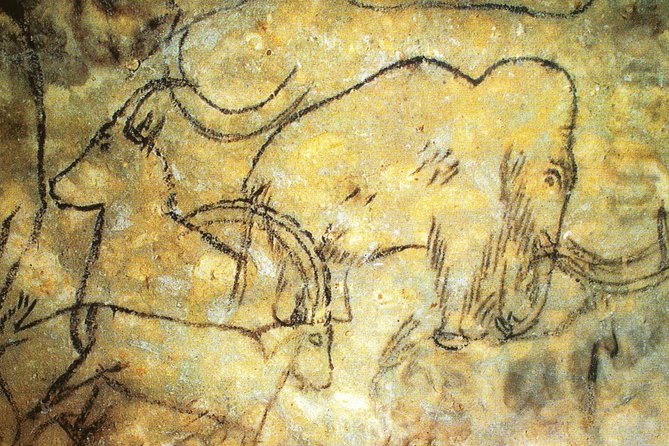
- Confirm the cave stop: The supplied route lists La Roque Saint-Christophe, but some tour descriptions mention Rouffignac Cave.
Why this Dordogne prehistory day works so well
This is not just a ride to Lascaux, a quick look at a replica, and a return to Sarlat. The day is arranged as a story.
You begin with the people, tools, and time periods at the National Museum of Prehistory. You then see how humans used the region’s limestone cliffs at La Roque Saint-Christophe. Finally, Lascaux IV introduces the art itself. That order gives you useful context instead of asking you to stare at painted animals without knowing how old they are or how archaeologists interpret them.
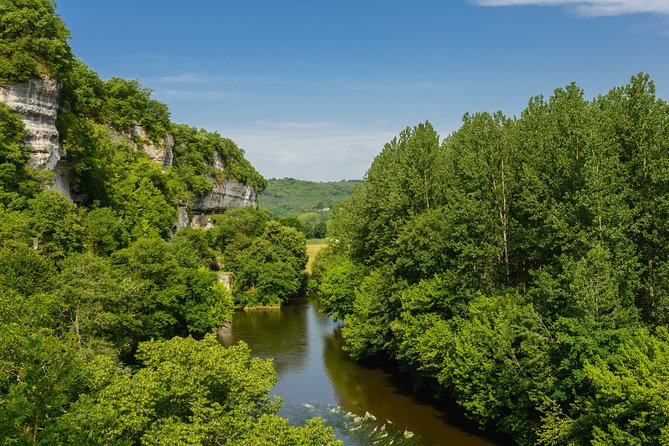
The Dordogne is one of France’s strongest places for prehistoric sites. The caves and shelters are concentrated around the Vézère Valley, so a guided day saves you from piecing together separate reservations and driving routes. It also gives you someone to explain what you are seeing between stops.
The experience costs about $199.55 per person. That is not a cheap day out, but the fee covers transport during the tour, an English-speaking driver-guide, live commentary, and admission to the museum, Lascaux IV, and the listed cliff site. For a first visit, the price can make sense because the timed cave entry and regional driving are handled for you.
A few more Dordogne half-days worth comparing
- Lascaux IV: Full Replica Cave Experience Ticket
★ 4.5 · 334 reviews - Sarlat la Canéda: The Dordogne valley by canoe
★ 4.5 · 297 reviews - From Vitrac: Dordogne River Canoe Rental
★ 4.8 · 162 reviews
The National Museum of Prehistory in Les Eyzies
Allow about two hours here. The museum is a serious one, with a large collection of tools, bones, and objects connected to early human life. On your own, it could feel like too much information at once. A good guide helps you focus on the displays that explain the broad story.
Guides such as Benoit have been praised for pointing out key tools and explaining the sequence of different Homo species. That matters because prehistoric dates can blur together quickly. You want help separating the major stages rather than leaving with a pile of disconnected facts.
The museum also sets up the art you will see later. You begin to understand the materials people used, how they lived around the cliffs, and why the Dordogne became such an important place for archaeological study.
I would pay close attention to the guide’s introduction here. Ask questions early. This is the best part of the day for sorting out basic terms and timelines before entering the caves.
Two hours is enough for a guided overview, but not enough to inspect every display at leisure. If you love museums and archaeology, you may wish you had extra time. The tradeoff is that the tour keeps moving and still fits in the other major stops.
La Roque Saint-Christophe and life against the cliff
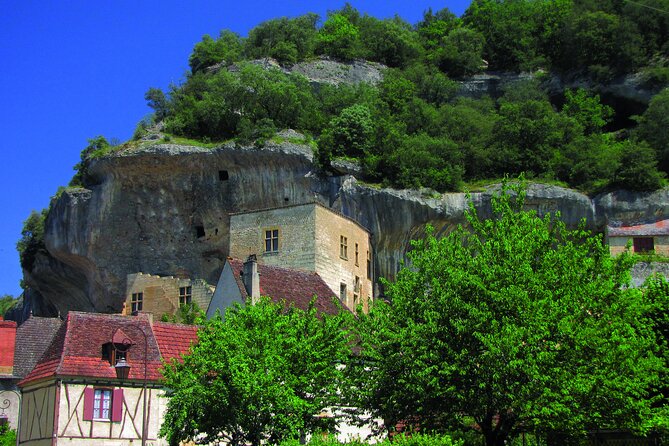
The listed itinerary gives about two hours to La Roque Saint-Christophe, a dramatic limestone cliff used by people since Paleolithic times. This is different from a painted cave. The interest here lies in the way people occupied and altered the rock face over long periods.
You can expect explanations about prehistoric shelters and later engineering adapted to the cliff. The site helps you picture the practical side of early settlement: shelter, access, storage, and protection. It is a useful counterpoint to Lascaux, where the focus is ceremonial or artistic.
The cliff also gives the day a strong sense of place. You are not looking only at objects behind glass. You are seeing the rock formations that shaped where people lived and moved through the valley.
Be ready for stairs. The tour information specifically warns that the day includes climbing and is not suitable for people with mobility problems. Children must be accompanied by an adult, and children under four are not allowed.
One important note: the supplied route names La Roque Saint-Christophe, but several detailed accounts of this tour describe a visit to Grotte de Rouffignac instead. Rouffignac is known for a small train ride through the cave and prehistoric drawings, and it appears to have been a highlight on some departures. Since these are different places, ask Ophorus which cave itinerary applies to your date.
The lunch stop around Montignac
The schedule allows about two hours for lunch in Montignac. Your meal is not included, so budget separately and ask the guide for a recommendation.
This longer pause is useful on a nine-hour day. You are out from 9 a.m. until roughly late afternoon or early evening, and the museum and cave visits require concentration. A relaxed meal gives you a chance to sit down, ask the guide about the region, and reset before Lascaux.
Past guide-led days have included suggestions in nearby villages such as Saint-Léon-sur-Vézère. If your timing allows an extra village stop, you may see a quieter side of the Vézère Valley, away from the main cave attractions. Do not assume that every departure includes the same detour, since the order and timing can change around Lascaux reservations.
The lunch break is also where a small group pays off. A guide like Anne or Martin can point you toward local restaurants, gourmet shops, and places to visit later in Sarlat. The meal itself remains your responsibility.
Same trip, a completely different kind of day:
- From Sarlat: Beynac & Domme Tour & Dordogne Boat Ride
★ 4.6 · 137 reviews - From Sarlat-la-Canéda: Lascaux IV and Cave Art Full-Day Tour
★ 4.9 · 122 reviews - Au Cœur du Château – VSOP D’USSÉ & XO BARON OTARD
★ 4.5 · 108 reviews - Sturgeon Fish-Farm Visit and Caviar Discovery Tasting in Neuvic
★ 4.5 · 81 reviews
Lascaux IV and the painted cave experience
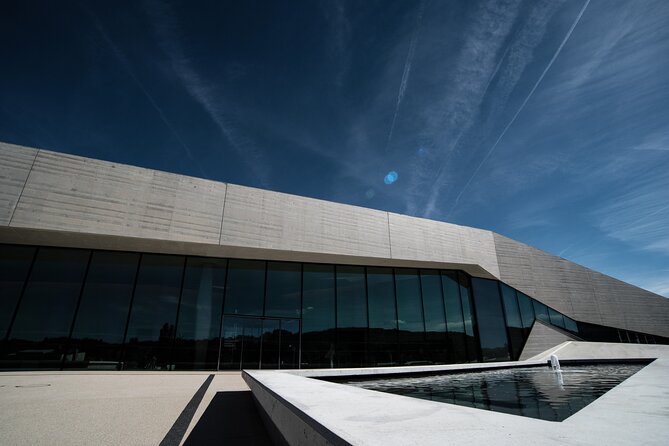
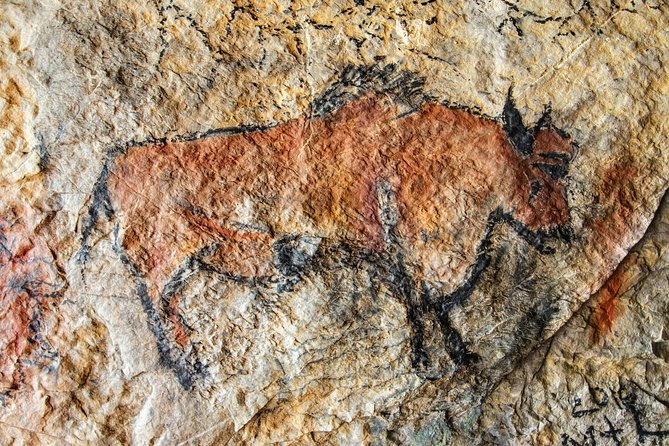
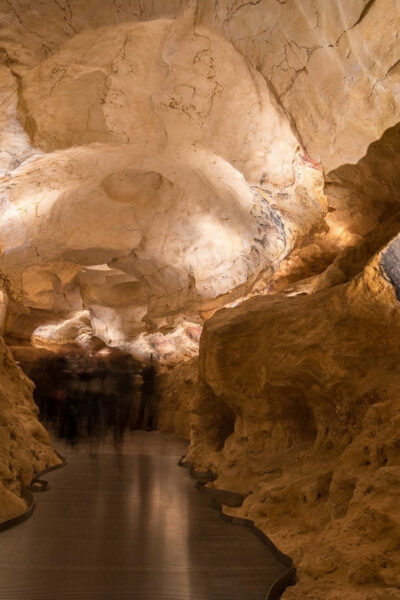
Lascaux IV is the grand finale, with about three hours allocated to the complex. It presents a complete replica of the famous decorated cave and tells the story of its discovery. The reconstruction lets you see the paintings without putting the original art at risk.
The replica is one of the strongest reasons to choose this tour. You can stand close enough to study the shapes, animals, and arrangement of the paintings, while the surrounding museum explains techniques and theories about the images.
Do not expect a quiet, private cave visit. Lascaux IV uses timed admission, and the complex can feel crowded. One practical issue is language. English tours inside the cave are very limited, and simultaneous translation is not allowed. Many visits take place in French.
Your English-speaking guide should explain the cave before and after the official visit. That briefing is especially important. Listen closely before entering, then focus on the guide’s reference points as you move through the replica. Some English-speaking visitors have found the cave guide’s accent difficult or the commentary hard to hear in a large group.
The timing can also feel tight. Lascaux is often the final stop, and one past account found that more time would have helped. The itinerary allocates three hours, but the exact order may change according to the reserved entry slot. Ask your guide how much free time you will have at the museum complex.
Even with those limitations, Lascaux IV is impressive. It gives you a strong visual sense of the original cave’s art without pretending that a reproduction is the same as entering the authentic site. That distinction is worth keeping clear.
The guide can make or break the day
The tour includes both a driver-guide and professional commentary, so you are not simply being dropped at each attraction. The strongest guides add meaning during the drives, point out cliff settlements, explain local history, and help you avoid getting lost in the museum.
Benoit has been praised for his enthusiasm for prehistoric art, clear explanations, and ability to answer questions. Martin has been described as passionate and good at managing the day’s timing. Anne has offered restaurant advice and a careful museum introduction. Marion, Florence, Miriam, Emilion, and others have also led highly rated departures.
Guide quality can vary, as it does on any shared tour. One account described a difficult meeting-point problem and limited assistance after a late arrival. The practical lesson is simple: arrive early at Place Pasteur and identify the vehicle and guide before the 9 a.m. departure.
The meeting point is in Sarlat-la-Canéda, even though the location field may refer to Bergerac. There is no hotel pickup or drop-off. If you are staying in Bergerac, you must arrange your own transport to Sarlat and back, and the late finish may complicate public transport.
Group size, comfort, and physical demands
The maximum group size is eight. That is small enough for the guide to hear your questions and adjust explanations, while still keeping the price below that of a private tour.
The vehicle is described in the supplied information as comfortable. Most people can take part, but this is an active day with stairs, walking, and several hours of attention. It is not a good fit if you have significant mobility issues.
The caves are cold at about 13°C. Bring a sweater or light jacket even if the Dordogne is warm above ground. Wear practical shoes, since the route includes cave and cliff areas rather than only smooth museum floors.
Pets are not allowed. Children are welcome if accompanied by an adult, but children under four cannot join.
Because the day lasts around nine hours, it suits older children, adults, and anyone with a real interest in archaeology, art, or regional history. It may be too long for a young child who cannot manage museum time, stairs, and a timed cave visit.
Is the $199.55 price fair?
I would judge the value by what you would otherwise need to arrange. The price includes the main admissions, a guide, transport during the day, and the planning needed to link three major sites. You also avoid the risk of missing a timed Lascaux entry.
The price is less attractive if you already have a rental car, speak French well, and are comfortable booking each site yourself. Independent visitors may prefer to spend longer at one museum or choose their own lunch and cave schedule.
For most first-time visitors without a car, the tour earns its price through convenience and interpretation. The museum alone can be overwhelming, and the cave sites make more sense when someone explains the connection between the objects, shelters, and paintings.
The best value comes when your guide is active during the museum visit and the drives. That is where the small-group format earns its keep. You are paying for the story around the tickets, not just admission.
Booking details that matter
Confirmation is provided when you book, and free cancellation is available until 24 hours before the start time. Changes or cancellations inside that 24-hour window are not accepted for a refund.
The experience requires a minimum number of participants. If that minimum is not met, you should be offered another date or experience, or a full refund.
Book early if your dates are fixed. The tour is often reserved well ahead, with an average booking lead time of about 86 days. That is particularly sensible during the busy Dordogne season, when Lascaux entry slots control the day’s order.
Before booking, ask two direct questions:
- Is the scheduled cave stop La Roque Saint-Christophe or Rouffignac?
- Will the Lascaux visit include an English-language cave presentation, or only an English briefing before and after?
Those answers will help you match the tour to your expectations.
Who should book this Sarlat day trip?
Book it if you want a guided introduction to Dordogne prehistory and prefer not to manage several reservations. It is especially useful for first-time visitors, families with older children, and anyone who wants the museum explained rather than browsed alone.
It also suits you if Lascaux is a main reason for visiting southwestern France. The museum, cliff site, and painted cave create a much fuller day than Lascaux by itself.
Think twice if you need an easy, flat route, dislike timed visits, or want a slow museum day. You should also reconsider if you are staying in Bergerac and have not planned the early trip to Sarlat and the late return.
My final advice is to book, but confirm the exact cave stop and language arrangements first. If the route matches your interests, this is a strong way to see the Dordogne’s prehistoric sites in one well-organized day. Just arrive early, bring a warm layer, and treat the guide’s explanations as an essential part of the experience.
FAQ
Where does the tour start?
It starts at Place Pasteur in Sarlat-la-Canéda at 9 a.m.
Where does the tour end?
The tour ends back at the meeting point in Sarlat-la-Canéda.
Is hotel pickup included?
No. Hotel pickup and drop-off are not included.
How long does the tour last?
The tour lasts about nine hours.
What admissions are included?
Admission to the National Museum of Prehistory, Lascaux IV, and La Roque Saint-Christophe is included in the stated tour information.
Is lunch included?
No. Lunch is not included. You choose and pay for your meal during the lunch break.
What language is the tour offered in?
The tour is offered in English, with an English-speaking driver-guide and live commentary. English presentations inside Lascaux IV are limited, and some cave visits may be conducted in French.
How large is the group?
The group has a maximum of eight travelers.
Are children allowed?
Children may participate when accompanied by an adult. Children under four years old are not allowed.
Is the tour suitable for someone with mobility problems?
The day includes climbing stairs, so it is not recommended for people with mobility issues.
What should I wear for the caves?
The caves are about 13°C, or 56°F. Bring warm clothing.
Can I cancel for a refund?
You can cancel at least 24 hours before the start time for a full refund. Cancellations or changes made less than 24 hours before the start time are not accepted.
Just added around Dordogne
- Sarlat Gourmet Tour & Market Visit with Tastings★ 4.6 · 57 reviews
- Dordogne Villages Half Day Tour from Sarlat★ 4.5 · 63 reviews
- The greedy Rando quad of Nico★ 5.0 · 45 reviews
- Sarlat Gourmet Tour and Market Visit★ 5.0 · 49 reviews
- Discover Braastad Cognac★ 5.0 · 52 reviews
- From Sarlat: Beynac & Domme Tour & Dordogne Boat Ride★ 4.6 · 137 reviews
- From Sarlat-la-Canéda: Lascaux IV and Cave Art Full-Day Tour★ 4.9 · 122 reviews
- Lascaux IV: Full Replica Cave Experience Ticket★ 4.5 · 334 reviews
Dordogne Tours, compared.

Lascaux IV: Full Replica Cave Experience Ticket
Read our review →
la-Canéda: Lascaux IV and Cave Art Full-Day Tour
Read our review →
Au Cœur du Château – VSOP D’USSÉ & XO BARON OTARD
Read our review →
Sturgeon Fish-Farm Visit and Caviar Discovery Tasting in Neuvic
Read our review →
Browse the lists this tour appears in