Reviewed · FULL-DAY
From Avignon: Provence Highlights Full-Day Tour
The big appeal here is range. In one long day, you move from a cool natural spring and ochre cliffs to Van Gogh country, a medieval hill village, and a Roman aqueduct. Provence’s greatest hits come quickly, but they are connected by a guide rather than left for you to piece together by car or bus.
I like the small group limit of eight and the included entry to Pont du Gard. I also like the practical route: Roussillon gets the lunch break, Saint Rémy comes early in the afternoon, and the day ends with one of France’s most impressive Roman monuments. The main drawback is also clear: nine hours is a full day, and several stops mean walking on uneven or sloping ground.
Key points at a glance
- Five very different Provençal sights in one day: You see a spring, hill villages, ochre country, Van Gogh’s Saint Rémy, and a Roman aqueduct.
- A maximum of eight people: The small minivan format should feel more personal than a large coach and makes a long route easier to manage.
- Roussillon is the lunch stop: Plan to choose and pay for your own meal there, then leave time for its red cliffs and ochre-colored streets.
- Anne has earned special praise: If she is your guide, expect an enthusiastic presence, humor, and strong local insight.
- Pont du Gard admission is included: You do not need to buy a separate entry ticket for the UNESCO-listed aqueduct.
- Seasonal and Sunday extras: Lavender fields may appear during blossom season, while Sunday morning departures can include the market at L’Isle-sur-la-Sorgue.
Why this route works so well in one day
This is not a slow village holiday. It is a broad survey of Provence, built for you if your time in Avignon is limited and you want to see more than one town without arranging several train and bus connections.
The route covers the Luberon, the Alpilles area around Saint Rémy and Les Baux, and the Pont du Gard. Those places have different characters. Fontaine de Vaucluse is about water and shade. Gordes is about stone houses and a dramatic perch. Roussillon brings color and former ochre workings. Saint Rémy adds art and local biography. Les Baux supplies medieval drama. Pont du Gard finishes with Roman engineering on a grand scale.
I like that mix because the day does not ask you to look at six similar villages. You keep changing subjects. The tradeoff is pace. You will get an introduction to each place, not a full day in any one of them.
Transport is by air-conditioned minivan, with bottled water provided. That matters in summer, when a long day in Provence can become tiring quickly. The small group size, capped at eight, should also make the vehicle and guide interaction more comfortable than a large bus tour.
The meeting point is the Tourism Office, and hotel pickup and drop-off are not included. Check the exact starting time before booking, since availability controls the departure schedule.
A few more Avignon half-days worth comparing
- Provence Highlights Full-Day Tour from Avignon
★ 5.0 · 499 reviews - Chateauneuf du Pape wine tour
★ 5.0 · 484 reviews - From Avignon: Châteauneuf du Pape Half-Day Wine Tour
★ 4.7 · 365 reviews
Fontaine de Vaucluse and the source of the Sorgue
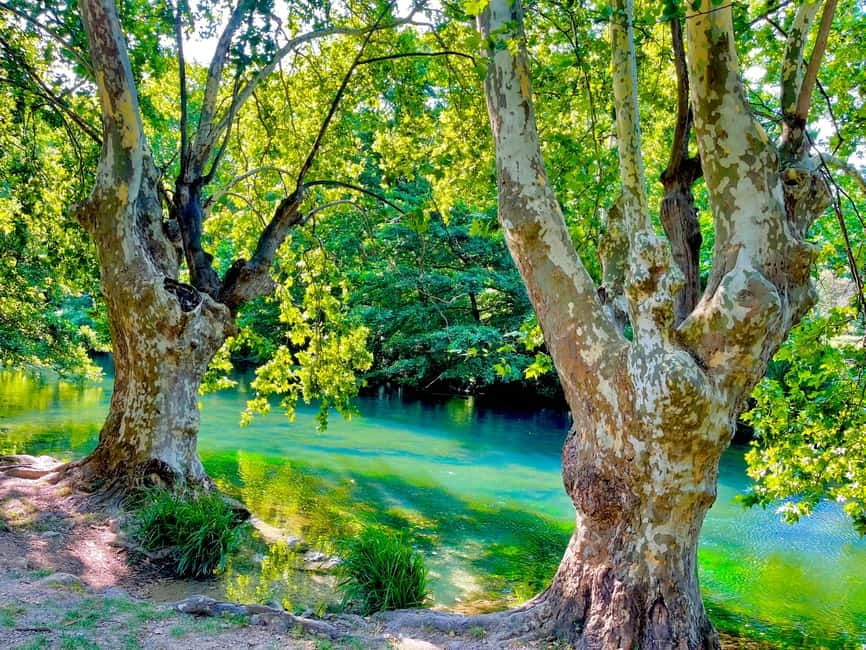
The first stop is Fontaine de Vaucluse, known here as France’s biggest spring. It is a good opening because the setting changes your pace at once. Instead of beginning among traffic and stone walls, you start beside pure water and leafy surroundings.
The spring has long drawn attention because water rises from deep underground before feeding the Sorgue River. You should expect a natural setting rather than a formal museum visit. The value is in seeing the water source and understanding why this small village has been important for so long.
The walk may include sloping or uneven ground, so comfortable shoes are sensible from the start. You will want shoes that work for both the spring and the hill villages later. The minivan gets you between places, but the sightseeing itself is not a sit-down experience.
This stop also helps set up the rest of the day. Provence is often reduced to purple lavender, but this first visit shows a cooler, greener side of the region. It is a useful contrast before the dry limestone villages of the Luberon.
Gordes and the high villages of the Luberon
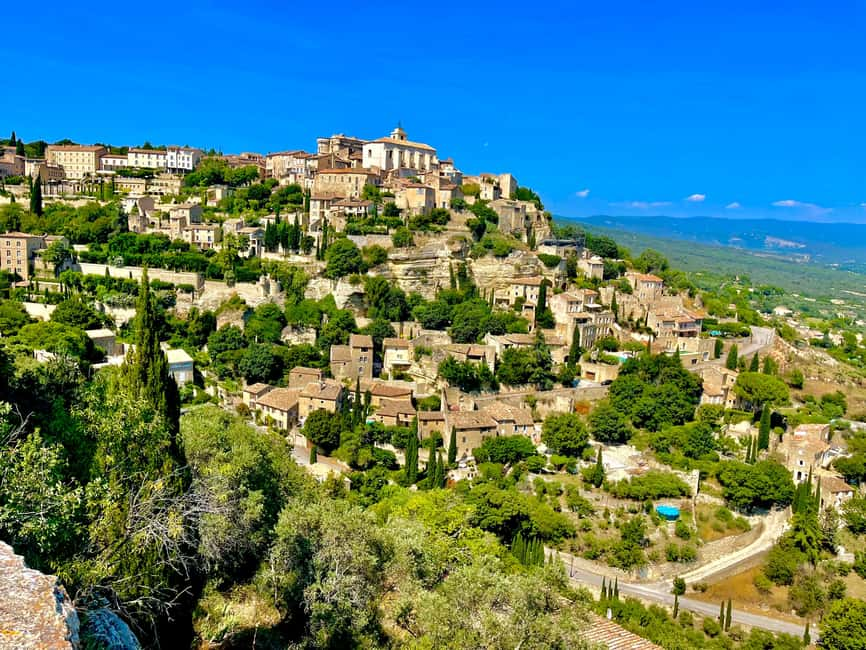
From Fontaine de Vaucluse, the route moves into the Luberon Regional Natural Park, created in the 1970s. The park is known for limestone villages perched above the surrounding countryside, and Gordes is the headline stop.
Gordes is built on a steep hillside, with pale stone houses rising toward the top. From a distance, the village has the compact, almost stacked appearance that makes Provençal hill towns so appealing. Once inside, the reward comes from lanes, stonework, and views rather than from a long list of major sights.
I would treat Gordes as a place for a short orientation walk and time to look outward. The slope is part of its charm, but it also means you should not expect flat, effortless wandering. If you have limited mobility, this is one reason the tour is not suitable for wheelchair users.
The Luberon section is valuable because the guide can give the villages a shared setting. You are not just visiting pretty buildings. You are seeing how communities were built on high ground, using local limestone, with the terrain shaping their appearance and access.
The schedule does not promise a long independent stay in Gordes. If your ideal day means lingering over coffee, browsing every lane, or visiting several small museums, a private trip or overnight stay would suit you better. If you want a strong first look, the stop does its job.
Roussillon’s red cliffs and the lunch break
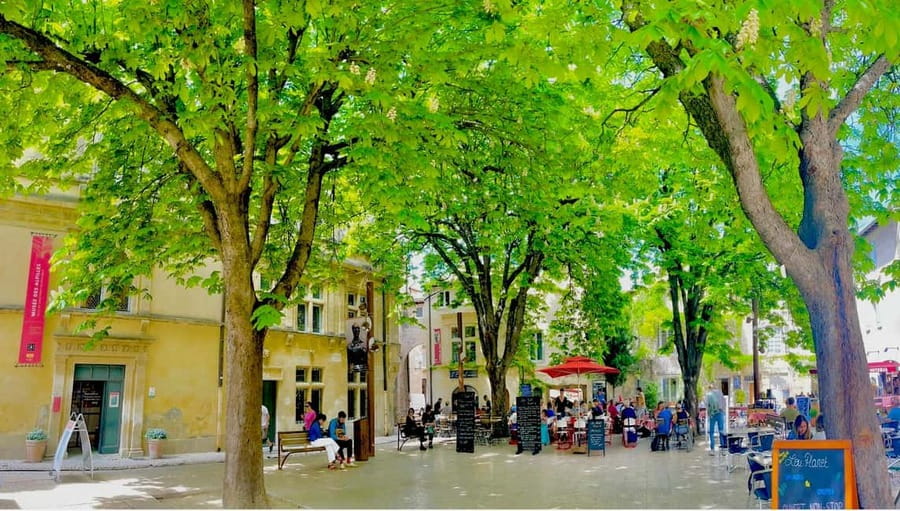
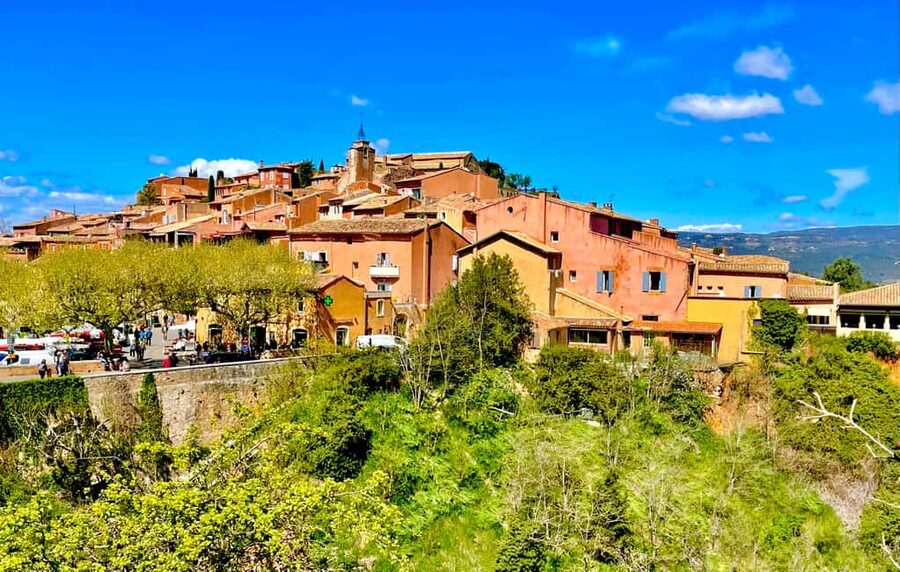
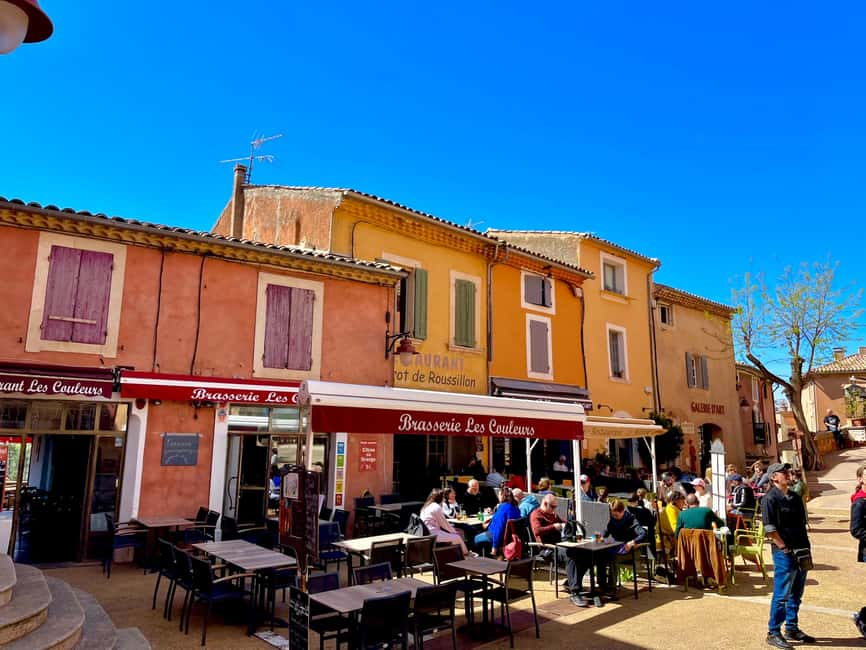
Roussillon brings the strongest color of the day. The village is known for its red cliffs and for the ochre industry that supported the area for centuries. Ochre gives the soil and buildings shades of red, orange, and yellow, a welcome change from Gordes’s pale limestone.
The tour places the lunch break in Roussillon. That is practical, since you can combine eating with time in one of the most visually distinctive villages on the route. Lunch is not listed as included, so budget for your own meal.
I would avoid treating lunch as a rushed fuel stop. Roussillon’s appeal is in the color of the rock, the streets, and the way the village fits its surroundings. You may want to use part of the break for a short walk and photographs, then eat without watching the clock every minute.
At the same time, remember that this is one stop in a packed schedule. You may need to choose between a leisurely meal and more time exploring. The guide can help you understand how much time is available, but the day cannot provide unlimited freedom at every location.
The ochre story adds useful depth to the visit. You are not simply seeing a red village. You are seeing a place shaped by a local mineral resource and by the work built around it. That sort of context is one of the best reasons to take a guided route instead of only driving from viewpoint to viewpoint.
Same trip, a completely different kind of day:
- From Avignon: Full-Day Best of Provence Tour
★ 4.7 · 338 reviews - From Avignon: Half-Day Great Vineyards Tour
★ 4.7 · 321 reviews - Provence Cru Wine Small-Group Half-Day Tour from Avignon
★ 4.5 · 290 reviews - Châteauneuf du Pape Wine Day Tasting Tour including Lunch from Avignon
★ 5.0 · 287 reviews
Saint Rémy, Nostradamus, and Van Gogh
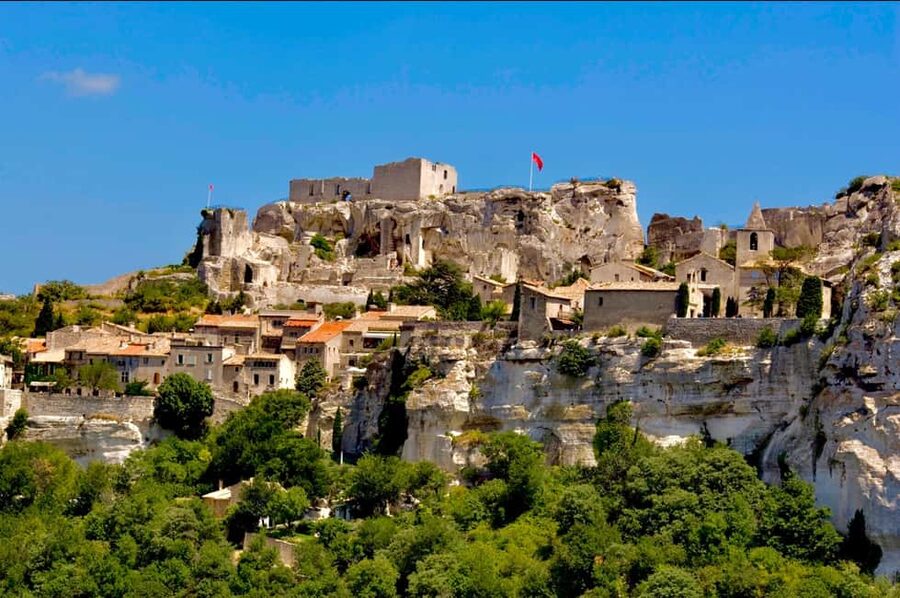
Early afternoon brings Saint Rémy de Provence. The town is linked with Nostradamus, who was born there, and with Vincent van Gogh, who created some of his best-known paintings in the area.
This stop changes the focus again. After the natural spring and the Luberon villages, Saint Rémy gives the day a cultural and artistic thread. Your guide can connect the town to two very different figures, one associated with prophecy and medicine, the other with painting.
The information provided does not promise a museum entry or a dedicated Van Gogh site visit, so think of Saint Rémy as a town visit with historical and artistic context rather than a specialist museum tour. You will have a chance to see the place associated with these stories, but the exact balance between walking, commentary, and free time depends on the day’s timing.
Saint Rémy can also be a useful breather after Roussillon. Its identity is less about one dramatic cliff or monument and more about the people and events connected with the town. I like having that change of mood in the middle of the tour.
If Van Gogh is your main reason for booking, check what the guide plans to cover before you go. The route gives you Saint Rémy, but the supplied details do not promise an art-focused lecture or a specific museum visit.
Les Baux de Provence and its medieval setting
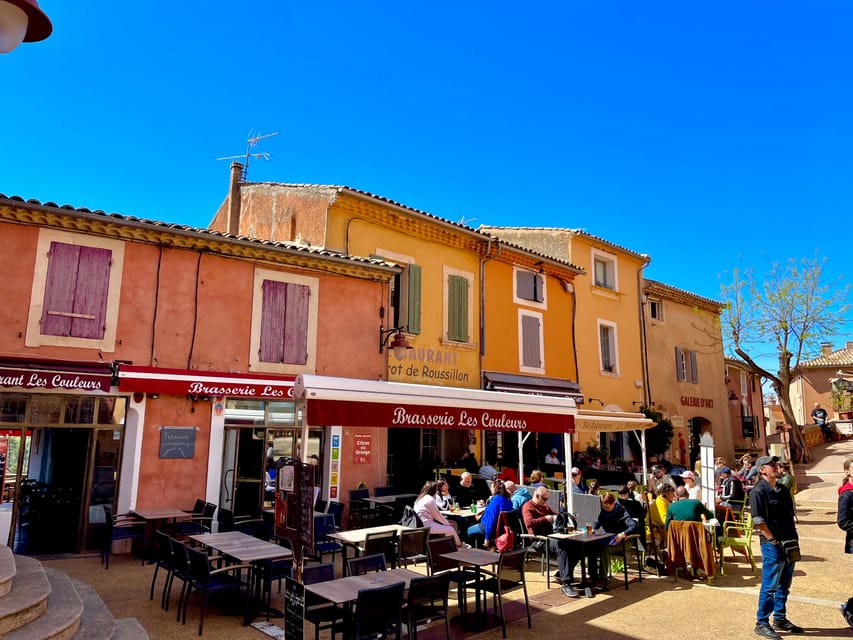
Nearby Les Baux de Provence brings you back to a hilltop village, this time with a strong medieval character. The settlement is filled with history and sits in a commanding position above the surrounding area.
Les Baux is a place where sturdy stone buildings, steep lanes, and an exposed hill setting work together. The village can feel more dramatic than a regular town because its position is so closely tied to its past. You are likely to spend time walking uphill and over uneven surfaces, so the comfortable-shoe advice matters even more here.
The tour does not state that entry to a particular castle or attraction at Les Baux is included. The included admission specifically applies to Pont du Gard. If you want to enter a separate site at Les Baux, ask about the plan and any extra charge before setting out.
I like the placement of Les Baux after Saint Rémy. You first hear about the region’s people and art, then see a village that feels shaped by defense, stone, and height. The two stops are close enough to make sense together, but they offer different experiences.
The limitation is time. Les Baux deserves more than a quick photograph if you want to explore every lane and historical corner. This tour is designed to introduce it as part of a much wider day.
Pont du Gard, the grand final stop
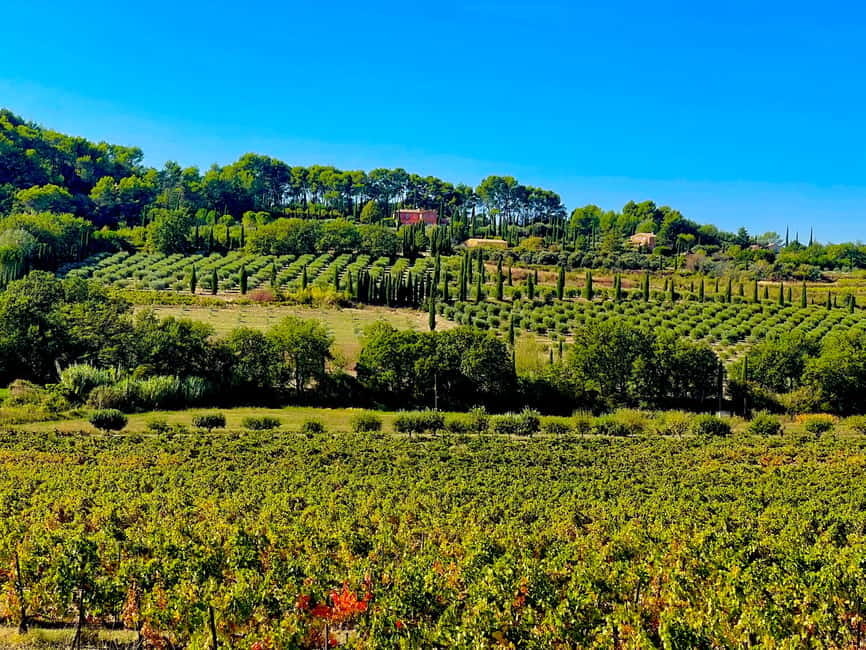
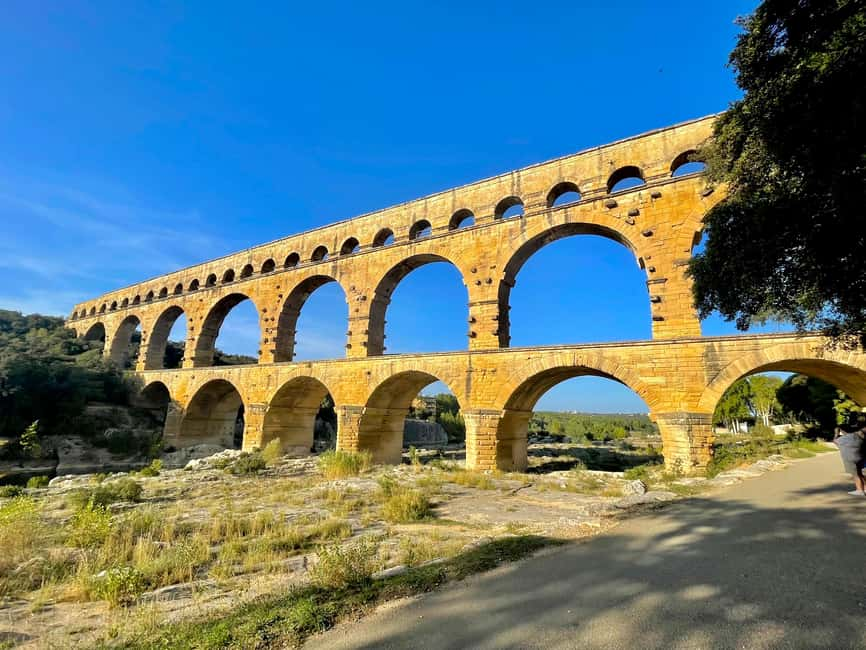
The final stop is Pont du Gard, the first-century Roman aqueduct and a UNESCO site. Ending here is a smart choice. After a day of villages and regional stories, the aqueduct gives you a clear, monumental finish.
Pont du Gard was built to carry water across the Gardon valley as part of a Roman water system. Even without adding extra claims about the exact route of the ancient aqueduct, the scale of the surviving bridge is enough to explain its reputation. Its arches make the Roman engineering easy to read from a distance.
Entry to Pont du Gard is included in the tour price, which improves the value. You are not arriving at the day’s main monument only to discover another admission charge. The guide can provide context, while you get time to take in the structure itself.
This is also the point where the long route pays off. A village tour alone would give you charming streets and viewpoints. Pont du Gard adds a major historic work that feels different in size, purpose, and setting.
Do not assume that included entry means an unlimited visit. The overall day still has to return to Avignon, and the exact time at the site depends on the schedule. If Pont du Gard is your top priority, ask how long the stop is expected to last.
Seasonal details worth checking before you book
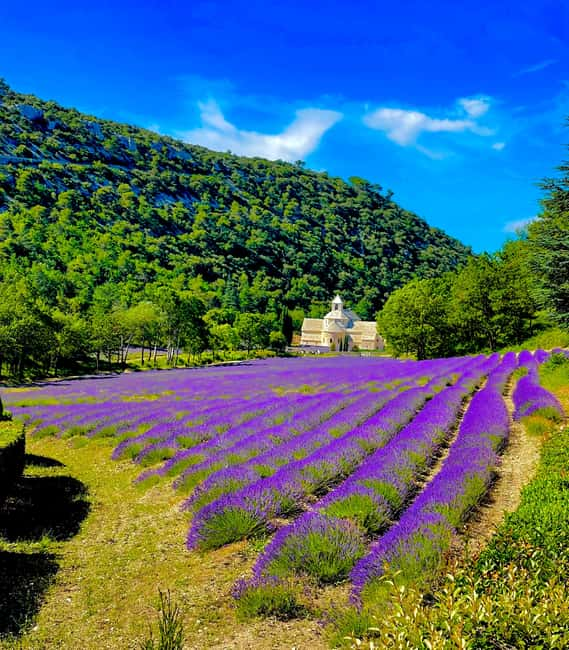
The route includes two useful seasonal possibilities. During lavender blossom season, you may see lavender fields along the way. The exact appearance of the fields depends on the season and conditions, so do not book this as a guaranteed lavender-only outing.
On Sunday mornings, the tour may stop at the market in L’Isle-sur-la-Sorgue. This is a special addition because a market offers a different view of local life than a planned sightseeing stop. It also changes the route and timing, so confirm that the Sunday departure you choose includes it.
These details can shape your decision. If lavender is your main goal, check the travel dates and ask what is normally visible. If you like markets and are visiting on a Sunday morning, L’Isle-sur-la-Sorgue may add extra appeal.
Is $165 a fair price?
At $165 per person, this is not the cheapest way to see Provence. It is also not a simple transfer between two towns. The price covers nine hours of transport in an air-conditioned minivan, an English or French speaking driver-guide, bottled water, and Pont du Gard admission.
The strongest value comes from access. Gordes, Roussillon, Les Baux, and Pont du Gard are spread across a wide area, and connecting all of them by public transport in one day would be difficult. You would spend more time checking routes and waiting for connections, with less control over the sequence.
The small group limit makes the cost easier to justify than a basic large-coach outing. With no more than eight people, you have a better chance of hearing the guide and asking questions. The highly positive score of 4.8 from 31 ratings also points to consistent satisfaction, especially with the route and guide quality.
Still, you are paying for breadth, not depth. Meals are extra, hotel pickup is not included, and separate entry at Les Baux is not listed as included. If you are happy to see many places briefly, the price is reasonable. If you prefer a slow village day, you may get more from spending the same money on a private local outing focused on one area.
What to bring and who will enjoy it most
Wear comfortable shoes with good support. You will encounter hill villages, stone streets, and natural surroundings, and the day includes a lot of moving between places.
Bring a water bottle or use the bottled water supplied, plus sun protection during warm months. A light layer can also help because the day moves between shaded and open settings, though the supplied information does not give a forecast or specific weather guidance.
This tour fits you best if you:
- Have one day in Avignon and want a broad look at Provence
- Prefer a guide to handle the driving and route
- Like history, village scenery, art connections, and Roman sites in equal measure
- Are comfortable with a long day and walking on uneven ground
- Want a small group rather than a large coach
You may want another option if you use a wheelchair, dislike changing locations often, or want a slow, unstructured day. Smoking and alcohol are not allowed in the vehicle, so keep those rules in mind for the long ride.
The guide can make or break a packed day
A route this full needs a good guide. The guide is responsible not only for directions, but also for turning separate stops into a coherent picture of Provence.
The tour provides an English or French speaking live guide. Anne is one guide specifically praised for her experience, humor, enthusiasm, and insight. She is not guaranteed for every departure, so check the assigned guide if that matters to you.
The strongest guide style for this itinerary will help you know what to notice without burying you in facts. You want context at Fontaine de Vaucluse, a clear explanation of ochre at Roussillon, useful links to Van Gogh and Nostradamus in Saint Rémy, and a solid introduction to Pont du Gard.
Past feedback gives this aspect real weight. The overall score is 4.8, and the most repeated praise centers on the guide and the number of special places covered in limited time. That matches the tour’s main purpose: efficient access with a human voice attached to it.
Should you book this Provence tour?
Book it if you want to cover a lot of Provence from Avignon without renting a car or planning a difficult public transport day. The mix is excellent: water at Fontaine de Vaucluse, stone at Gordes and Les Baux, ochre at Roussillon, art in Saint Rémy, and Roman engineering at Pont du Gard.
I would be especially comfortable recommending it to first-time visitors with only one free day. You get a clear sense of how varied the region is, and the small group keeps the long ride manageable.
Think twice if your priority is deep exploration of one village, a full museum visit, or a leisurely lunch. This is an ambitious route. Its success depends on accepting short visits and a firm timetable. Bring good shoes, allow extra money for lunch, and check for the seasonal lavender or Sunday market options before booking.
FAQ
How long is the Provence highlights tour?
The tour lasts nine hours.
Where does the tour meet?
The meeting point is the Tourism Office. Hotel pickup and drop-off are not included.
Which languages are available?
The live guide service is available in English and French.
How many people are in the group?
The tour is limited to eight participants.
Is entry to Pont du Gard included?
Yes. Entry to the UNESCO-listed Pont du Gard is included in the tour price.
Is lunch included?
No. The tour provides a lunch break in Roussillon, but the meal is not listed as included.
Is the tour suitable for wheelchair users?
No. The experience is not suitable for wheelchair users.
Can I cancel the booking?
Yes. You can cancel up to 24 hours in advance for a full refund. You can also reserve now and pay later.
Just added around Avignon
- Châteauneuf du Pape Wine Day Tasting Tour including Lunch from Avignon★ 5.0 · 287 reviews
- Wine Tasting Tour at Châteauneuf du Pape★ 5.0 · 36 reviews
- In the footsteps of Van Gogh in Provence from Avignon★ 4.5 · 102 reviews
- Lavender Route – Small-Group Day Trip from Avignon★ 5.0 · 120 reviews
- Wines from Châteauneuf-du-Pape and surrounding areas in 1/2 day★ 5.0 · 96 reviews
- Truffle Hunting in Provence★ 5.0 · 55 reviews
- Van Gogh & Carrières de Lumières Half-Day Tour from Avignon★ 4.5 · 29 reviews
- Nimes, Uzes & Pont du Gard Small Group FULL DAY Tour from Avignon★ 4.5 · 187 reviews
Full-Day, compared.
Normandy American D-Day Beaches Full Day Tour from Bayeux
Read our review →
From Paris: Full-Day Loire Valley Chateaux Tour
Read our review →
The Best of the French Riviera Full Day Tour
Read our review →