
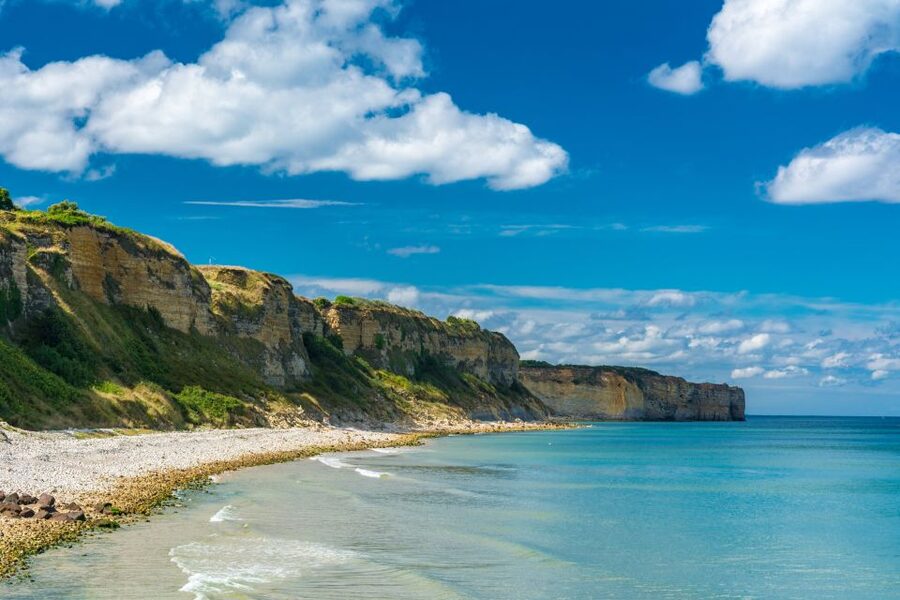
Reviewed · D-DAY BEACHES TOURS
From Bayeux: D-Day American Beaches and US Airborne Day Tour
Omaha Beach gives this tour its emotional center. You stand where the 1st and 29th Infantry Divisions came ashore, then follow the American campaign across Normandy, from the cliffs of Pointe du Hoc to the airborne operation at Sainte-Mère-Église. I like the small group of seven, which keeps the day personal, and I like that maps, pictures, and headsets make a complicated battle easier to follow. The visit to Angoville-au-Plain, a wartime aid station, adds a human story beyond troop movements and battle plans.
The tradeoff is pace. You cover a great deal of ground in 8.5 hours, with several drives and fixed visit times. Sainte-Mère-Église includes lunch and free time, but you will need to arrange and pay for food yourself. This is not a tour for anyone who has trouble walking across beaches, grass, uneven ground, or historic battle sites.
The American D-Day route at a glance
- Omaha Beach and the 1st and 29th Divisions: Use maps and wartime images to understand why this landing became known as Bloody Omaha.
- The American Cemetery above Omaha: Allow time for a quiet visit among more than 9,000 American servicemen and women buried here.
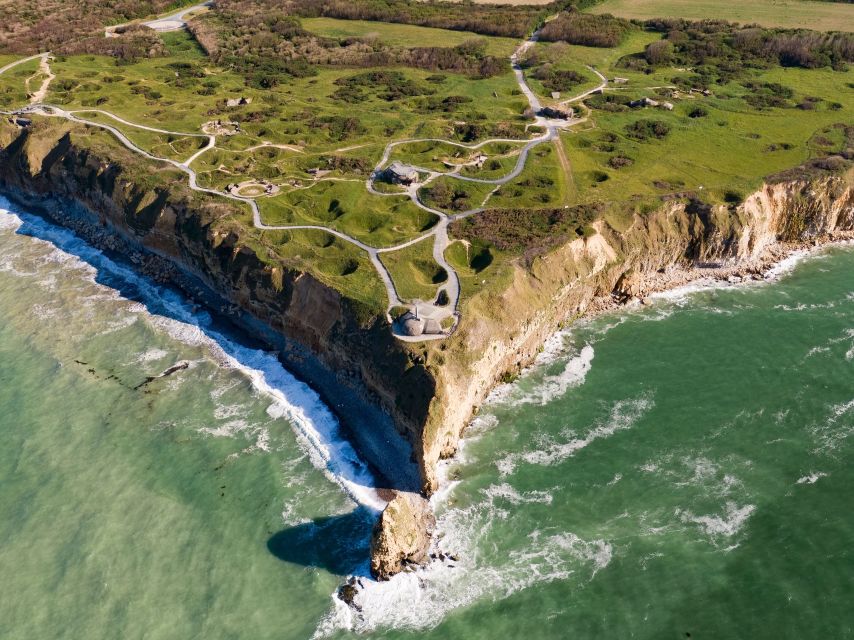
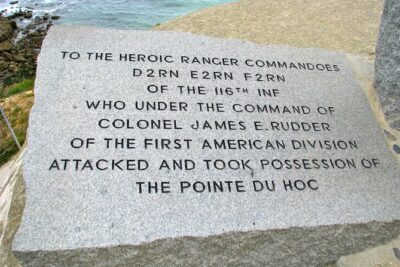
- Pointe du Hoc battlefield: See bomb craters, bunkers, and dugouts while following the route of the 2nd US Ranger Battalion.
- Sainte-Mère-Église and the Airborne Museum: Connect the famous church story with the wider American paratrooper operation.
- Utah Beach and Theodore Roosevelt Jr.: Hear how the 4th Infantry Division broke through the German defenses.
- Angoville-au-Plain aid station: Learn how two medics treated about 80 wounded soldiers over two days.
Why this full-day tour works
The tour follows a clear American story rather than scattering you among unrelated museums and memorials. You begin with the hardest beach landing, move through the Army Rangers and airborne forces, and finish with Utah Beach and a small but powerful medical story.
That structure matters. D-Day can feel like a blur of beaches, initials, divisions, and dates. Here, each stop has a distinct purpose. Omaha explains the cost of the landing. Pointe du Hoc shows the risk taken to silence German guns. Sainte-Mère-Église turns your attention inland, where paratroopers fought to secure roads and towns. Utah shows a different kind of landing, one that met less resistance than Omaha.
The day costs $165 per person. I consider that fair for a licensed English-speaking guide, transport for the full route, headsets, and admission to the Airborne Museum. You are also paying for the guide’s preparation and for someone else to handle the driving between sites. Food, drinks, hotel pickup, and hotel drop-off are not included, so budget for those separately.
The small van is a major part of the value. With space limited to seven participants, you should have a better chance to hear explanations, ask questions, and move between stops without the feel of a large coach tour. Transport receives a 90 percent perfect score, and the strongest praise centers on guides who keep the complicated subject understandable while adding visual aids and personal stories.
More D-Day landing beach tours:
- Normandy American D-Day Beaches Full Day Tour from Bayeux
★ 5.0 · 2,103 reviews - Normandy American D-Day Experience – Group tour from Bayeux
★ 5.0 · 1,566 reviews - Omaha and Band Of Brothers Full Day Tour
★ 5.0 · 1,104 reviews
Meeting the van in Bayeux
The starting point is Place de Québec in Bayeux. Look for the vehicle with the HQ Company Tour sign at the back. The first drive takes about 30 minutes, giving you a little time to settle in before the history begins.
Headsets are included, which is useful in windy or open places such as Omaha and Pointe du Hoc. The tour is conducted in English, and guides including Sophie, Yannick, Gwen, Bridget, Matthew, and Dillon have been singled out for clear explanations, good pacing, and an easy willingness to answer questions. Your actual guide will depend on the date.
The van returns to Place de Québec after a final 35-minute drive from Angoville-au-Plain. Since the day lasts 510 minutes, plan on being out for about 8.5 hours. Wear comfortable shoes and bring rain gear. The tour runs in all weather, so Normandy’s famously changeable conditions are part of the deal.
Omaha Beach: understanding the first waves

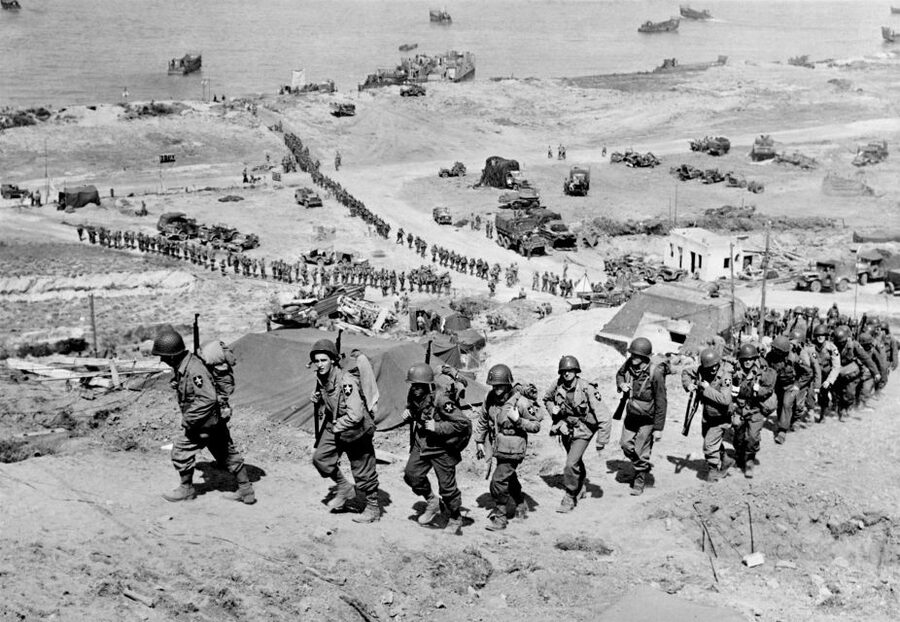
Your first major stop is Omaha Beach, where the 1st and 29th US Infantry Divisions landed. The visit lasts about 40 minutes and focuses on the shape of the beach, the German defensive positions, and the plight of the first waves of American soldiers.
This is where a guide earns the price of admission. Looking at the broad shore alone does not explain why the landing became so costly. Maps and photographs help you connect the open beach with the defenses above it and understand the problem facing soldiers who had to cross exposed ground under fire.
The stop is guided rather than a long period of free wandering. That suits you if you want the battle explained on site, but it may feel brief if you want to sit quietly or explore every part of the beach. The surface can also be tiring in poor weather, so good footwear matters.
The American Cemetery: a quiet hour above Omaha
A short five-minute drive takes you to the Normandy American Cemetery. You get about an hour here, including guided time and free time. That balance is important. You can listen to the explanation, then pause on your own among the more than 9,000 American servicemen and women buried at the site.
The cemetery is run by the American Battle Monuments Commission and is the most visited D-Day site in Normandy. Its scale changes the way you understand the numbers discussed at Omaha. Instead of hearing about casualties as an abstract figure, you confront the human cost in rows of graves.
I would use the free time carefully. This is not a stop to rush through for a photograph. The tour gives you enough time to pay your respects, but the overall schedule means you should return promptly when asked. If you want an extensive cemetery visit, you may find the hour shorter than you would prefer.
A few more Bayeux half-days worth comparing
- Normandy Beaches Half-Day Afternoon Trip from Bayeux (A2)
★ 4.5 · 1,116 reviews - Omaha Beach D-Day Experience – Afternoon group tour from Bayeux
★ 5.0 · 1,088 reviews - Omaha and Utah beaches
★ 5.0 · 1,085 reviews - Normandy Battlefields Tour – American Sites (A3)
★ 5.0 · 876 reviews
Pointe du Hoc: craters, cliffs, and the Rangers
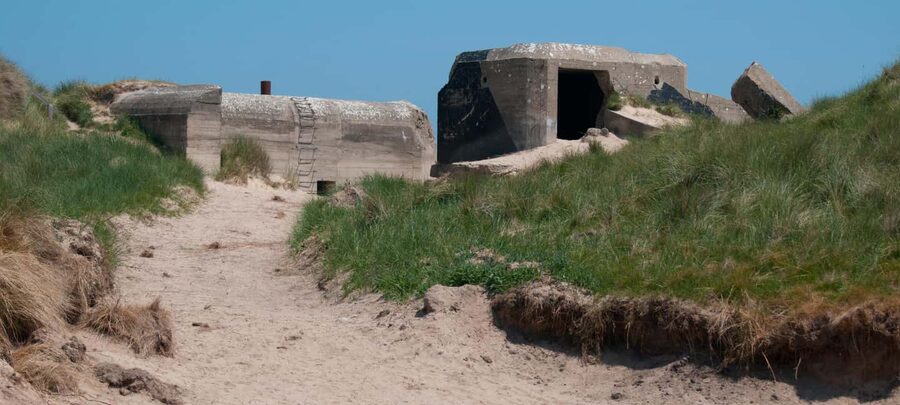
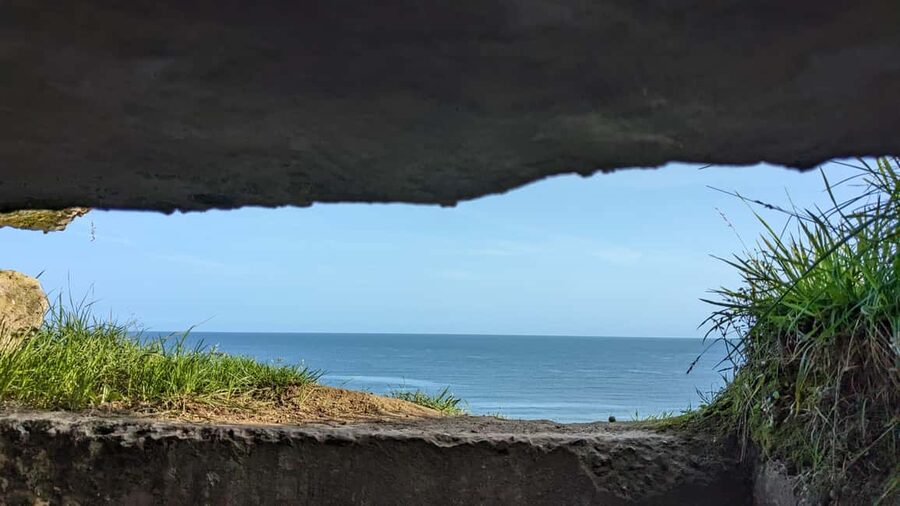
After about 20 minutes on the road, you reach Pointe du Hoc for a 50-minute guided visit. This is one of the most physical stops, with bomb craters, bunkers, and dugouts spread across an exposed battlefield.
The focus is the 2nd US Ranger Battalion, led by Lieutenant Colonel James E. Rudder. The Rangers scaled the cliffs to attack a German gun battery that threatened the American landing operation. Your guide uses the site itself to explain why the mission mattered and what made it so dangerous.
Pointe du Hoc is valuable because it still looks like a battlefield. The bomb craters and concrete positions give shape to the story, rather than leaving it trapped in a museum display. You will need to walk across uneven ground, however, and the site is not suitable for people with mobility impairments.
The 50-minute stop should give you a solid overview, not an exhaustive military study. If you already have a strong interest in the Rangers, you may wish for more time. For a first visit to Normandy, the balance is sensible.
Sainte-Mère-Église and the Airborne Museum
A 30-minute drive brings you to Sainte-Mère-Église, the first town captured by American paratroopers. You have about 50 minutes for lunch, free time, and shopping, followed by an hour at the Airborne Museum.
The church is tied to one of the most memorable stories of the night operation: an American paratrooper became caught on the church tower. Your guide explains that episode within the larger airborne assault, helping you see Sainte-Mère-Église as more than a famous anecdote.
Lunch is not included, so plan ahead. The 50-minute break must cover food and any short walk or shopping, and you should not expect a leisurely restaurant meal. The benefit is flexibility. You can choose how to spend the break rather than being tied to a provided menu.
The Airborne Museum is included in the tour price. The museum is described as exceptionally well done, with a presentation that can appeal even if you are not a specialist in World War II. You get one hour there, enough to add depth to the outdoor visit and to see the airborne side of D-Day treated as its own story.
This is one of the strongest parts of the day for anyone interested in paratroopers. It also helps balance the heavy beach focus of the morning. Still, the schedule gives you an introduction, not an entire museum day. If museums are your main reason for visiting Normandy, you may want a separate, longer visit.
Utah Beach and Theodore Roosevelt Jr.
After a 20-minute drive, the tour reaches Utah Beach for about 40 minutes. Here, the focus shifts to the 4th Infantry Division and the way American troops breached the German defenses.
Your guide also explains the role of Brigadier General Theodore Roosevelt Jr., who led the first wave and landed at 6:30 a.m. He was later awarded the Medal of Honor. This detail gives the stop a strong personal angle, especially when connected to the decisions required during the landing.
Utah provides a useful comparison with Omaha. Seeing both beaches in one day lets you understand that D-Day was not one uniform event. Terrain, defenses, leadership, and confusion produced different results from one landing area to another.
The 40-minute visit is enough for a guided explanation and a look around, but not enough for a slow, independent exploration. The tour works best if you see Utah as one part of a connected day rather than your only beach visit.
Angoville-au-Plain: the day’s most human story
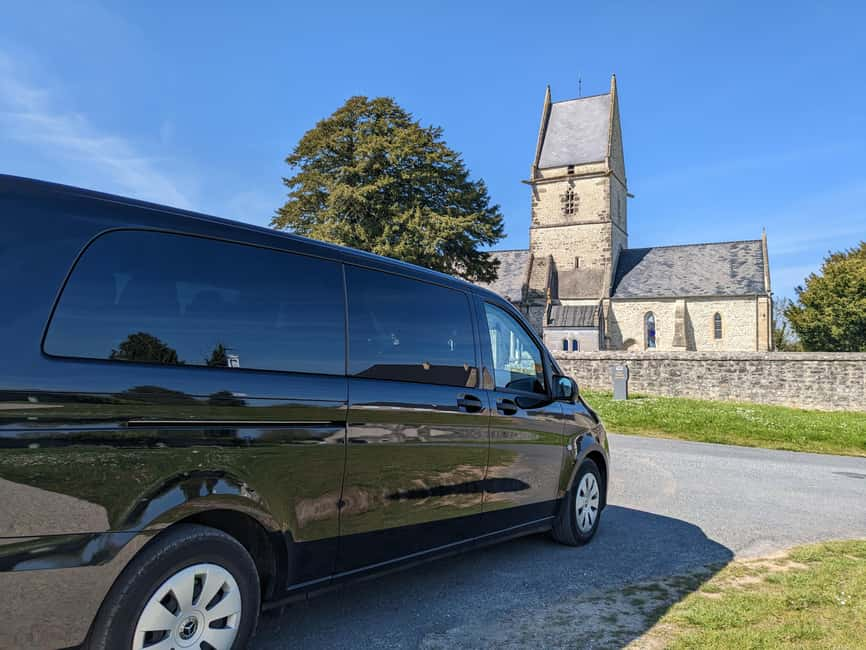
The final site is a 15-minute drive from Utah Beach. At the church of Angoville-au-Plain, two young medics treated about 80 wounded soldiers over two days while the building served as an aid station.
This is a small stop, lasting about 20 minutes, but it can stay with you longer than some of the larger sites. The story shifts attention from commanders and units to care, fear, exhaustion, and dedication in the middle of battle.
I especially like its place at the end of the route. After beaches, artillery positions, cemeteries, and airborne operations, the aid station brings the war down to individual decisions and acts of mercy. It also gives the tour a wider view of the American experience, not just a list of military victories.
The short visit means the guide must tell the story efficiently. You should not expect a long stop or a large museum. Its value comes from the human detail and the chance to see a lesser-known site.
Guide quality and the small-group advantage
The most important variable on a historical tour is the guide. This route covers a complicated operation, and the strongest guide profiles are people who can explain military movements without losing the human story.
Sophie is praised for being engaging, easy to understand, prepared, and open to questions. Yannick is described as using strong visual aids and memorable stories, while Gwen has been noted for making a complicated subject manageable and offering useful suggestions for other activities. Bridget is praised for clear explanations and safe driving, and Matthew and Dillon are also described as passionate and well informed.
Those details point to the kind of experience you can expect: not a silent transfer between attractions, but a day shaped by narration. The guide can connect the map to the ground beneath your feet and explain why each site matters.
The group limit of seven helps. You are not guaranteed a particular guide or a completely private experience, but the format should make questions easier and reduce the distance between you and the person leading the tour.
Who should book this Normandy tour?
I would choose this tour if you have one full day in Bayeux and want the main American D-Day sites in one organized route. It suits first-time visitors, families with older children who can manage walking, and anyone who wants military context without planning every drive.
It is also a strong choice for a World War II enthusiast traveling with someone who knows less about the subject. The guide’s explanations, maps, and pictures can make the material manageable rather than overwhelming.
You may want something else if you prefer long, quiet visits at one or two sites. The schedule is full, and the time at each stop is set. It is also a poor fit for anyone with mobility limitations, since the day includes beaches and uneven outdoor battlefields.
Book only after checking the starting time and planning food for Sainte-Mère-Église. Cancellation is free up to 24 hours before departure, and you can reserve now and pay later, which helps if your Normandy plans are still shifting.
Should you book it?
Book this tour if you want a clear American D-Day overview, a small van, and a guide who can turn a complicated military campaign into a series of understandable places and stories. The combination of Omaha, the cemetery, Pointe du Hoc, Sainte-Mère-Église, Utah Beach, and Angoville-au-Plain gives you both the major landmarks and one quieter personal account.
Skip it if you need a slow pace, extensive free time, or a tour built around accessibility. For most visitors with comfortable shoes, rain gear, and one full day to spare, the $165 fee is justified by the transport, included museum admission, and the value of an experienced English-speaking guide.
FAQ
Where does the tour start and finish?
The tour starts and finishes at Place de Québec in Bayeux. Look for the vehicle with the HQ Company Tour sign at the back.
How long does the tour last?
The tour lasts 510 minutes, or about 8.5 hours, including travel between the sites.
Which language is the tour conducted in?
The live tour guide speaks English.
How many people are in the group?
The tour is limited to seven participants.
Is hotel pickup and drop-off included?
No. Hotel pickup and drop-off are not included. You meet the vehicle at Place de Québec.
Is lunch included?
No. Food and drinks are not included. The schedule provides about 50 minutes in Sainte-Mère-Église for lunch, free time, and shopping.
Is the Airborne Museum admission included?
Yes. Entry to the Airborne Museum in Sainte-Mère-Église is included.
What should I bring?
Bring comfortable shoes and rain gear. The tour runs in rain or shine.
Just added around Bayeux
- Normandy U.S. D-Day Sites Half Day Tour From Bayeux★ 5.0 · 325 reviews
- WW2 Jeep or Dodge truck tour of the Omaha Beach site★ 5.0 · 51 reviews
- Private Walking Guided Tour of Historic Bayeux English or French★ 5.0 · 36 reviews
- Mont Saint Michel Experience – Shuttle Service from Bayeux★ 5.0 · 194 reviews
- Private guided Allied D-Day Tour from Bayeux★ 5.0 · 45 reviews
- Private Full day American D-Day Guided Tour in Bayeux★ 5.0 · 133 reviews
- Private American landing beaches tour from Bayeux★ 5.0 · 36 reviews
- Private tour landing beaches from Bayeux★ 5.0 · 82 reviews
D-Day Beaches Tours, compared.
Normandy D-Day Sites & Cemetery Day Trip from Paris with Lunch
Read our review →
Normandy D-Day Small-Group Day Trip with Omaha Beach, Cemetery & Cider Tasting
Read our review →
Normandy D-Day Beaches and American Cemetery Day Trip from Paris
Read our review →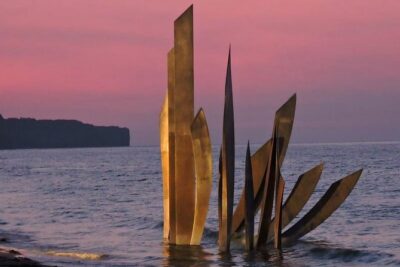
Normandy American D-Day Beaches Full Day Tour from Bayeux
Read our review →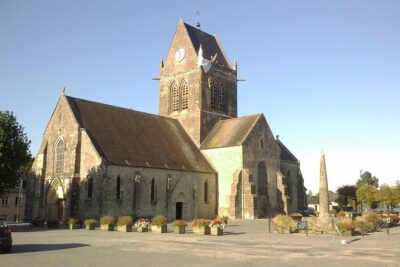
Normandy American D-Day Experience – Group tour from Bayeux
Read our review →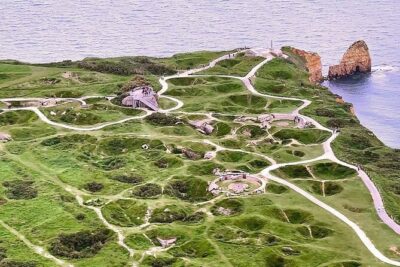
Omaha Beach D-Day Experience – Afternoon group tour from Bayeux
Read our review →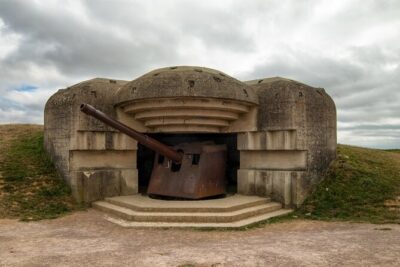
Browse the lists this tour appears in