
Reviewed · GIVERNY & MONET'S GARDENS
Giverny Monet House and Gardens Skip the line Walking tour
Claude Monet’s Giverny is where paintings become a place you can walk through. You’ll see the pink house, Japanese prints, flower beds, lily ponds, and bridge that shaped some of his best-known work. The garden is the star, especially in spring and early summer.
I like the small-group format, capped at 15, and the time saved by entering through a special entrance. I also like that the guide begins with Giverny village, giving you a sense of the artists’ colony before you enter Monet’s home. The main caution is crowding. Even with skip-the-line access, the gardens can feel very busy, and one poorly organized departure had more than 20 people and trouble hearing the guide.
Key points to know before booking
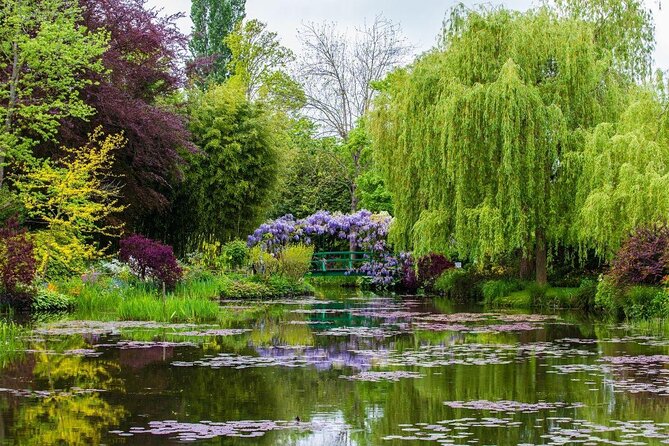
- The garden is the main event: See the Japanese bridge, water lilies, weeping willows, and flower beds linked to Monet’s paintings.
- You begin in Giverny village: The walk adds context about Monet’s life, friends, and the artists who gathered here.
- A special entrance saves time: Entrance to Monet’s house and gardens is included, with no need to buy a separate ticket on site.
- The group limit is 15: Smaller groups can make it easier to stay with the guide and ask questions.
- Season matters: April through October brings flowers, but October may have fewer blooms and wetter weather.
- Plan your arrival carefully: Meet at La Capucine, 80 Rue Claude Monet, 15 minutes early. There is no hotel pickup or drop-off.
Why Giverny feels like stepping into a Monet painting
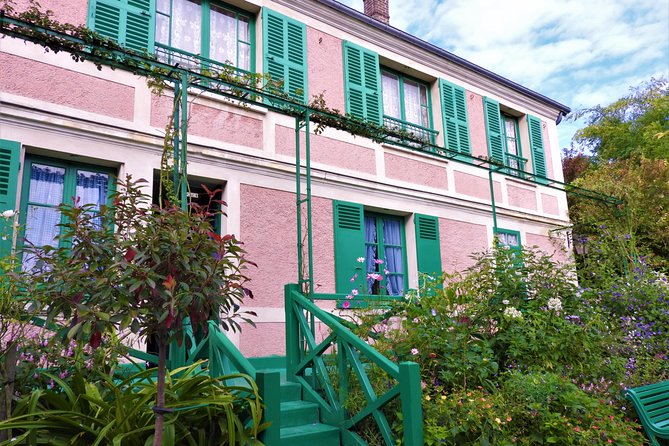
This visit works because the subject is not locked behind glass. Monet’s house, garden paths, water, flowers, and Japanese bridge remain together in the setting that fed his work for decades.
Monet lived in Giverny from 1883 until 1926. The village became a gathering place for artists, including John Singer Sargent, Paul Cézanne, and Mary Cassatt. By 1887, it had the feel of an artists’ colony. A good guide can make that connection clear without turning the visit into a long art lecture.
You will not see Monet’s original paintings here. The house and gardens are the attraction, while the original works are held in museums. What you do see is the physical setting behind the paintings, including the water garden and the Japanese bridge that appear again and again in his work.
I find that distinction useful. If you expect a small museum full of original canvases, this visit may disappoint. If you want to understand how Monet arranged color, water, reflection, and plant life around himself, Giverny offers something a museum cannot.
More Walking Tours in Normandy
- Mont Saint Michel: Walking Tour & Optional Abbey Ticket
★ 4.3 · 562 reviews - 2-Hour Guided Walking tour of the Mont Saint Michel
★ 4.0 · 203 reviews - Mont Saint Michel: Village History and Legends Walking Tour
★ 4.8 · 96 reviews
The village walk gives the visit a proper beginning
The tour meets at La Capucine Giverny, 80 Rue Claude Monet. You should arrive 15 minutes early because the group leaves promptly, and latecomers risk missing the start.
The first portion is a walking tour of Giverny. This is more than filler before the house. It introduces the quiet village where Monet lived and worked, and it helps you picture how artists and visitors encountered the place during Monet’s lifetime.
The village also contains the church cemetery where Monet is buried. The supplied tour details do not promise a formal stop there, so think of it as part of the wider setting rather than a guaranteed feature of the walk. Still, knowing it is nearby adds another layer to the visit.
The village section is especially useful if you have come from Paris and know little about Giverny beyond the famous garden. Guides have included Bertrand, Bernard, Mwamiri, and Marine on different departures. The strongest reports describe guides who kept the group together, added stories, and used photographs to explain Monet’s life and work.
Guide quality can vary. One departure suffered from a language mix-up, with French-speaking participants added to an English tour, forcing the guide to translate. Another guide spoke only intermittently and did not use a headset. Ask at the beginning where to stand so you can hear clearly, and stay close when the group moves.
Entering Monet’s house through the special entrance
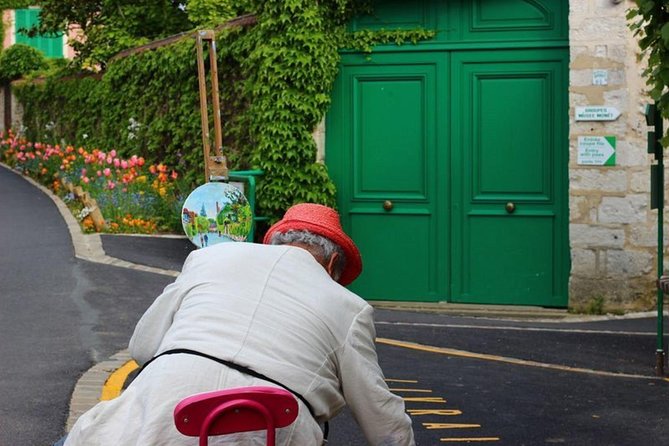
After the village walk, the guide takes you to the entrance for Fondation Claude Monet, which manages the house and gardens today. The special entrance is the practical reason to book a guided visit instead of simply arriving on your own.
The attraction is popular, particularly during Easter and the main spring bloom. Crowds can form around the entrance and inside the grounds. Skip-the-line access does not mean the property will be quiet. It means you avoid spending as much time waiting to get inside.
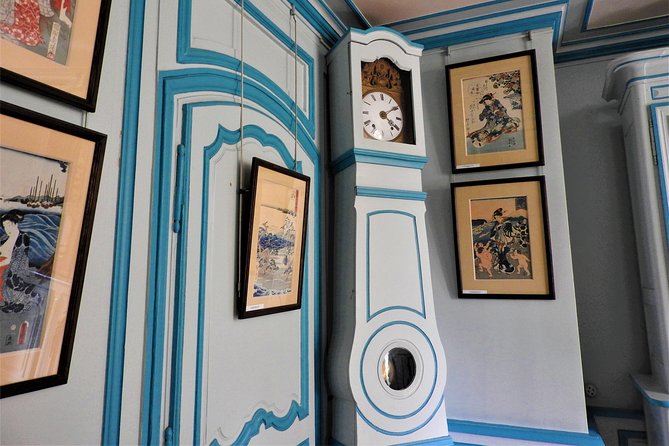
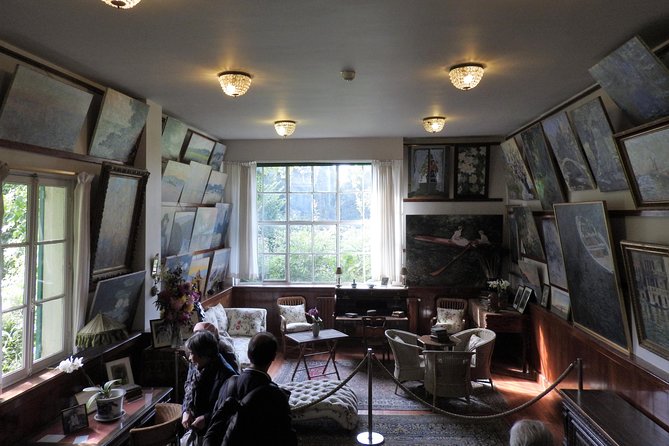
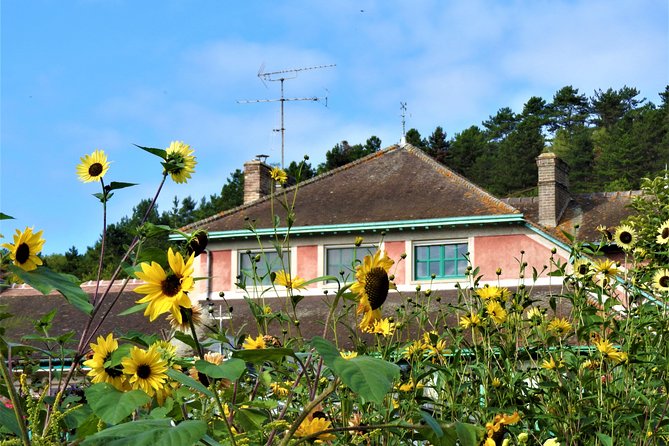
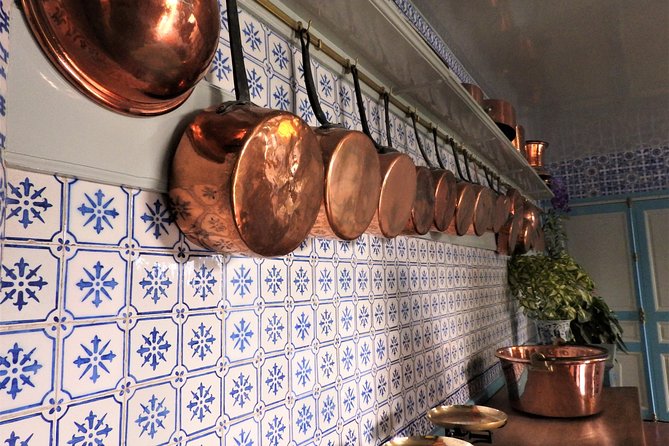
The house itself is colorful and personal rather than grand. You’ll see the pink exterior and rooms filled with original furnishings, including a cheerful kitchen. Monet’s collection of 18th and 19th century Japanese prints is another important feature.
The house helps explain why Japanese design mattered to Monet and why the garden includes an Oriental Water Garden. It also gives you a break from the open flower beds, though the rooms can feel tight when many groups arrive at once.
I would not treat the house as the sole reason to pay for this tour. The visit is strongest when you see the house as one part of a larger picture: Monet’s living space, his print collection, the flower garden, and the pond that became a subject in its own right.
The flower garden changes with the calendar
From April through October, the grounds can feature roses, hollyhocks, poppies, honeysuckle, and many other flowers. The exact show depends on the month.
May is a particularly appealing time based on the tour feedback. The flowers may be bursting into bloom, and the garden can supply excellent photo opportunities. This is also a busy period, so you trade fuller beds for more people on the paths.
October has a different character. Several departures still found the garden beautiful, even in rain, and some flowers may remain. But you should not expect the same display as in late spring. One visitor specifically found the flowers closer to the end of their season. Autumn can still work well if you care about the structure of the garden, reflections, and color rather than peak bloom.
The garden is carefully maintained, but it is not meant to look like a formal palace park. Its appeal comes from layers of planting, changing color, and the way paths lead your eye toward water and trees. Take time to notice the arrangement instead of photographing every flower and rushing onward.
More trips to Monet's garden at Giverny:
- From Paris: Giverny Day Trip with Audio Guide or Live Guide
★ 4.3 · 2,372 reviews - From Paris: Giverny, Monet’s House, & Gardens Half-Day Trip
★ 4.5 · 2,174 reviews - Versailles Palace and Giverny Monet House Visit with Lunch
★ 4.0 · 1,948 reviews - Giverny Monet’s Home and Gardens Half Day Tour from Paris
★ 4.5 · 1,836 reviews
The Japanese bridge and lily ponds are the visual payoff
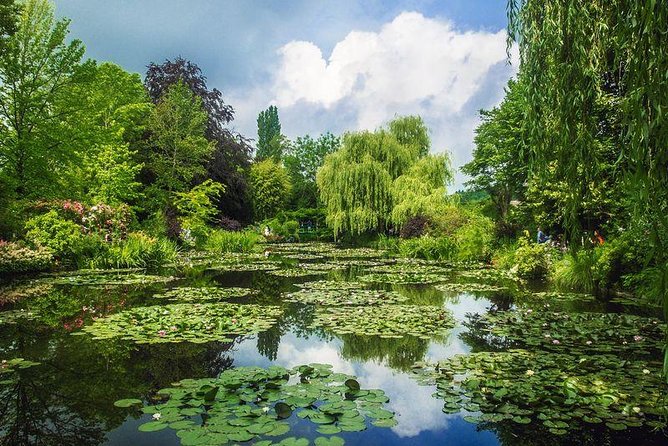
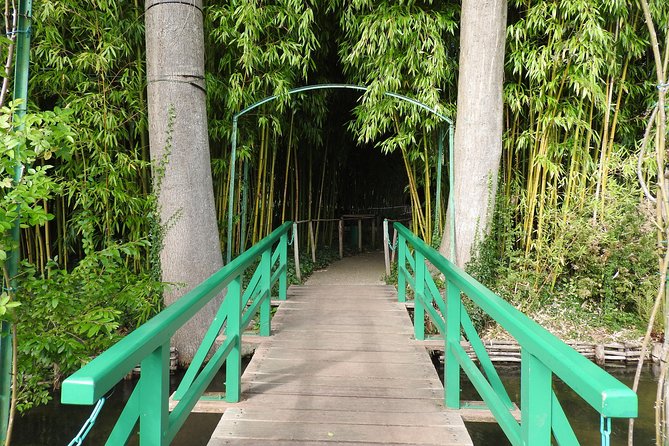
The Oriental Water Gardens contain the elements most closely tied to Monet’s famous paintings: water lilies, weeping willows, and the Japanese bridge.
This is where the visit becomes most recognizable. You can compare the shapes in front of you with the paintings you know, while also noticing the differences. Real gardens change with weather, season, maintenance, and crowds. The setting is not a frozen copy of a canvas.
The water garden also gives the tour its strongest sense of place. Monet did not merely paint an attractive scene from a distance. He shaped an environment around his home and returned to it repeatedly. The pond, bridge, plants, and reflections were part of daily life as well as artistic work.
Your guide may add the most value here by showing images or pointing out how Monet treated color and light. Several guides were praised for telling stories about Monet, his family, friends, and working life. The clearest guides help you look more closely without telling you what every detail must mean.
Expect plenty of people near the bridge and ponds. You may need to wait for a clear photo, and the group can stretch out along the paths. A smaller group helps, but it does not remove the crowds created by the site’s popularity.
What two hours really gives you
The advertised duration is about two hours, including the village walk and admission to the house and gardens. That is enough for an introduction, but it is not an all-day study visit.
The guided portion keeps you moving. This is useful if you want structure, context, and a way through the busiest sections. It is less ideal if you prefer to linger beside the pond or study each room at your own pace.
One especially good feature is the chance to have free time in the village after the guided portion, depending on how the departure runs. The official end point is back at the meeting point. You should confirm with your guide how much independent time remains, since the exact pace can change with crowds.
The two-hour format suits a day trip from Paris or a larger Normandy itinerary. It also works for families who might lose interest during a longer art-history program. Children can focus on the flowers, water, bridge, and photographs, while adults get the Monet context.
If you are a serious garden enthusiast or art student, you may want more time than this tour provides. The guided visit gives you a useful framework, but it does not promise a slow, detailed study of every room and planting area.
Price and practical value at $63.86
At $63.86 per person, the tour costs more than simply reaching Giverny and touring independently. The value comes from the included entrance, the guide, and the special access point.
The entrance fee matters because the house and gardens are the central attraction, not an optional add-on. The guide also saves you from having to build your own explanation of Monet’s home, village, and garden design. For a first visit, that can make the experience easier and more rewarding.
The price is harder to justify if you are comfortable touring alone and can arrive early enough to avoid the worst entrance wait. One harsh assessment found that self-guiding would have been preferable after a rushed visit. That is the key tradeoff: you pay for structure and access, but the quality depends heavily on the guide and group management.
The group is supposed to be capped at 15. That is a useful limit for a walking tour, especially on narrow paths. One poor departure reportedly reached 22 people because of a booking error and had audio problems. Since group size affects the whole experience, check the head count at the start and stay close if the group begins to stretch out.
Getting to Giverny without a pickup
Hotel pickup and drop-off are not included. You make your own way to the meeting point in Giverny, and the activity ends there.
The meeting point is near public transportation. A practical route described by one visitor used the train from Paris to Vernon, followed by a shuttle to Giverny. The tour information does not include transportation tickets, so you need to arrange and pay for that part separately.
Driving can be less simple than expected during busy periods. Parking problems caused one planned visit to be abandoned after a long search. If you drive, allow extra time and do not aim to arrive only a few minutes before the meeting time.
The mobile ticket is convenient, but it does not replace planning the journey. Save the booking confirmation on your phone, check the meeting address, and arrive at least 15 minutes early. The guide cannot hold the departure for late arrivals.
When the guide makes the biggest difference
The best departures add color to what you are seeing. Bertrand was singled out for an engaging and informative approach, while Bernard received praise for filling in gaps in a visitor’s existing knowledge of Monet. Mwamiri was noted for keeping a group together and making the visit fun, and Marine was praised for stories and watchful group management.
These names reflect guides who have led different departures, not a promise that you will receive a particular person. Still, they show what to look for: clear speaking, good pacing, useful images, and enough energy to hold a group’s attention outdoors.
Headsets are not guaranteed. One group had audio trouble at the rear, while another guide did not use a headset at all. Stay within speaking distance, especially during the village walk and in crowded sections of the garden.
The language of your departure also matters. The tour is intended to be in English, but one mixed-language booking created a translation problem. If the group includes several languages, ask how the guide plans to handle it before the tour gets underway.
Who should book this Giverny tour
I would choose this experience if you are visiting Giverny for the first time, want background on Monet, and prefer not to deal with the entrance process alone. It is also a good fit if you are coming from Paris and want a compact visit with a clear structure.
Families may appreciate the two-hour length and the visual appeal of the flowers and ponds. Art lovers will get useful context about Monet’s life, the Impressionist circle, and the Japanese prints in the house.
I would hesitate if you strongly prefer independence, dislike group pacing, or want a quiet garden visit. Crowds remain possible, even with special entry, and guide quality is not perfectly consistent.
Free cancellation is available up to 24 hours before the start time for a full refund. Cancellations or changes made within 24 hours are not refunded or accepted. If the minimum number of participants is not reached, the provider offers another date or experience, or a full refund.
Should you book it?
Book this tour if the skip-the-line access and guide context are worth paying for. Monet’s house and gardens are beautiful on their own, but a good guide can connect the village, house, prints, flower beds, and water garden into one story.
Before booking, choose your season carefully. May offers the best chance of full flower displays but also brings crowds. October can be pleasant and photogenic, though some flowers may be past their peak.
The experience is not flawless. Transportation is not included, parking can be difficult, and a bad group or weak guide can undercut the value. Still, for a first visit with limited time, the included admission, village walk, and small-group format make it a sensible choice, especially if you want to see Giverny as more than a quick photo stop.
FAQ
Where does the tour meet?
The tour meets at La Capucine Giverny, 80 Rue Claude Monet, 27620 Giverny, France.
How long does the experience last?
The tour lasts about two hours and ends back at the meeting point.
Is admission to Monet’s house and gardens included?
Yes. Entrance fees to Monet’s house and gardens are included, and the guide provides the tickets through a special entrance.
How large is the group?
The activity has a maximum of 15 participants, although one reported departure had more than 20 people because of a group mix-up.
Is transportation from Paris included?
No. Pickup and drop-off are not included. You must make your own way to Giverny and the meeting point.
What happens if I need to cancel?
You can cancel up to 24 hours before the local start time for a full refund. Cancellations or changes made less than 24 hours before the start are not refunded.
More Skip-the-Line Tickets in Normandy
- Giverny: Monet’s House and Gardens Skip-the-Line Tour
★ 4.3 · 460 reviews - Versailles: Skip-the-Line Tour of Palace with Gardens Access
★ 4.7 · 9,778 reviews - Versailles: Skip-the-Line Guided Palace Tour and Full Access
★ 4.6 · 5,214 reviews - Louvre Museum: Skip-the-Line Small Group Guided Tour
★ 4.6 · 3,960 reviews
Just added around Normandy
- From Le Havre: D-Day Beaches Shore Trip with Packed Lunch★ 4.9 · 101 reviews
- Bike tour from Vernon to Giverny with local guide★ 4.7 · 47 reviews
- Bayeux: Normandy D-Day Landing Beaches Full-Day Guided Tour★ 4.8 · 158 reviews
- Bay of Mont Saint-Michel : Quicksands And Discovery★ 4.9 · 168 reviews
- Bayeux: 2-hour tour of the D-Day beaches, by vintage sidecar★ 4.9 · 64 reviews
- Bayeux: Band Of Brothers Full-Day Tour★ 4.9 · 53 reviews
- From Paris: 2-Day Normandy & Brittany Tour★ 4.5 · 93 reviews
- Small-Group Giverny and Van Gogh’s Room in Auvers from Paris★ 4.9 · 168 reviews
Giverny & Monet's Gardens, compared.

Giverny Day Trip with Audio Guide or Live Guide
Read our review →
Giverny, Monet’s House, & Gardens Half-Day Trip
Read our review →
Versailles Palace and Giverny Monet House Visit with Lunch
Read our review →
Giverny Monet’s Home and Gardens Half Day Tour from Paris
Read our review →
Giverny Small-Group Half Day Trip with Monet’s Gardens from Paris
Read our review →
Giverny and Versailles Palace Guided Day Trip
Read our review →
Giverny and Monet’s House Half Day Trip from Paris Guide or Audio
Read our review →
Giverny and Versailles Small Group Day Trip from Paris with Lunch
Read our review →Browse the lists this tour appears in