
Reviewed · HISTORICAL TOURS
Guided tour of Nancy, Great History and Little Anecdotes
Nancy makes a strong first impression with Place Stanislas, but the square is only the opening chapter. This 90-minute walk follows the city’s story through grand royal projects, medieval streets, ducal power, and a leafy city park, with historian Léopold Fousnaquer supplying the links.
I like the clear route and the way big events are tied to small architectural details. I also like the guide’s academic background and his stated aim of adjusting the talk for beginners and history fans alike. The main consideration is simple: the tour is in French, and most of the experience takes place outdoors.
Key points at a glance
- A historian leads the walk: Léopold Fousnaquer holds a master’s degree in history and also works with the city’s Tourist Office.
- Four central Nancy landmarks: The route covers Place Stanislas, Place de la Carrière, Grande Rue, and Parc de la Pépinière.
- The famous square gets real attention: About 30 minutes are devoted to Stanislas Leszczynski, the Baroque plan, and Jean Lamour’s gilded railings.
- Big history meets local stories: Expect political context, architectural details, curiosities, and anecdotes rather than a list of dates.
- Good for mixed ages: The pace and explanations are designed to work for novices, experienced history fans, and family groups.
- A low-cost orientation: At $17.42 per person, the walk is an inexpensive way to get your bearings before exploring Nancy on your own.
Why Place Stanislas is the right starting point
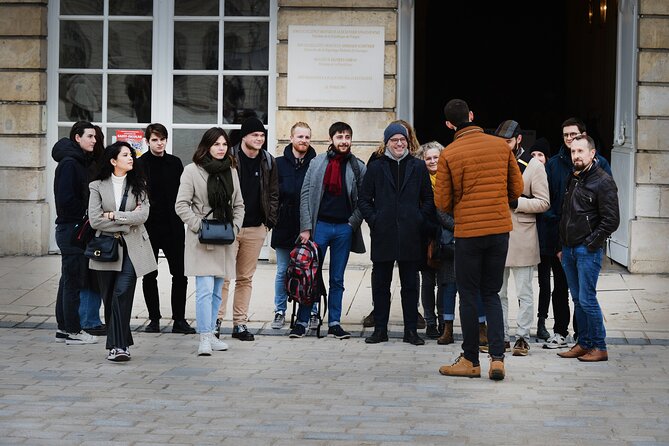
The tour begins in the middle of Nancy’s grandest public space. Place Stanislas is not just a pretty square for photographs. It tells the story of Stanislas Leszczynski, a man who managed to be King of Poland, Duke of Lorraine, and father-in-law to Louis XV of France.
That unusual family and political connection gives the square its purpose. Stanislas commissioned this Baroque Place Royale in the 18th century, and the result was meant to impress. The design links power, ceremony, architecture, and urban planning in one open space.
Your guide spends about 30 minutes here, the longest single stop. That makes sense. You need time to look beyond the central statue and take in the surrounding buildings, sight lines, and ornamental metalwork.
The gilded railings by Jean Lamour are a major highlight. Their rococo curves create a bright frame around the square, and they are the sort of detail that is easy to admire without understanding. Léopold’s approach is designed to explain why the decoration matters and how it fits the period.
I like that the tour starts with a landmark you can see immediately, then adds political and architectural context. If you arrive in Nancy with no background at all, this is a useful way to understand why the square is so important. If you already know the basics, the smaller stories and design details should give you more to notice.
The stop is also practical. Place Stanislas is the meeting point, so you do not have to navigate to an obscure corner of town. A mobile ticket is accepted, and the tour ends back at the same place, making it easy to continue sightseeing afterward.
More Historical Tours in Alsace:
- From Strasbourg: Best Of Alsace Historical Day Trip
★ 4.7 · 633 reviews - Strasbourg: Guided Historical Neighborhoods Walking Tour
★ 4.9 · 275 reviews - Strasbourg: Private Walking Tour of the Historical Center
★ 4.2 · 107 reviews
Place de la Carrière and Nancy’s planned grandeur
From Place Stanislas, the walk continues to Place de la Carrière. This space has a different character, though it belongs to the same larger story of Nancy’s urban design.
The square was created inside the city walls at the end of the 16th century. Its original purpose was practical and energetic: riders connected with the dukes trained here. The ducal stables were close by, in an adjoining lane that still retains its old-town charm.
That detail helps you picture the square before it became a polished architectural setting. It was not simply built for quiet admiration. It was a working place connected to horses, military skill, and the daily operations of the ducal court.
Duke Leopold later improved the area, and Stanislas continued the work. Their additions created a coherent architectural group, linking the older city with the more formal spaces associated with Stanislas.
The stop lasts about 15 minutes. That is enough for an explanation and a look around, but not enough for a long architectural study. I see that as a fair choice in a 90-minute walk, since the guide has several parts of Nancy to connect.
This is also where the value of a historian’s commentary becomes clear. Without context, Place de la Carrière can seem like another elegant square. With the story of riders, stables, dukes, and later improvements, you can read it as part of Nancy’s changing role as a seat of power.
Grande Rue, where old Nancy feels most personal
The route then moves along Grande Rue, historically the liveliest street in Nancy’s Old Town. Its name has never changed, which gives the street a direct link to the city’s medieval past.
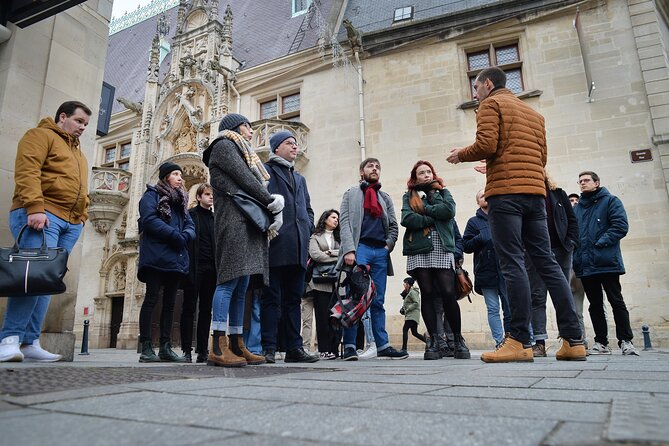
This section lasts about 20 minutes and brings together several important buildings. Along the way, you can admire the Basilica of Saint-Epvre, the former Palace of the Dukes of Lorraine, the Church of the Cordeliers, and Porte de la Craffe.
The value here is the walking itself. The tour shifts from formal squares to a street where Nancy’s older layers sit close together. Instead of studying one monument in isolation, you get a sense of how religious, political, and defensive buildings shaped everyday movement through the city.
The Palace of the Dukes of Lorraine points to the authority that once governed the region. The Church of the Cordeliers adds another side of that story, connecting Nancy with religious institutions and the Franciscan tradition. Porte de la Craffe brings the city’s defenses into view.
A good guide can make this stretch feel less like a parade of names. Léopold’s background in local history should help you understand how the buildings relate to one another and why the street mattered over time.
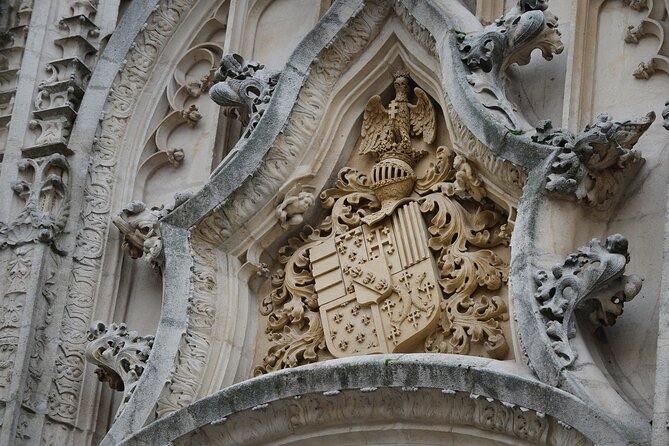
I would pay close attention here if you enjoy architecture. The tour is not limited to famous people and major dates. Its stated focus includes details, curiosities, and small anecdotes, so you may find yourself looking at entrances, façades, and street corners differently after the walk.
The Old Town section may also be the most rewarding part for visitors who want a less polished view of Nancy. Place Stanislas is the city’s grand showcase. Grande Rue gives you a closer look at the institutions and routes that made the historic center function.
Pépinière Park adds a welcome change of pace
The final stop is Parc de la Pépinière, a 22-hectare park described as Nancy’s green lung. After the formal squares and historic streets, this is a welcome change of pace.
The park contains several kinds of sights. Its centuries-old trees provide the natural setting, while the statue of Claude Lorrain by Rodin supplies a major artistic point of interest. The Mozart kiosk adds a lighter, more decorative note and invites a pause.
About 10 minutes are assigned to the park. That is enough to introduce its main features, but not enough to explore 22 hectares in any real depth. Think of this as a final chapter and a preview, not a full park visit.
I like ending here because it shows another side of Nancy. The city’s identity is not only about royal squares, dukes, churches, and gates. It also includes public green space, sculpture, music, and places for quiet reflection.
If you are planning to return to the park later, listen for the guide’s pointers about the trees, Rodin’s work, and the Mozart kiosk. The short stop can help you decide where to spend more time after the tour.
A few more Alsace half-days worth comparing
- Strasbourg: Euro Guided Tour by Segway
★ 4.7 · 808 reviews - Colmar, Medieval Village & Castle Small Group from Strasbourg
★ 5.0 · 769 reviews - 2-Hour Strasbourg Euro Tour by Segway
★ 5.0 · 642 reviews - Strasbourg Food Tour – A Taste of Tradition by Do Eat Better
★ 5.0 · 614 reviews
Léopold Fousnaquer’s teaching style
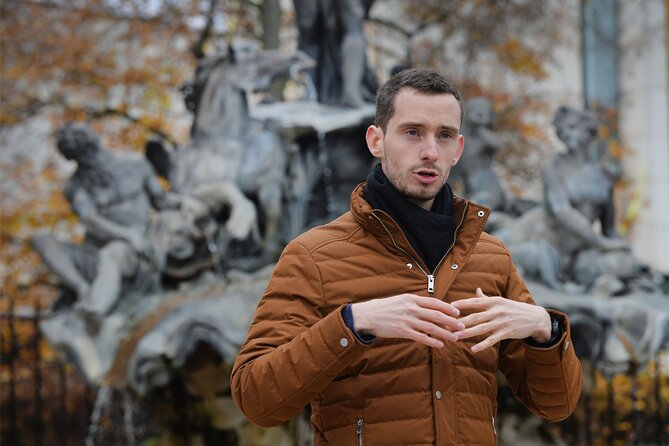
Léopold Fousnaquer is presented as a guide with a master’s degree in history who works for Nancy’s Tourist Office alongside independent guiding. That combination matters. You get formal training, but also a guide whose work is tied directly to the city.
His stated priority is teaching. He aims to adjust his explanations to the people in front of him, from beginners to those with stronger historical knowledge. That is useful on a public tour, where one person may want a simple overview and another may want more context about Lorraine, the French monarchy, or the dukes.
The strongest praise attached to his guiding style focuses on structure, clarity, warmth, and humor. Those qualities matter more than sheer quantity of facts. A guide can know a great deal and still give a tiring tour. Here, the goal is to keep the information moving and make the subject approachable.
His answers to questions are another strength. The tour is not described as a rigid speech, so you should feel comfortable asking about a building, a person, or a detail that catches your eye.
Families appear to fit the format well. The walk has been enjoyed by groups ranging from children to older adults, and the mix of anecdotes and major events gives different ages several ways into the story. It can also suit a private group of friends or a small work gathering, though the overall booking limit is 30 people.
Keep in mind that the tour is in French. If you do not understand French well, the historical detail will be difficult to follow. The route itself is easy to appreciate visually, but the guide’s explanations are the main reason to book.
What $17.42 buys you
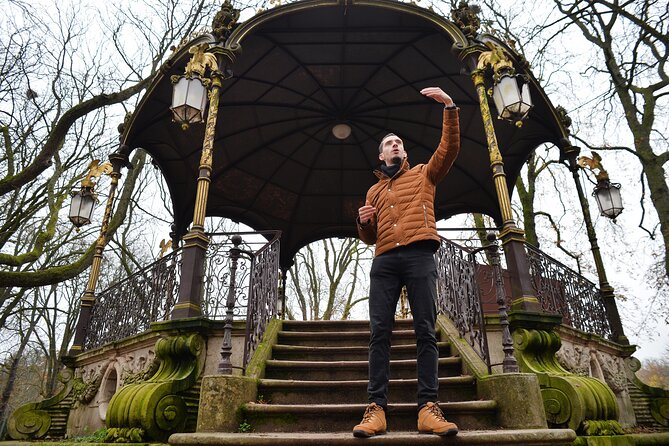
At $17.42 per person, this is priced as an affordable introduction to Nancy rather than a full museum experience. The fee covers a qualified guide and the guide’s travel costs to the meeting place. Admission to monuments and museums is not included.
That distinction matters because the walk focuses on exteriors and public spaces. You are paying for interpretation, not entry into a collection or a private room. If you want to visit museums or monuments afterward, budget separately for their entrance fees.
I consider the value good for three reasons. First, the tour covers four distinct parts of central Nancy in one compact session. Second, the guide brings formal historical training to places you could otherwise see without much context. Third, the tour can help you decide which sites deserve more of your own time.
The 90-minute length is also a sensible compromise. It is long enough to establish the city’s story, but short enough to fit into a busy day. Since the tour begins and ends at Place Stanislas, you can continue with lunch, shopping, a museum, or another walk without needing a transfer back to your hotel.
The main limitation is group size. Up to 30 people can join, so the experience may not feel intimate if it fills. A larger group can also make it harder to hear in an open square or on a busy street. The guide’s clear delivery and structured approach should help, but this is still a public walking tour, not a private one-on-one visit.
The activity is booked an average of 14 days ahead, so reserving before your Nancy visit is sensible, especially if your schedule is tight.
Practical details for planning your walk
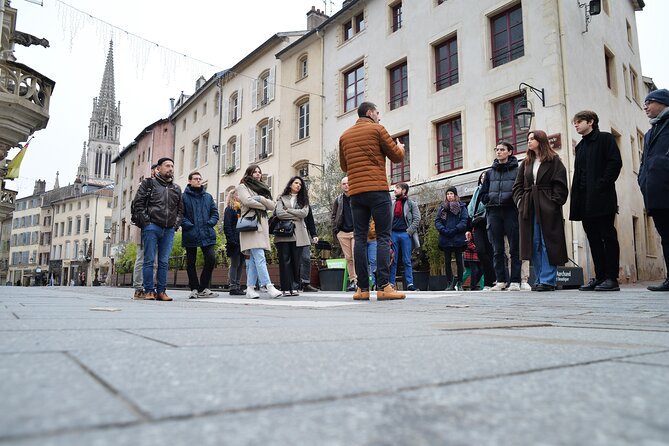
Meet at Place Stanislas in Nancy. The activity returns to the same meeting point, which keeps the logistics simple.
The tour lasts approximately one hour and 30 minutes. You will be outdoors for the full route, moving between public squares, historic streets, and the park. Wear comfortable shoes and check the forecast before you set out. The information provided does not specify rest stops, indoor seating, or shelter from rain.
The tour is near public transportation, and most people can participate. Service animals are allowed. The group limit is 30 people.
Confirmation arrives when you book, and the mobile ticket makes it easy to keep the booking on your phone. You can cancel for a full refund if you do so at least 24 hours before the local start time. Cancellations or changes made inside that window are not accepted for a refund.
Because no museum admission is included, plan the walk as an orientation through the city rather than a ticketed monument tour. You can then choose your indoor visits based on what interests you most.
Who should book this Nancy history walk?
I would recommend it to a first-time visitor who wants a clear introduction before exploring independently. The route gives you Nancy’s main visual signature at Place Stanislas, then moves through the Old Town and finishes with a park, so you get more than one version of the city.
It also suits anyone who enjoys history but dislikes dry lectures. The focus on anecdotes, architectural clues, and local characters should keep the walk grounded in real places.
Families are a good match, provided everyone can follow French. The route has enough variety to hold the attention of different ages, and the guide’s use of humor is helpful during the more factual sections.
You might skip it if you want a private tour, a museum visit, or a walk conducted in another language. You might also prefer a longer experience if your main goal is to explore Pépinière Park or enter the city’s monuments.
For most French-speaking visitors, though, this is a well-priced way to get your bearings fast. Book it early if the timing matters, meet at Place Stanislas, and leave room afterward to revisit the places that catch your eye.
FAQ
Where does the tour begin?
The tour begins at Place Stanislas, Place Stanislas, 54000 Nancy, France.
Where does the tour end?
The activity ends back at the meeting point, Place Stanislas.
How long does the tour last?
The guided walk lasts approximately one hour and 30 minutes.
What language is the tour conducted in?
The tour is conducted in French.
What places does the route include?
The route includes Place Stanislas, Place de la Carrière, Grande Rue, and Parc de la Pépinière.
Is admission to museums and monuments included?
No. Entrance fees to monuments and museums are not included in the tour price.
How many people can join the tour?
The activity has a maximum of 30 participants.
Just added around Alsace
- Guided Tour “Unusual Nancy”★ 5.0 · 36 reviews
- Entrance ticket for guided tour of the Maginot Line at the Michelsberg★ 5.0 · 53 reviews
- Alsace villages half day tour from Colmar★ 5.0 · 186 reviews
- ICONICS Tour: 1/2 day on the Wine Route, visit of 2 Villages + Tasting.★ 5.0 · 159 reviews
- Alsace’s Gems Small Group Day Tour from Colmar★ 5.0 · 84 reviews
- The Emblematic: visit of villages, Haut-Koenigsbourg, Wine tasting★ 5.0 · 81 reviews
- Segway Tours 2h in Colmar★ 5.0 · 116 reviews
- Self-Guided and Interactive City Tour – Colmar★ 4.5 · 45 reviews
Historical Tours, compared.
Louvre Museum Entry with History of Mona Lisa
Read our review →

Vieux Lyon Cultural & Historical Walking Guided Tour (English)
Read our review →

Toulouse Food & History Tour with a Chef (in English)
Read our review →
Small-Group Full-Day Tour of Côte de Nuits, Côte de Beaune Vineyards and Beaune Historical District
Read our review →
Browse the lists this tour appears in