
Reviewed · DESSERT TOURS
Paris: Bread and Croissant-Making Class
Paris: Bread and Croissant-Making Class Review
The best part of this class is that you go behind the counter of a working, family-run Paris bakery and learn from a baker whose craft has passed through several generations. Didier shows you how flour, fermentation, shaping, and heat turn simple ingredients into a crisp baguette and flaky croissant.
I like the small group of up to eight, which gives the baker room to watch your technique and answer questions. I also like the tasting element: you sample warm baguettes and croissants during the session, including the bakery’s own La Parisse baguette. The main consideration is the price, $258 per person for two hours. That is a serious sum for a short class, so this works best if baking is a major interest rather than a casual break between sightseeing stops.
Key points at a glance
- Learn two baguettes: Make a classic French baguette and La Parisse, the bakery’s special version.
- Work with the dough: Get practical guidance on handling, shaping, and creating the right crust and crumb.
- Study croissants: Learn how to make and shape croissants, with tasting included.
- Meet a true artisan baker: Didier brings family baking traditions, technical skill, humor, and plenty of stories.
- Use multilingual support: Instruction is available in English, French, Japanese, and Spanish.
- Take the lesson home: Recipes are sent by email, and some sessions may include dough starter and extra bread.
A working bakery at 8 rue Oberkampf
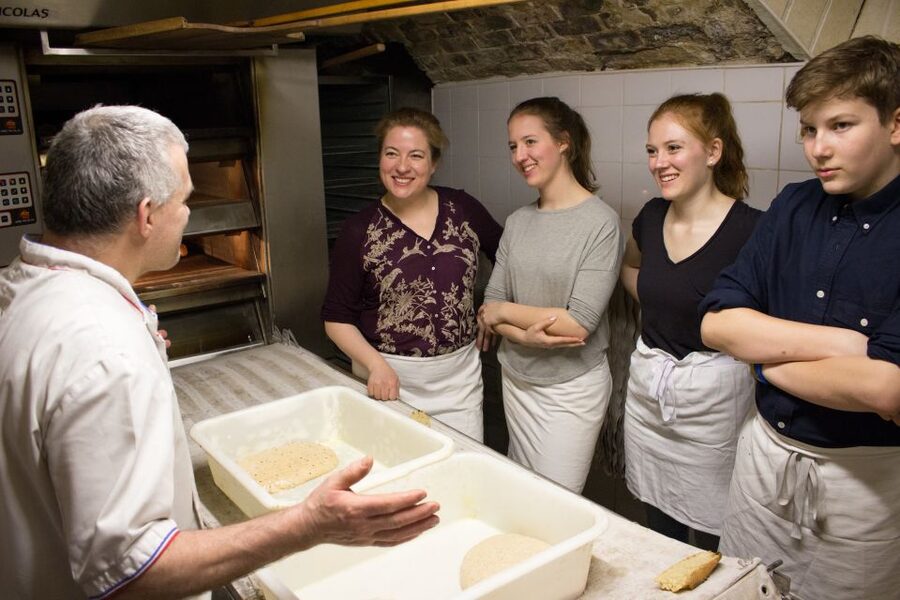
You meet at Le Petit Mitron, at 8 rue Oberkampf in Paris. This is not a staged demonstration in a hotel kitchen. You go into the bakery itself, put on an apron, and work with ingredients in the place where the baker makes and sells bread.
That setting matters. You see the equipment, the shop, and the daily world of French baking around you. The class feels informal and personal because Didier teaches in his own bakery rather than in a large cooking school. The bakery is described as modern, clean, and spacious enough for a small group.
The class is offered in English, French, Japanese, and Spanish. When Didier teaches in French, a translator may interpret into English or another supported language. Past sessions have included interpreters named Luis, Luce, and Elsa. The most useful interpreters do more than translate individual words. They explain baking terms and keep the lesson moving, which is important when the baker is working quickly.
You should still expect the class to have a social, conversational feel. Didier is known for his humor and energetic teaching style. That can make the two hours fly by, but it also means this is not a silent, highly technical laboratory session.
More pastry and chocolate tours in Paris:
- Paris: Day or Sunset Cruise with Drink, Ice Cream or Dessert
★ 4.4 · 4,225 reviews - Paris: Montmartre Cheese, Wine & Pastry Guided Walking Tour
★ 4.8 · 2,255 reviews - Award-Winning Paris French Bakery Experience — Le Marais, 4th Arr
★ 4.5 · 1,186 reviews
The baguette lesson starts with touch
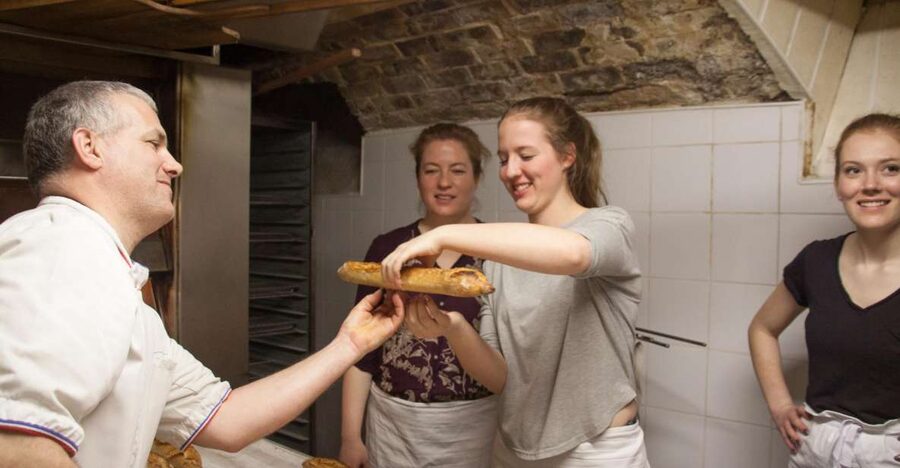
The class gets you close to the basic materials. You handle the flour and dough rather than simply watching a finished loaf come out of an oven. That hands-on part is valuable because bread dough can feel very different from what a recipe suggests.
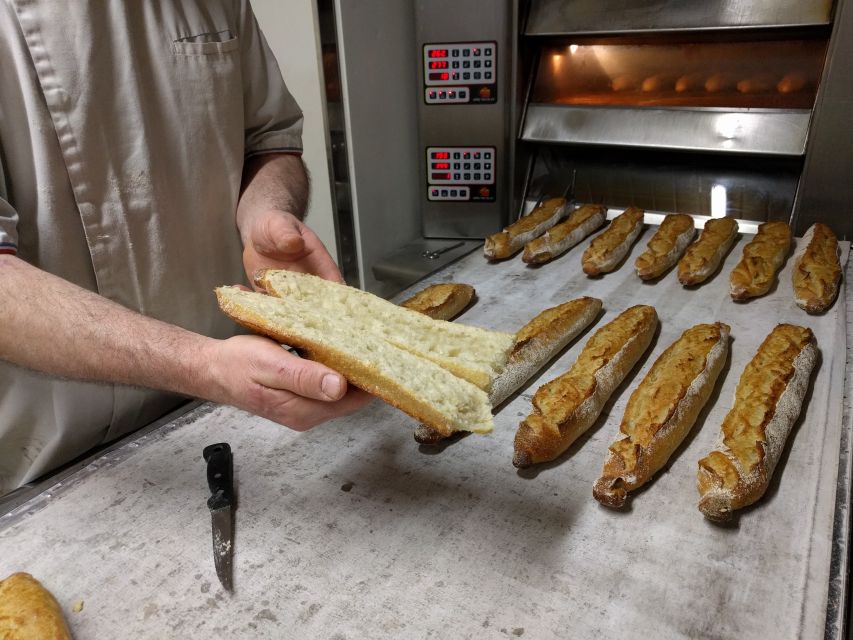
Didier explains the process from start to finish, including the small choices that affect the final loaf. You learn how to work toward the classic contrast: a crunchy golden crust outside and a soft, warm interior inside.
The aim is not only to copy a list of ingredients. You learn how to shape the dough and how the baker approaches texture. For home bakers, this is where the class earns much of its value. A written recipe cannot easily tell you what properly handled dough should feel like in your hands.
You make two types of baguette. The first is a classic French baguette, the loaf most people picture when they think of a Paris bakery. The second is La Parisse, a special baguette associated with this bakery. Making both gives you a useful comparison instead of one recipe repeated twice.
The class also includes background about French bread and how different shapes and styles developed. One point covered in the lesson is the story behind the baguette’s familiar form. These details give the technique a cultural setting without turning the session into a formal lecture.
Shaping croissants, then waiting for the oven
The croissant portion adds variety to the lesson. You learn how to make and shape croissants, with the baker showing how the pastry should be handled before baking.
The supplied information does not promise that each participant will complete every stage of croissant production alone. You should think of this as a guided workshop with demonstrations and practical work, not a full pastry-school course. Some past participants expected even more hands-on time, while still finding the instruction useful and entertaining.
The waiting period is part of the experience. Bread and pastry need time in the oven, and the finished tasting comes near the end. If you arrive hungry, that can feel like a long wait while warm loaves and pastries are within sight. One practical tip is simple: eat a light meal beforehand, but leave room for the tasting.
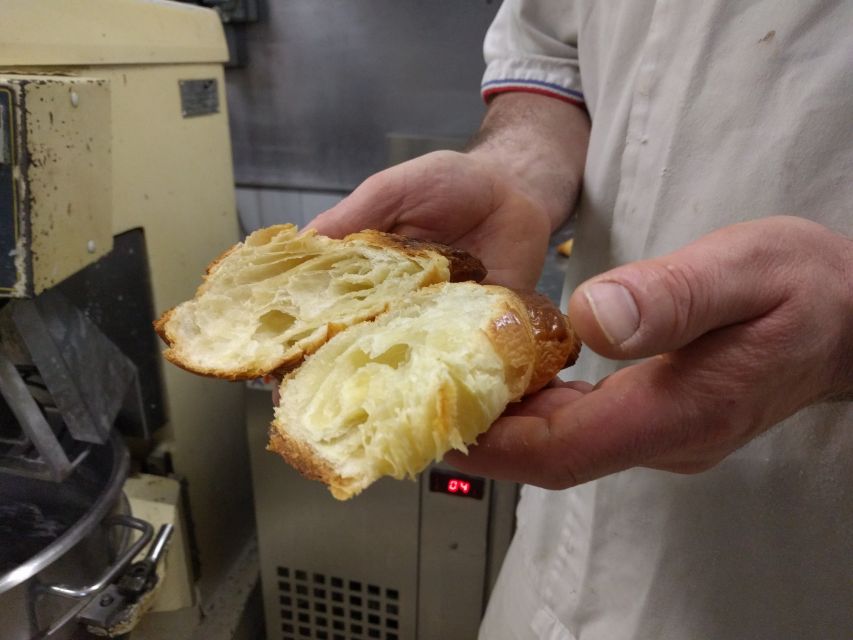
The reward is fresh bread at the point when the crust is still crisp and the inside is warm. You taste the baguettes and croissants made during the class, and some sessions include several types of bread. The difference between warm bakery bread and a loaf that has cooled for hours is easy to appreciate here.
Didier brings the bakery’s family story to the table
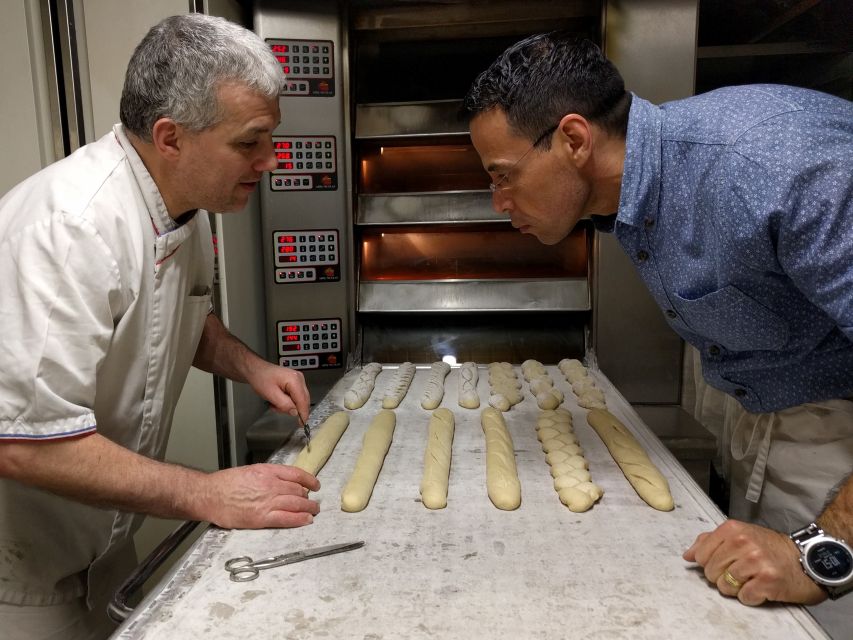
Didier is not presented as a generic cooking instructor. His father and grandfather were bakers, and he has owned his boulangerie for years. That family connection gives the class a clear sense of place and craft.
He also shares practical details from his own work. One particularly unusual detail is that he sources his own wheat and grinds it in the shop. That makes the conversation about flour more concrete. You are not just hearing that ingredients matter. You are seeing how a baker makes decisions about the raw material.
The lesson can range beyond recipes. It may include French food traditions, the development of bread styles, current issues facing a bakery, and questions about flour and gluten. One session even addressed gluten intolerance and the use of flour made on site without additives. You should not treat that as medical advice or assume the class is suitable for every dietary need, but it shows that the discussion can be more thoughtful than a basic baking demonstration.
Didier’s humor is a major part of the tone. He has been described as warm, funny, high-energy, and generous with his time. That personality works especially well for families and mixed-age groups. Children can stay engaged with the activity, while adults get useful explanations about technique.
A few more Paris half-days worth comparing
- Paris: Louvre Museum Timed-Entrance Ticket
★ 4.6 · 71,977 reviews - Disneyland® Paris 1-Day Ticket
★ 4.6 · 49,412 reviews - Paris: Versailles Palace and Gardens Full Access Ticket
★ 4.6 · 41,579 reviews - Paris: Evening River Cruise with Music
★ 4.4 · 22,721 reviews
How much hands-on baking will you really do?
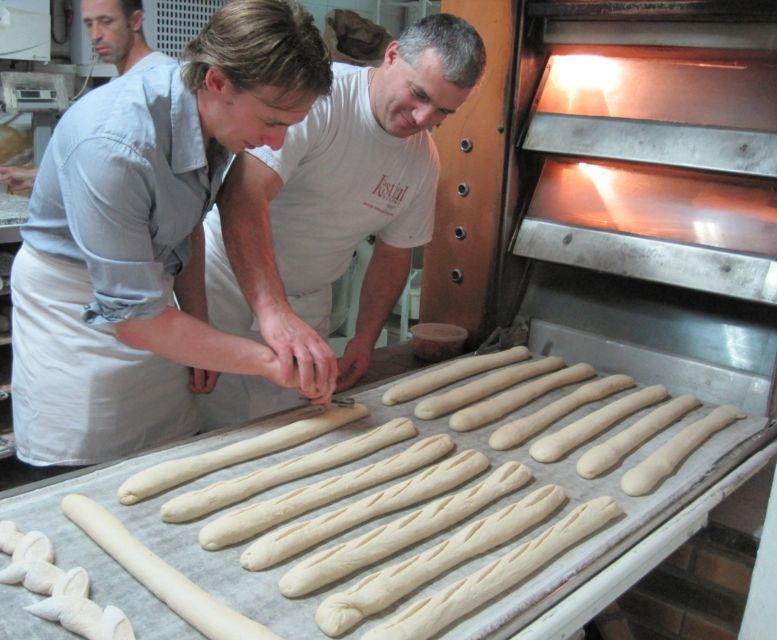
This is a workshop, but the balance between doing and watching matters. You will handle dough, shape bread, and learn croissant techniques. You will also spend time watching demonstrations and listening to explanations while dough rests or bakes.
That mix suits you if you want to understand how a professional baker thinks. It may disappoint you if you expect to spend the entire two hours independently mixing, folding, laminating, shaping, and baking a complete batch from scratch.
The small group helps. With no more than eight people, the baker can give individual attention and invite participants to try the techniques. Several past sessions included families with children, couples, and people who already bake at home. The class has also worked well for groups ranging from children to older adults.
The level of instruction can be surprisingly useful for experienced home bakers. The focus is on small corrections and practical methods, not only on a novelty activity. At the same time, beginners can follow along because the baker demonstrates each stage and the interpreter helps explain the process.
You should wear clothes you do not mind getting flour on, even though an apron and utensils are supplied. The class involves touching dough and working at bakery counters, so it is best approached as an active session rather than a polished tasting event.
The tasting is more than a final reward
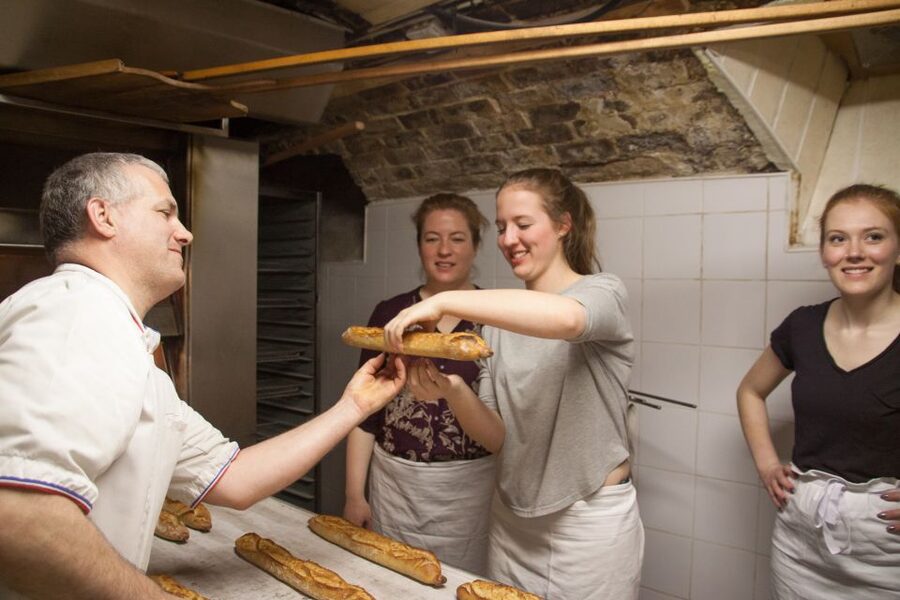
The food is one of the strongest reasons to book this class. You taste the bread and croissants while they are fresh, and the class may leave you with enough bread to enjoy later. One family even received a large bag of baguettes and a dough starter after its session, though you should not assume every booking includes exactly the same extras.
You may also taste different baguettes and pastries as the baker explains their differences. This gives you a better sense of texture and flavor than a recipe alone can provide.
There is one small drawback. The class does not list a separate snack service during the teaching portion. If you are watching warm bread cool while waiting for the tasting, hunger can make the lesson feel longer. I would not arrive after skipping breakfast.
The recipes are sent by email, which is useful because bread making involves plenty of details. You can refer back to the instructions at home rather than trying to remember every measurement and shaping step. If you are already a home baker, bring questions about your own bread-making problems and use the class time well.
Who gets the best value from $258?
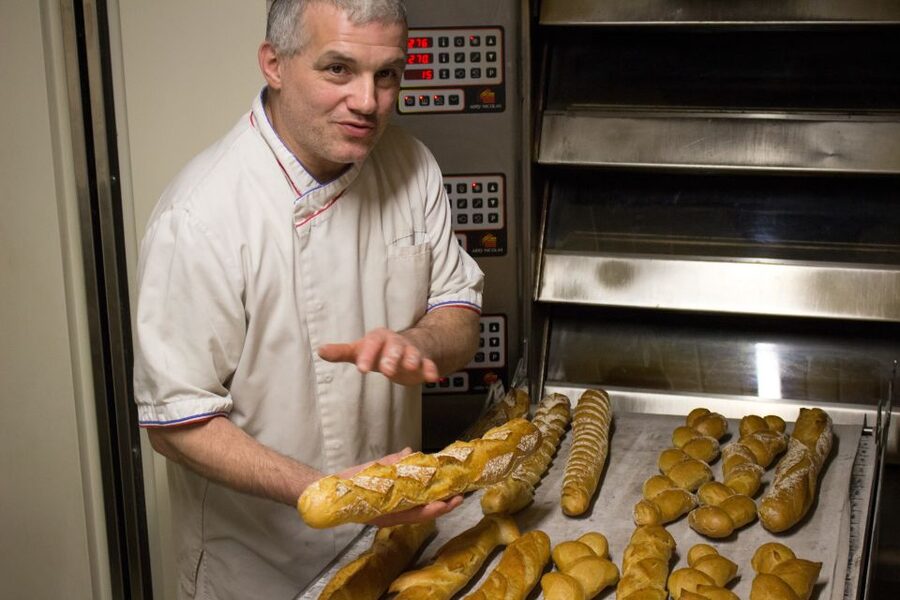
At $258 per person, this is expensive compared with a simple Paris food tour or a short demonstration. The price makes more sense when you consider the small group, the time with a working artisan baker, the hands-on practice, the tastings, the multilingual support, and the recipes for home use.
Still, the value depends on your priorities. If you want the cheapest way to eat a croissant in Paris, this is not it. If you want an entertaining activity with a few samples, you may find the cost hard to justify.
I think the class works best for three types of people:
- Home bakers: You can take the methods back to your own kitchen and practice them again.
- Families: Children from about six years old can take part, and the baker’s humor helps keep younger participants involved.
- Food-focused visitors: You get cultural context along with practical work and fresh tasting.
It is also a good choice for a repeat visit to Paris. Once you have seen the major sights, a morning or afternoon spent learning how a familiar French food is made can feel more personal than another standard attraction.
The class is not suitable for children under six. Older children have taken part successfully, including eight, ten, eleven, and twelve-year-olds, but the experience still requires attention and a willingness to work with dough.
Timing, language, and cancellation details
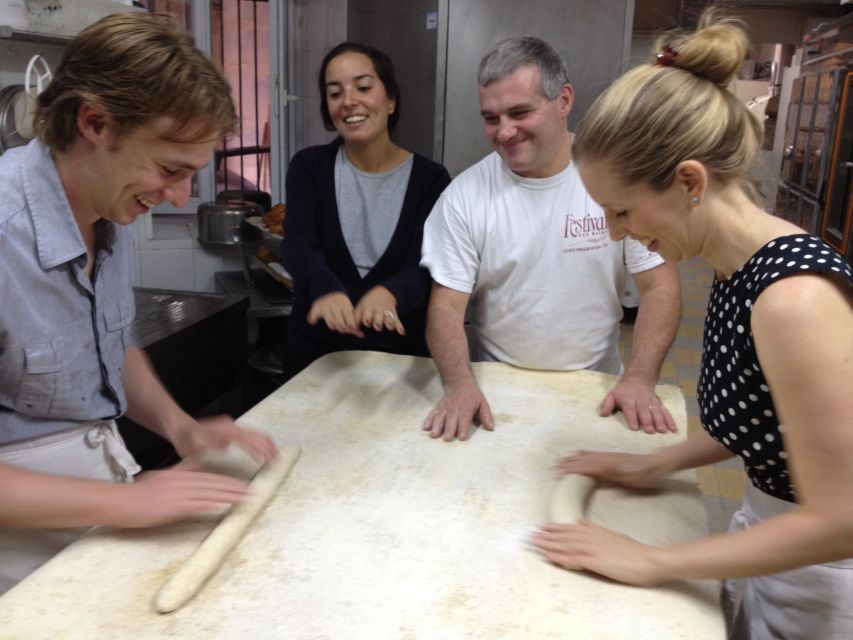
The activity lasts two hours, with starting times set by availability. Because the class includes mixing, shaping, resting, baking, and tasting, the schedule may feel full rather than leisurely.
You can book with instruction in English, French, Japanese, or Spanish. English-speaking visitors should pay attention to the language option when reserving, since a translator can make technical explanations much easier to follow.
The meeting point is Le Petit Mitron, 8 rue Oberkampf, 75011 Paris. The group is limited to eight participants, although a smaller turnout can sometimes give you an especially personal lesson.
Free cancellation is available up to 24 hours before the activity for a full refund. You can also reserve now and pay later, which helps if your Paris plans are still shifting.
Should you book this Paris baking class?
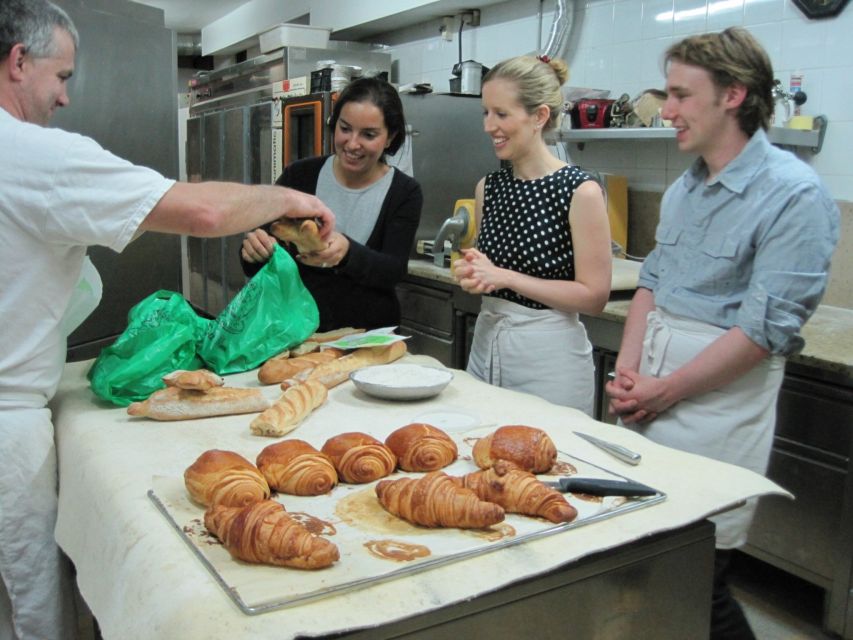
Book it if you want to do more than eat French bread. You will handle dough, compare two baguettes, shape croissants, meet an expressive artisan baker, and leave with methods you can try at home.
I would especially recommend it to families, serious home bakers, and anyone who values a small, local setting over a big sightseeing production. The price is high for two hours, and the session includes some watching as well as hands-on work. But if the chance to learn inside a real bakery and taste bread fresh from the oven is one of your Paris priorities, this is a strong use of an afternoon.
FAQ
Where does the bread and croissant class meet?
The class meets at Le Petit Mitron, 8 rue Oberkampf, 75011 Paris.
How long does the class last?
The class lasts two hours. Starting times depend on availability.
What will I learn to make?
You will learn to make a classic French baguette, the bakery’s special La Parisse baguette, and croissants. You will also learn shaping and baking techniques.
Is the class available in English?
Yes. Instruction and translation support are available in English, French, Japanese, and Spanish.
How large is the group?
The class is limited to eight participants.
Are children allowed to attend?
Children under six are not allowed to attend. Older children have taken part in the class.
What is included in the price?
Ingredients, utensils, and an apron are included. You also receive a copy of the recipe by email and taste the bread and pastries made during the class.
Just added around Paris
- Paris: Croissant Baking Class with a Chef★ 5.0 · 201 reviews
- Cooking Class with a Parisian Chef★ 5.0 · 46 reviews
- Cocktails lessons in Speakeasy★ 4.5 · 72 reviews
- Paris: Choux Pastry and Chocolate Éclair Making Class★ 4.9 · 50 reviews
- Paris: Classic Sites Tour by Vintage Citroen 2CV★ 4.6 · 189 reviews
- Paris: Cheese and Wine Class in a 17th Century Cellar★ 4.8 · 91 reviews
- Paris: Romantic Photoshoot for Couples★ 4.9 · 131 reviews
- Paris Bike Tour: Eiffel Tower, Place de la Concorde & More★ 4.7 · 193 reviews
Dessert Tours, compared.

Paris: Day or Sunset Cruise with Drink, Ice Cream or Dessert
Read our review →
Montmartre Cheese, Wine & Pastry Guided Walking Tour
Read our review →
Award-Winning Paris French Bakery Experience — Le Marais, 4th Arr
Read our review →

Private Montmartre Food Tour with Wine, Cheese & Pastries
Read our review →
Paris French Sweets Tasting Tour with Pastries and Chocolates
Read our review →
Paris Croissant Small-Group Baking Class with a Chef
Read our review →
Browse the lists this tour appears in