
Reviewed · COOKING CLASSES
Paris Croissant Small-Group Baking Class with a Chef
The best part of this Paris class is that you do not simply watch a chef fold pastry dough. You work the dough yourself, shape croissants and pain au chocolat, then eat the warm results straight from the oven. You also make pain au raisin, so the lesson covers more than one French bakery classic.
I like the small-group format, which gives you room to ask why each step matters. I also like the practical finish: you taste the pastries, take some home, and receive an illustrated recipe booklet. The main catch is the price, $157.21 per person, and the occasional risk of a last-minute cancellation if a chef becomes ill.
Key points at a glance
- Hands-on pastry work: You knead, roll, laminate, shape, and bake instead of watching a long demonstration.
- Three French favorites: The class covers croissants, pain au chocolat, and pain au raisin.
- A Marais location: The studio is at 7 Rue de Béarn in the third arrondissement, close to Place des Vosges.
- Small groups: Sessions are often limited to about eight people, with a stated maximum of 12.
- Useful take-home skills: You receive the recipes and leave with pastries you helped make.
- Family-friendly pace: Children as young as seven have taken part successfully, with a parent or accompanying adult.
Starting at 7 Rue de Béarn near Place des Vosges
Your class begins in the Marais, one of Paris’s easiest neighborhoods for combining a scheduled activity with a good wander. The meeting point is 7 Rue de Béarn, 75003 Paris, just around the corner from Place des Vosges. The address is near public transportation, and the activity ends back at the same place.
That location matters. You are not being sent out to an industrial area on the edge of the city for a pastry lesson. You can pair the class with a walk through the Marais, a visit to Place des Vosges, or lunch nearby. Give yourself enough time to find the studio without rushing. Pastry work rewards calm hands, and arriving flustered is not the best way to begin.
Inside, you receive an apron and utensils before the work starts. The studio is fully equipped for the lesson, and hot and cold drinks are available throughout. This is a working class rather than a polished cooking show, so expect flour, butter, active participation, and plenty of standing around a shared work area.
The published details describe sessions as small, usually limited to eight participants, while the overall maximum is 12. In practice, that means the class should feel more personal than a large group demonstration, though the exact number can vary. Smaller groups are especially useful when you are trying to judge dough texture or shape a pastry for the first time.
More cooking classes in Paris:
- Paris Cooking Class and Lunch with Wine plus Market Visit Option
★ 5.0 · 1,024 reviews - Paris: French Croissant Baking Class with a Chef
★ 4.9 · 712 reviews - Paris Cooking Class: Learn How to Make Macarons
★ 5.0 · 634 reviews
Mixing, kneading, and learning why pastry takes time
The first part of the lesson focuses on the dough. You begin with instruction from a professional chef, then follow the steps yourself. The teacher explains how to make and knead the dough before moving on to the more delicate work.
Croissant dough is not difficult because it requires exotic ingredients. It is difficult because timing, temperature, pressure, and handling all matter. The class gives you a chance to see those details up close. You learn that pastry is not just a list of ingredients. It is also about how firmly you roll, how evenly you work, and when to stop.
That hands-on approach is the real value here. At home, a recipe may tell you to knead until the dough is smooth or roll it into a certain shape. Those instructions can be hard to judge if you have never handled the dough before. In class, the chef can show you what the dough should feel and look like, then correct your technique as you work.
The chefs named in the feedback include Clara, Felix, Milly, Prisca, Rosalie, Lizzy, Delphine, Leslie, and Ines. You should not assume you will get a particular instructor, but the teaching style described across the sessions is consistent: patient explanations, clear English, personal help, and extra context about French food culture. Prisca, for example, has included a few French words and cultural notes while teaching the pastry steps.
Laminating the dough with butter
The key technical stage is lamination. This is where butter is worked into the dough through repeated folding and rolling, creating the thin layers that puff in the oven. One of the most useful parts of this class is that you take part in that process rather than being handed a prepared piece of dough.
This is also where you need to pay attention. Croissants are forgiving in a bakery window, but less forgiving on a worktable. Uneven rolling can affect the layers. Butter that is too soft or too firm can make the process harder. A chef guiding the group can explain what to watch for and help you avoid the most common errors.
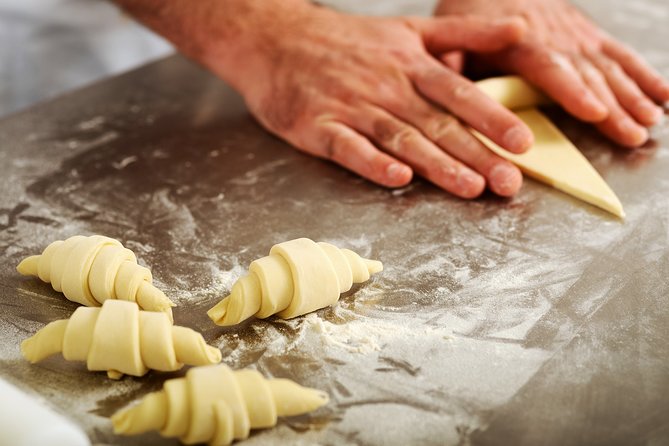
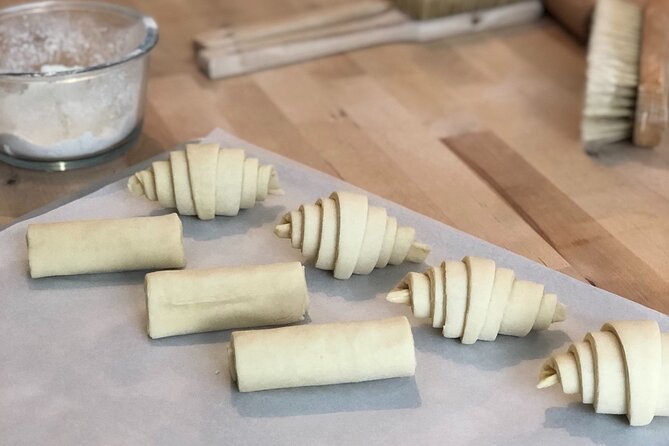
You will work toward the classic triangular croissant shape first. Then you use related techniques for pain au chocolat, which is filled with chocolate, and pain au raisin. The class therefore gives you a useful comparison between a plain crescent-shaped pastry, a chocolate-filled pastry, and a spiral pastry with raisins.
Do not expect a professional baker’s apprenticeship in two and a half hours. You will not master every part of French pastry production in one morning or afternoon. What you do get is a solid introduction to the stages that matter most, plus enough practical understanding to try again at home.
Shaping croissants, pain au chocolat, and pain au raisin
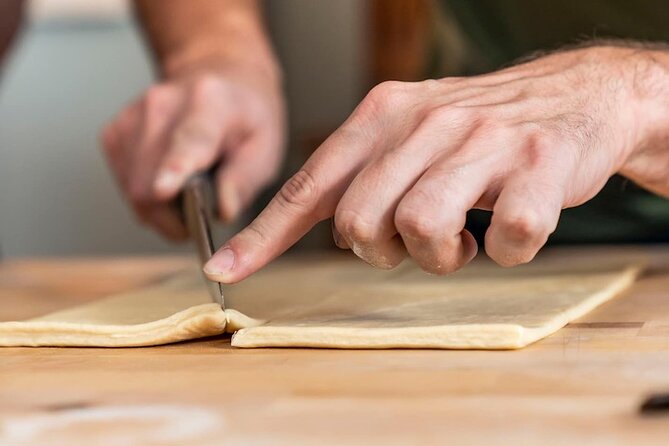
Shaping is the most satisfying part for many people because the dough begins to look like something recognizable. You cut and form the pieces, then prepare the different pastries. The work is repetitive enough to be manageable, but varied enough to keep the class moving.
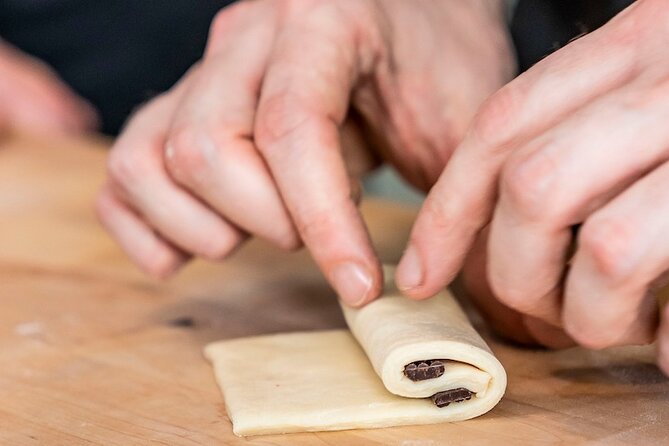
Croissants require care as you roll the triangle into its familiar curved form. Pain au chocolat is more direct, with chocolate placed inside the dough before it is folded and shaped. Pain au raisin gives you another style to practice, with a spiral form rather than the classic crescent.
The class description presents all three pastries as part of the same workshop. Some session details in the feedback focus on croissants and pain au chocolat, while a few people received additional pastries or used dough remnants for other shapes. Treat the exact mix as something that may vary with the class rather than counting on a special extra.
The quantity can also be generous. Several class accounts describe leaving with two croissants and two pain au chocolat per person, and one description warns that you may end up with about four pastries each. That is good news if you are hungry, but less convenient if you have a full dinner planned soon after. Bring a bag if you want to carry pastries around Paris without crushing them.
More pastry and chocolate tours in Paris:
- Paris: Day or Sunset Cruise with Drink, Ice Cream or Dessert
★ 4.4 · 4,225 reviews - Paris: Montmartre Cheese, Wine & Pastry Guided Walking Tour
★ 4.8 · 2,255 reviews - Award-Winning Paris French Bakery Experience — Le Marais, 4th Arr
★ 4.5 · 1,186 reviews - Paris: Entrance Ticket to the Chocolate Museum
★ 4.1 · 1,105 reviews
Fresh from the oven, with drinks and a recipe booklet
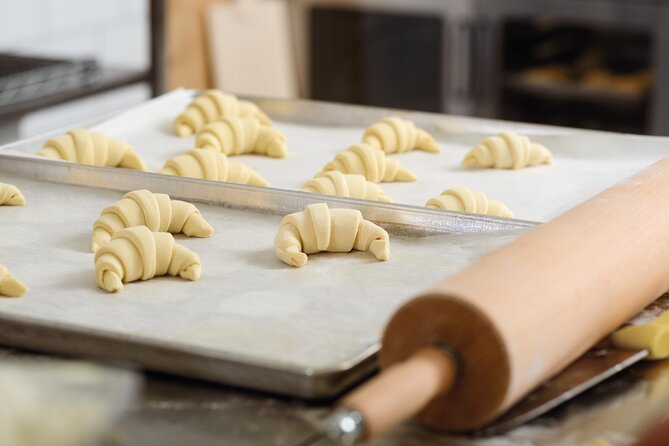
After shaping, the pastries go into the oven. The final wait is part of the lesson, and the reward is eating the baked goods while they are still fresh. You taste what you made rather than simply packing everything away for later.
Hot and cold drinks are included during the workshop. That keeps the session relaxed and gives you something to enjoy while the pastries bake. You also take away the baked products, subject to what your group makes that day.
The illustrated recipe booklet is more important than it may first appear. A croissant recipe can look simple on paper, but the difficult points are usually the small decisions: how the dough should feel, how thin to roll it, and how to handle the butter. The booklet helps you remember the order of the work after your Paris trip.
Several people have successfully made the pastries at home after taking the class. That does not mean your first home batch will look exactly like the ones from a professional studio. It does mean the lesson gives you a better starting point than reading a recipe alone.
Why the small group changes the lesson
A pastry class can become frustrating when one chef is trying to help 20 people at once. Here, the advertised group size is usually around eight, with a maximum of 12. That is a useful balance between shared energy and individual attention.
You can ask questions while you work. If your dough looks too thick or your shaping is uneven, you have a reasonable chance of getting help before the pastries reach the oven. Several instructors, including Milly, Clara, Prisca, and Ines, have been praised for explaining not only what to do but why the step matters.
The class also suits mixed skill levels. Beginners can follow the chef step by step, while more experienced home bakers can focus on technique and timing. You do not need to arrive with baking knowledge, and the class is not only for people who already own a stand mixer or a pastry scraper.
Families can make good use of the format. Children aged seven, nine, 12, 13, and 15 have taken part in sessions described in the supplied information. Younger children may need help with hot trays, sharp tools, and heavy rolling, but the activity gives them a real task rather than asking them to sit through a demonstration.
Is $157.21 a fair price?
At $157.21 per person, this is not a bargain bakery breakfast. You are paying for a two-and-a-half-hour class, a professional chef, ingredients and equipment, drinks, instruction, a recipe booklet, and the pastries you make.
The value depends on what you want from Paris. If you only want to eat a good croissant, spend a few euros at a bakery. If you want a guided activity that teaches you how the pastry is made, the price becomes easier to justify. You are also paying for an experience you can repeat at home, which gives it more lasting value than a one-time tasting.
The cost makes most sense for couples, families, and small groups who want a break from museums and monuments. It is also a practical choice for repeat visitors who have already seen the major sights and want a more active morning or afternoon.
I would hesitate to book it if your budget is tight or if you have little interest in baking. The class is centered on the process, not just on eating. You need to be willing to knead, roll, shape, wait, and clean up as part of the fun.
The activity is booked, on average, 43 days in advance, which suggests that you should not leave it until the last minute if the schedule matters to you. Free cancellation is available up to 24 hours before the start time. Changes or cancellations inside that 24-hour window are not accepted for a refund.
What can go wrong?
The overwhelming pattern is a smooth, enjoyable class, but you should know about the practical risk of cancellation. At least one session was cancelled on the day because the pastry chef became ill. The provider offered another Maison Fleuret location, but that alternative did not suit the person who had booked.
Another reported problem involved an instructor who did not arrive and gave no notice. That is a serious service failure, especially when you have crossed Paris by taxi and planned your day around the class. These incidents appear to be exceptions, but they are worth considering when booking a time-sensitive activity.
If the class is a major part of your Paris plan, avoid placing it immediately before a train, flight, or ticketed attraction that cannot be changed. Keep the provider’s contact details available on the day. Last-minute illness is not something a cooking school can always prevent, but clear communication matters greatly when it happens.
Who should book this pastry class?
I would recommend it most for people who want to do something in Paris, not simply see another sight. It works particularly well for families, couples, and friends who enjoy food and want a shared activity with a clear result.
It is also a strong choice for home bakers. You will learn the basic structure of laminated pastry, get to ask practical questions, and leave with recipes to try later. The lesson is suitable for beginners, and more experienced bakers can still pick up useful handling tips.
Children can take part, but adults should expect to help with safety and concentration. The class includes hot ovens and pastry tools, so it is not a completely hands-off children’s activity.
You may want to skip it if you dislike group instruction, have limited mobility for standing and working, or are searching only for a quick food tasting. The available information does not promise private transportation or a private class. It is an English-language workshop in a shared studio.
Should you book the Maison Fleuret class?
Book this class if you want a practical Paris memory that keeps working after you return home. The location near Place des Vosges is convenient, the class covers several classic pastries, and the small-group format gives you a fair chance to receive personal help.
The strongest reasons to go are the hands-on lamination, the warm pastries at the end, and the recipe booklet. The main reasons to pause are the high price and the small possibility of a last-minute cancellation.
For a family or food-loving couple, I consider it a good use of two and a half hours. For a budget-conscious visitor who only wants a croissant, a bakery is the better deal. For anyone curious about how French pastry actually comes together, this class offers far more than a pastry on a plate.
FAQ
Where does the croissant baking class begin?
The class begins at 7 Rue de Béarn, 75003 Paris, France, in the third arrondissement near Place des Vosges.
Where does the activity end?
The activity ends back at the meeting point at 7 Rue de Béarn.
How long does the class last?
The workshop lasts approximately two hours and 30 minutes.
What pastries will I make?
The class covers a classic croissant, pain au chocolat, and pain au raisin.
Is the class taught in English?
Yes. The activity is offered in English.
How many people can join the class?
The workshop is described as a small-group activity, often limited to eight participants, with a maximum of 12 travelers.
Are drinks included?
Yes. Hot and cold beverages are provided throughout the workshop.
Can I take pastries home?
Yes. The baked products are included, and participants can take the pastries they make with them.
Do I receive recipes?
Yes. Each participant receives an illustrated recipe booklet.
Can I cancel for a full refund?
You can cancel at least 24 hours before the scheduled start time for a full refund. Cancellations or changes made less than 24 hours before the start time are not accepted for a refund.
Just added around Paris
- Paris: Croissant Baking Class with a Chef★ 5.0 · 201 reviews
- Cooking Class with a Parisian Chef★ 5.0 · 46 reviews
- Cocktails lessons in Speakeasy★ 4.5 · 72 reviews
- Paris: Choux Pastry and Chocolate Éclair Making Class★ 4.9 · 50 reviews
- Paris: Classic Sites Tour by Vintage Citroen 2CV★ 4.6 · 189 reviews
- Paris: Cheese and Wine Class in a 17th Century Cellar★ 4.8 · 91 reviews
- Paris: Romantic Photoshoot for Couples★ 4.9 · 131 reviews
- Paris: Bread and Croissant-Making Class★ 4.8 · 206 reviews
Cooking Classes, compared.
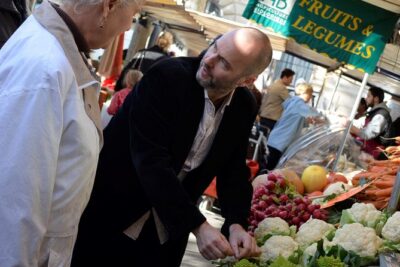
Paris Cooking Class and Lunch with Wine plus Market Visit Option
Read our review →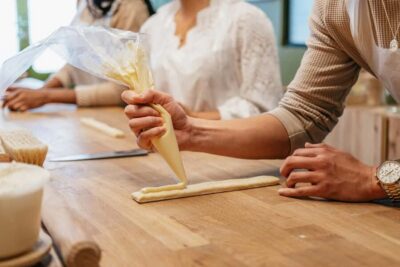
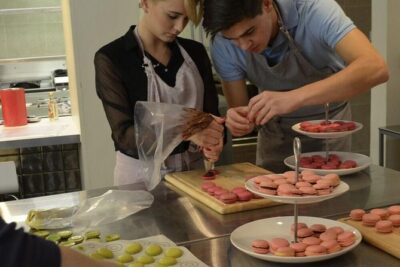
Paris Cooking Class: Learn How to Make Macarons
Read our review →
Paris Evening Cooking Class French Dinner and Market Visit Option
Read our review →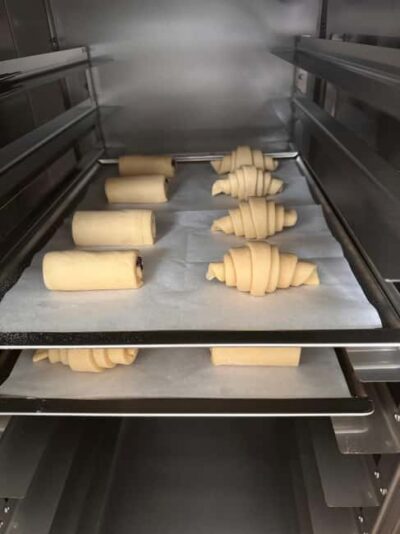
French Macarons Baking Class with a Parisian Chef
Read our review →
Browse the lists this tour appears in