
Reviewed · WALKING TOURS
Saint-Émilion: Vineyard Walking Tour and Tasting
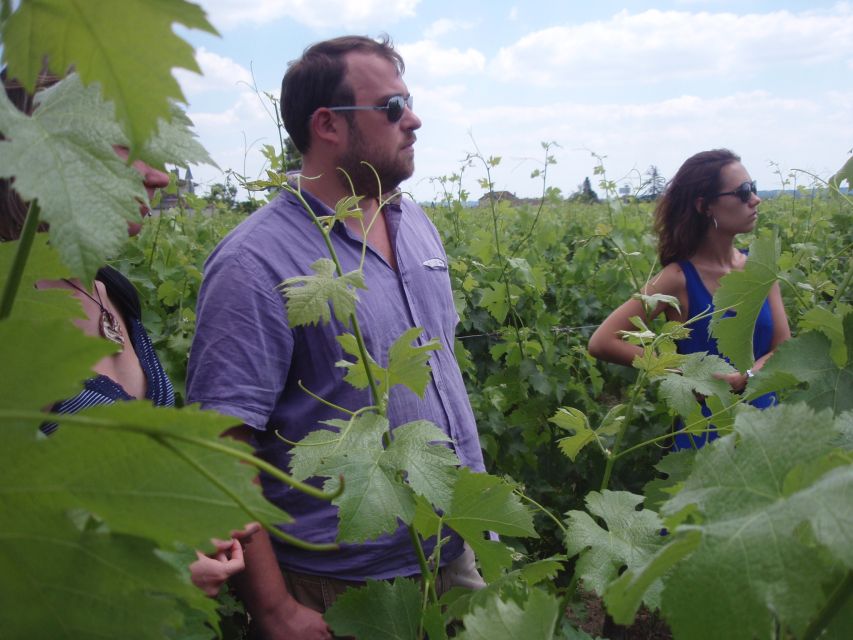
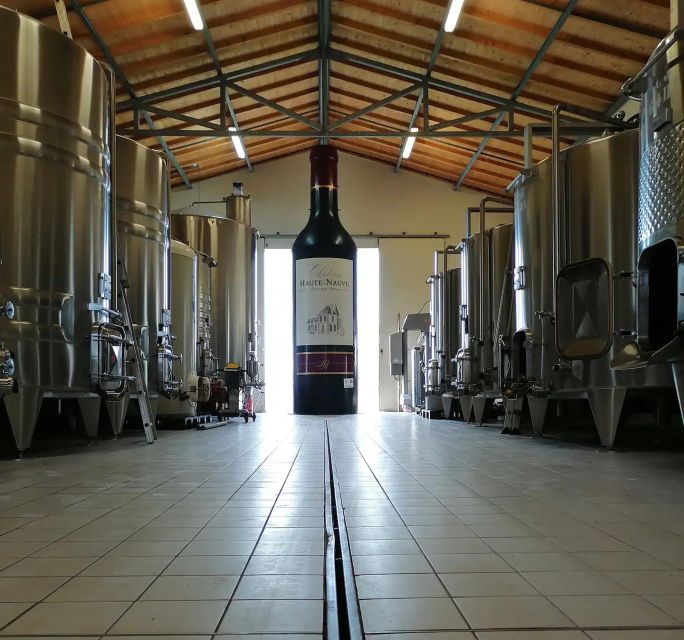
At Château Haute-Nauve, wine is not presented as a polished product behind a tasting-room counter. You walk among the vines with Florent or Marie-Anne, fourth-generation members of the family, then follow the grapes into the working cellar and barrel room. The unusual details help: a six-meter wine bottle, a wind turbine, solar panels, and a frank look at frost, diversification, and new wine styles.
I like the small groups, capped at 10, and the way the tour connects vineyard work with what ends up in your glass. I also like the price: $29 covers a two-hour guided visit and four wines, including two Grand Cru appellations. The main drawback is practical rather than cultural: Château Haute-Nauve sits about 3 kilometers from Saint-Émilion, and the owners recommend arriving by car.
Key points to know before you go
- Meet a fourth-generation wine family: Florent or Marie-Anne leads the visit and explains the estate from personal experience.
- Walk through working vineyard plots: You learn how care changes through the seasons, including the problems caused by frost.
- See the full production chain: The route includes the vinification cellar, fermentation equipment, pumping, pressing, and barrel ageing.
- Look for the six-meter bottle: It is one of the estate’s memorable visual surprises and also relates to frost protection.
- Taste four estate wines: The final tasting includes two wines carrying Grand Cru appellations.
- Plan your transport: The château has parking, but the location is outside the village center.
A family-run château near Saint-Émilion
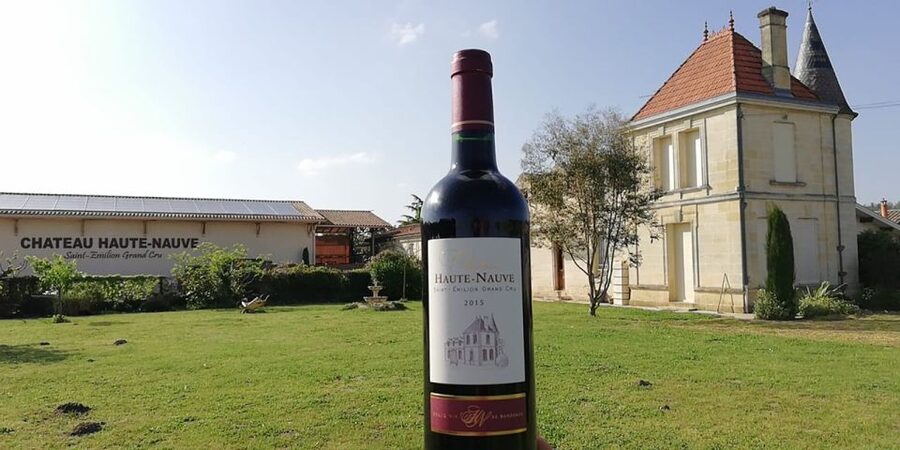
This is a useful choice if you want more than a quick tasting in town. Château Haute-Nauve is a family vineyard about 3 kilometers from Saint-Émilion, close enough to pair with a visit to the famous village but far enough out to give you open views across the vines.
The estate has been in the family for four generations. That matters because Florent can explain the work as an owner and producer, not simply as someone repeating a standard script. He talks about the decisions made on this particular property, the effect of soil and weather, and the practical demands of making wine year after year.
The tone is friendly and informal. Florent is often described as warm, funny, and easy to talk with, while Marie-Anne also leads tours. If you enjoy asking questions, this format gives you room to do it. A small group also helps the visit feel personal rather than like a large procession moving between buildings.
The estate welcomes English and French speakers. Several families with children have enjoyed the two-hour format, though the central subject is still wine production, not a children’s attraction.
More Walking Tours in Bordeaux
- Private – Best of Bordeaux Walking Tour + Glass of Bordeaux Wine
★ 5.0 · 240 reviews - Professional – Bordeaux Wine and Cheese Tasting with a walking tour
★ 5.0 · 218 reviews - 2-Hour Walking Tour of the City’s Iconic Sights and History
★ 4.0 · 207 reviews
Walking the vines and understanding Saint-Émilion wine
The tour begins outside, with a walk through the vineyard. This is important because many wine visits rush straight to the cellar. Here, you first see the vines and several plots, then learn how the work changes over the year.
You hear about grape varieties, the Saint-Émilion appellation, and the effect of soil and climate. The guide also explains how the family cares for the plants and deals with difficult weather. Frost is a real concern in the spring, and the estate’s approach includes practical measures that make the risks easier to understand.
This part is strongest for anyone who wants to know what happens before harvest. You get a clearer sense of why a vintage is not simply the result of a recipe. Weather, timing, vine care, and the character of each plot all affect the final wine.
The walk is not a strenuous hike, but you should wear comfortable shoes. You will be outside, so bring clothing suited to the weather. The ground and conditions can change with the season, and a vineyard tour is more enjoyable when you are prepared for sun, wind, or damp weather.
One of the memorable sights is a bottle of wine about six meters tall. It is not just a giant decoration. The estate uses creative ideas and equipment in its work, including ways to face frost and changing conditions. You will also see a wind turbine, and the château’s large building has solar panels. These details give the sustainability discussion a practical setting.
The family also talks about diversification and the development of new wine varieties. That is a valuable counterpoint to the idea that Bordeaux wine is frozen in the past. Tradition matters here, but so does finding sensible ways to keep a family business working in a changing climate and market.
Inside the vinification cellar
After the vineyard walk, you move into the vinification cellar. This is where the grapes become wine, and the guide explains the stages in plain language.
You see the technology used for fermentation, pumping, and pressing. The equipment makes the process easier to follow, especially if you are new to wine. Instead of hearing only about tasting notes, you see the machinery that moves and transforms the juice.
The guide covers the journey from grape to bottle, including the steps taken after the harvest. You may already know that grapes ferment, but watching the equipment and hearing how the estate handles the work gives the idea more meaning. It connects the vineyard outside with the wine you will taste later.
I appreciate that this section does not focus only on old-fashioned methods. You get a look at modern technology alongside the family’s long history. That balance is useful in Saint-Émilion, where the tradition can sometimes overshadow the daily work required to produce a consistent bottle.
The cellar visit is also a good reason to choose this experience over a simple tasting. If you want only a glass of Bordeaux and a view, there are easier options. If you want to understand production, this tour gives you the missing middle between vine and finished wine.
Barrel ageing and the final tasting
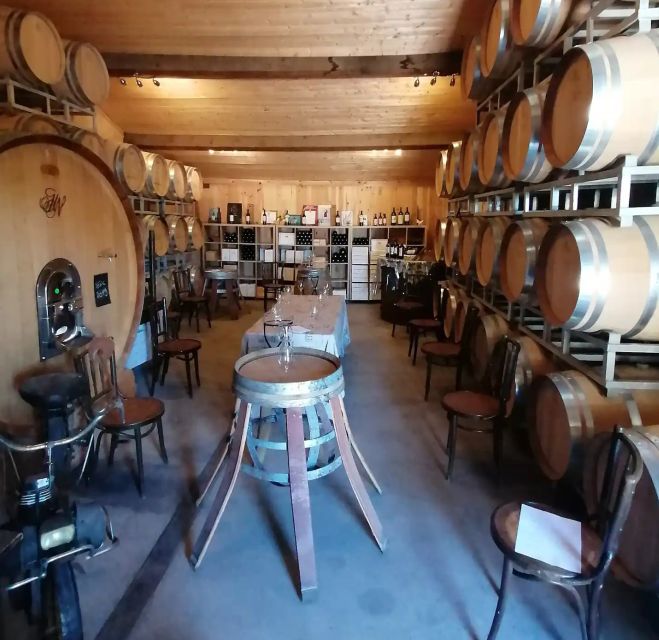
The route ends in the barrel cellar, where the guide explains how the wines age. This is a quieter part of the visit, but it helps you understand why the final product can change in character over time.
The tasting follows the cellar visit and includes four wines made at Château Haute-Nauve. Two have Grand Cru appellations. The wines show different styles, and the tasting is guided rather than simply poured without explanation. You can ask about the grapes, the plots, and the differences between the bottles.
I like this order. You first see the vines, then the production equipment, then the barrels, and only after that do you taste. The glass becomes easier to read because you have just seen the work behind it.
The wines have been described as ranging from smooth to full-bodied, with the Grand Cru wines receiving particular attention. Taste is personal, of course, and a Grand Cru label does not guarantee that every bottle will suit you. Still, four pours at this price give you a fair chance to compare the estate’s styles.
There is an opportunity to buy wine at the end. You are not required to purchase anything, and the wine purchases are separate from the tour price. If you are driving or have a sensible way to carry bottles, this can be a practical place to choose bottles for later in your trip. One visitor enjoyed the purchases with bread, cheese, and strawberries while continuing through Bordeaux and the Dordogne.
Same trip, a completely different kind of day:
- Bordeaux: Cité du Vin Entry Ticket and Wine Tasting
★ 4.6 · 3,885 reviews - Bordeaux: River Garonne Cruise with Glass of Wine and Canelé
★ 4.5 · 3,630 reviews - From Bordeaux: Afternoon Saint-Emilion Wine Tasting & snack
★ 4.8 · 1,581 reviews - Medoc or Saint Emilion Wine Tasting and Chateau from Bordeaux
★ 5.0 · 1,415 reviews
Why the two-hour format works
Two hours is enough time to cover the vineyard, production building, barrel cellar, and tasting without turning the visit into a full-day commitment. The outside portion takes a meaningful share of the visit, with one family group spending about 50 minutes in the vineyard before going indoors.
That timing suits a day trip from Bordeaux or a stop during a Saint-Émilion visit. You can fit the château into a larger day, though you should allow extra time for driving, parking, and visiting the village itself.
The group limit of 10 makes a real difference. Florent can answer questions, adjust his explanation to the people in front of him, and keep the tasting conversational. Some bookings may be especially small, and a private-feeling visit is possible when demand is light, but you should book expecting a small shared group rather than a guaranteed private tour.
The price is one of the strongest points. At $29 per person, you get a guided vineyard walk, a complete estate and cellar visit, and four wines. Since two of the wines carry Grand Cru appellations, the tasting alone would make the cost reasonable in Saint-Émilion. The added value comes from having the owner’s family explain the work and answer questions.
This is not a luxury meal or a transport-inclusive excursion. Food and transportation are not included. You should also remember that the price does not cover bottles you decide to buy.
Getting to Château Haute-Nauve
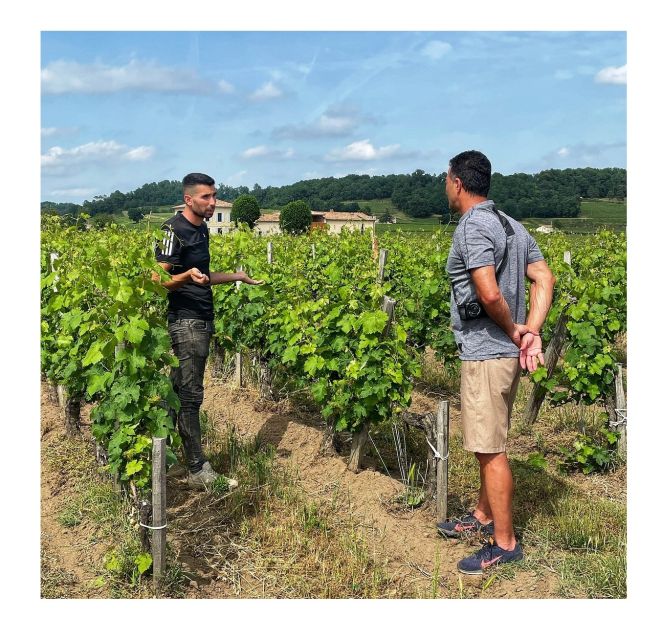
The meeting point is inside Château Haute-Nauve. Look for the car park near the large building with solar panels and the Château Haute-Nauve purple sign.
The owners recommend arriving by car. The château is about 3 kilometers from Saint-Émilion village, so it is not in the center of the historic streets. Some visitors have reached it by taxi or Uber, and it is close enough to the village to combine the two, but you should arrange your return transport in advance if you are not driving.
This location is both a benefit and a limitation. You get a proper vineyard setting rather than a town tasting room, but you need to plan the transfer. Public transport details are not provided, so do not assume that reaching the château will be as simple as walking from the train station.
The estate is wheelchair accessible according to the activity information. Still, because the tour includes time outdoors among vineyard plots, it is sensible to check the route and conditions directly if you have specific mobility needs.
Free cancellation is available up to 24 hours before the start time, and you can reserve now and pay later. Those options are helpful if your Saint-Émilion day depends on weather or a changing road schedule.
Who will enjoy this vineyard tour most
I would choose this experience for you if you want a personal introduction to Bordeaux wine rather than a formal lecture. It works especially well for people who want to understand the growing season, cellar equipment, and ageing process in one visit.
It also suits:
- First-time wine visitors who want the basics explained clearly.
- Experienced wine drinkers who enjoy meeting a small producer.
- Couples and families looking for a manageable two-hour activity.
- Anyone staying in or near Saint-Émilion with access to a car.
- Visitors who want to taste several wines before buying bottles.
You may want another option if your priority is a meal, vineyard transport, a long formal tasting, or a château in the center of Saint-Émilion. This visit is focused on production and family connection. The wine is central, but the real structure is grape to bottle.
The tour also has a practical advantage for mixed groups. People who know little about wine can follow the clear explanations, while more experienced drinkers can ask about varieties, terroir, fermentation, and ageing. The guide’s relaxed style helps keep the visit from feeling stiff or overly technical.
The most useful details to remember
Wear comfortable shoes and clothing suited to the weather. You will spend time outside before entering the working areas.
The tour is offered in French and English, lasts two hours, and is limited to 10 participants. Check the available start times before booking because the exact schedule can change.
You will taste four wines, including two Grand Cru appellations. Food is not included, so plan a meal separately. Additional bottles cost extra, and the château gives you the chance to browse and buy at the end.
Should you book Château Haute-Nauve?
Yes, if you want a fairly priced, small-scale wine visit that shows the whole process. The strongest reasons are the family connection, the vineyard walk, the practical look at fermentation and ageing, and the chance to taste four estate wines with the production story fresh in your mind.
I would book it as part of a day in Saint-Émilion, but I would plan the car journey first. The location outside the village is the only real inconvenience, and it is also what gives the visit its working-vineyard feel.
Choose Château Haute-Nauve if you like direct explanations, personal hosts, and a relaxed tasting without pressure to buy. At $29, it offers a lot for two hours, especially if you want to leave Saint-Émilion understanding not only how the wine tastes, but how the family makes it.
FAQ
Where is Château Haute-Nauve?
Château Haute-Nauve is in the Saint-Émilion area of Nouvelle-Aquitaine, France, about 3 kilometers from the village of Saint-Émilion.
How long does the tour last?
The tour lasts two hours, including the vineyard walk, cellar visits, and tasting.
How many wines are included?
You taste four wines produced by the château. Two of them have Grand Cru appellations.
Who leads the tour?
The tour is led by a member of the family, Marie-Anne or Florent. The estate is a fourth-generation family vineyard.
Is the tour offered in English?
Yes. The tour is available in English and French.
Should I arrive by car?
The château recommends arriving by car. Parking is available near the large building with solar panels and the Château Haute-Nauve purple sign.
Can I buy wine after the tasting?
Yes. You can browse the estate’s wine collection and buy additional bottles after the tasting. Wine purchases are not included in the tour price.
Just added around Bordeaux
- Bordeaux : Unforgettable Saint Emilion Half Day Wine Tour★ 4.5 · 131 reviews
- From Bordeaux: Full-Day St Emilion Wine Tasting Tour★ 4.8 · 280 reviews
- Bordeaux:Wine Masterclass & Blending workshop with appetizer★ 4.8 · 54 reviews
- Bordeaux: Sightseeing by Side Car★ 5.0 · 143 reviews
- Bordeaux: Guided Food and Wine Tour with Tastings★ 4.9 · 41 reviews
- Workshop Bordeaux wine tasting: 4 reds & charcuterie pairing★ 5.0 · 72 reviews
- Bordeaux: St-Emilion and Medoc Wine Day Tour with Lunch★ 4.8 · 64 reviews
- Welcome to Bordeaux: Private Walking Tour with a Local★ 4.4 · 116 reviews
Walking Tours, compared.

Paris Top Sights Half Day Walking Tour with a Fun Guide
Read our review →
Montmartre Hidden Gems and Scenic Highlights Walking Tour
Read our review →
Montmartre Hill French Gourmet Food and Wine Tasting Walking Tour
Read our review →
Paris Île de la Cité and Notre-Dame Walking Tour With Crypt
Read our review →
Montmartre Cheese, Wine & Pastry Guided Walking Tour
Read our review →
Paris in a Day: Louvre or Orsay, Eiffel Tower, City Walk & Cruise
Read our review →
Montmartre Highlights Walking Tour with a Local Guide
Read our review →
Browse the lists this tour appears in