
Reviewed · SKIP THE LINE
Skip the Line: Abbaye de Fontenay Admission Ticket
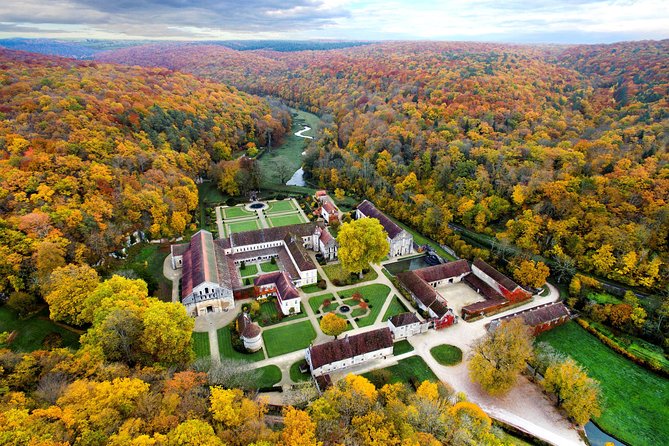
Fontenay Abbey is the sort of place where the silence is part of the attraction. Founded in 1118 by Saint Bernard of Clairvaux, it preserves a Romanesque church, dormitory, cloister, chapter room, common room, and forge in a peaceful Burgundy valley. Your pre-booked paper ticket gives you a simple way into this UNESCO-listed site.
I like two things here: first, the buildings remain unusually complete, so you get more than a church and a few walls. Second, the gardens and quiet setting give the visit a calm rhythm, especially when you reach the church or dormitory with few other people around. The main consideration is transport, since admission does not include getting to or from the abbey, and opening hours split into morning and afternoon sessions in winter.
- A preserved Cistercian complex: See the church, dormitory, cloister, chapter room, common room, and forge in one visit.
- A site founded in 1118: Saint Bernard of Clairvaux established the abbey, which became a major Cistercian foundation.
- Industrial survival: After the French Revolution, industrial use helped preserve the Romanesque buildings.
- Quiet gardens included: Your admission covers the gardens and lapidary museum, not just the abbey interiors.
- A family-preserved property: The same family has owned and cared for Fontenay since 1820.
- A flexible one to two hours: You can make this a focused architectural stop or take more time in the grounds.
Why Fontenay Abbey Feels Different
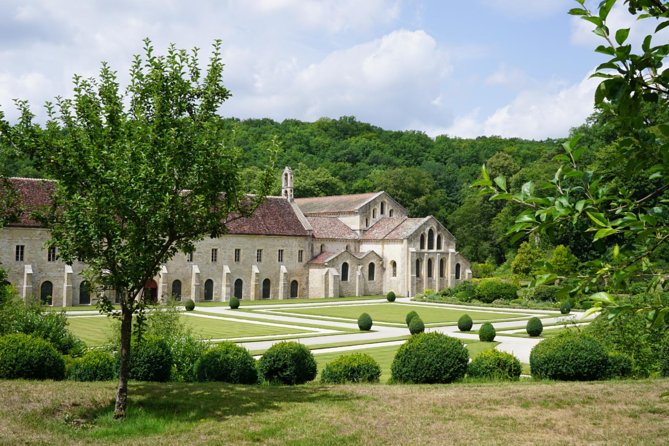
Many historic abbeys give you a grand church, a partial cloister, and a helpful sign explaining what used to be there. Fontenay gives you a much fuller picture of monastic life. You move through spaces built for prayer, sleep, work, meetings, and practical labor, all within one preserved compound.
That completeness matters. The Cistercians favored a restrained style, and Fontenay reflects that preference. You will not find the heavy decoration associated with some later French churches. Instead, the appeal comes from proportion, pale stone, clean lines, and the way the buildings work together.
The setting adds to the effect. The abbey sits in a protected valley extending over 1,200 hectares, with a landscaped park around the historic buildings. You are not simply checking off a monument. You are moving through a place designed for spiritual concentration, where the gardens and architecture keep pulling your attention back to quiet.
Fontenay was recognized as a French historic monument in 1862 and became a UNESCO World Heritage site in 1981. Those labels matter less than what you actually see, but they explain why the site receives careful protection and why the original buildings remain such a strong part of the visit.
Entering the Abbey With a Pre-Booked Ticket
The experience is an admission visit rather than a guided tour. Your booking provides a paper ticket for entry, and the stated operating language is English. No guide name is provided, so you should plan to explore independently rather than expect a named guide or a scheduled talk.
That arrangement suits people who like to set their own pace. You can spend extra time in the church, move quickly through the practical rooms, or pause in the gardens without keeping up with a group. It also means you should take responsibility for your own context and timing.
The ticket is listed at $13.91 per person. Since it includes admission to the abbey, gardens, and lapidary museum, I consider it a fair price for a substantial historic site rather than a quick photo stop. Food, drinks, and transportation are not included, so the real cost depends on how you reach Fontenay and how long you plan to stay in the area.
A useful detail is the small group limit of 15 people connected with this activity. The visit itself is still primarily self-guided, but the limited booking size should help keep the entry process manageable. It does not guarantee that the entire abbey will be empty, especially during busy periods.
More skip-the-line tickets in Beaune:
- Versailles: Skip-the-Line Tour of Palace with Gardens Access
★ 4.7 · 9,778 reviews - Versailles: Skip-the-Line Guided Palace Tour and Full Access
★ 4.6 · 5,214 reviews - Louvre Museum: Skip-the-Line Small Group Guided Tour
★ 4.6 · 3,960 reviews
The Abbey Church and Its Quiet Stone Interior
Start with the Abbey Church, the clearest expression of Fontenay’s Cistercian character. The building dates to the Romanesque period and has remained part of the preserved complex for centuries. Its power comes from simplicity rather than decoration.
Give yourself a few quiet minutes inside. The church is one of the places where the abbey’s original purpose becomes easiest to understand. You can see how the architecture was shaped around prayer, repetition, and stillness, not spectacle.
This is also where timing can change your experience. A German-speaking visitor described finding the church and dormitory almost empty, allowing those spaces to be experienced in a particularly peaceful way. You cannot count on having them to yourself, but visiting near opening, during a quieter period, or outside the busiest part of the day may give you a better chance at that same calm.
The church is not a huge, ornate showpiece, so visitors looking mainly for dramatic decoration may find it restrained. If you appreciate clean Romanesque architecture and the atmosphere of a working monastic foundation, it is likely to be one of the strongest parts of your visit.
The Dormitory Shows Monastic Life at Full Scale
The dormitory helps turn abstract history into something physical. Instead of hearing that monks lived here, you can stand in the large communal space where rest and daily routine once took place.
Its scale and simplicity are important. You begin to understand that the abbey was not only a place for worship. It was also a tightly organized community with shared sleeping quarters, common rules, and a daily schedule shaped by religious practice.
The dormitory is one of the rooms most worth seeing slowly. Look at the proportions, the stonework, and the relationship between this large space and the rest of the abbey. Even without a guide, the preserved building gives you a strong sense of how the monastery operated.
As with the church, the experience depends partly on crowd levels. A large group can soften the quiet mood, while a nearly empty room makes the architecture feel more immediate. The booking is not a reservation for a private visit, but the overall setting is less rushed than many major European monuments.
Cloister, Chapter Room, and Common Room
The cloister provides the abbey’s organizing center. In a Cistercian complex, it links the main buildings and creates a sheltered route through the site. At Fontenay, it also gives you a chance to see how plain architectural details can create a strong sense of order.
Walk through without rushing. The value here is not one isolated object, but the way the cloister connects prayer, administration, living quarters, and work. You can read the abbey as a complete system rather than a collection of unrelated rooms.
The chapter room was used for meetings and the daily business of the community. It helps balance the devotional side of the church with the practical structure required to run a monastery. The common room adds another piece to that picture, showing that communal life required spaces beyond formal worship and private contemplation.
These rooms may appeal most to visitors who enjoy architectural context. If you prefer a tour built around famous paintings or dramatic royal stories, Fontenay may seem understated. The reward comes from noticing how each room served a purpose and how well the whole complex remains connected.
A few more Beaune half-days worth comparing
- Burgundy Bike Tour with Wine Tasting from Beaune
★ 5.0 · 674 reviews - Beaune: Wine Tasting at Château de Pommard
★ 4.4 · 277 reviews - From Beaune: Burgundy Day Trip with 14 Wine Tastings
★ 4.8 · 248 reviews - Burgundy Grand Crus Route Day Tour – 14 Wines Tastings in Domains
★ 5.0 · 223 reviews
The Forge and the Abbey’s Unexpected Industrial Chapter
The forge adds a useful twist to the story. After the French Revolution, the monks left, and the abbey was converted to industrial use. That change could have destroyed the old buildings, but in Fontenay’s case, industrial activity helped preserve the Romanesque structures.
The forge shows that preservation is not always a simple story of a monument being frozen in time. Fontenay survived partly because the property found another use. The work carried out there belongs to a later chapter, but it helps explain why the church, dormitory, cloister, chapter room, common room, and forge are still available to see.
I like this part because it keeps the abbey from feeling like a perfect museum reconstruction. You are looking at a religious site that changed function, endured political upheaval, and later returned to public cultural use.
Since the visit is self-guided, you may want to give the forge a little extra attention instead of treating it as a quick side room. It adds industrial and social context to a site often described only through its spiritual past.
Gardens, Valley Views, and the Lapidary Museum
Admission includes the gardens and lapidary museum, which gives you more room to breathe after the indoor visit. The gardens were recognized as a Remarkable Garden by France’s National Council of Parks and Gardens in 2004.
The grounds are not merely a decorative border around the abbey. They help you understand the relationship between the buildings and the valley. After the compact interiors, the open park provides a change of pace and a chance to look back at the complex from different angles.
The valley extends over 1,200 hectares and has been fully preserved. You should allow time outdoors even if architecture is your main reason for coming. The quiet setting is one of the clearest parts of the experience, and it costs nothing extra once you have entered.
The lapidary museum adds another indoor stop, though the available details do not specify its size or display focus. Treat it as a useful addition rather than the main reason to book. The core experience remains the preserved abbey buildings and their setting.
How Long to Spend at Fontenay
The suggested visit lasts about one to two hours. One hour is enough for a focused look at the major buildings, especially if you move steadily and do not linger long in the gardens. Two hours gives you a better chance to absorb the quiet, walk through the outdoor areas, and visit the lapidary museum without hurrying.
The seasonal hours require attention. From November 12 through March 31, the abbey is open daily from 10 a.m. to noon and from 2 p.m. to 5 p.m. The midday closure is significant, so do not arrive expecting a continuous afternoon visit.
From April 1 through November 11, hours are listed as 10 a.m. to 6 p.m. daily. That longer schedule makes it easier to fit Fontenay around other Burgundy plans, but you should still confirm the date and local time when booking.
The experience is offered throughout the year, yet winter and warmer-season visits will feel different. The winter schedule leaves less room for a casual late-morning arrival, while the longer April to November hours make a relaxed garden visit more practical.
Is the $13.91 Ticket Good Value?
At $13.91 per person, the ticket is good value if you want a substantial historic site rather than a short photo opportunity. You receive access to several original or preserved buildings, the gardens, and the lapidary museum. The abbey’s UNESCO status and long preservation story add context, but the value comes from the amount you can see in one admission.
The price is less attractive if you are only passing through for a few minutes. Because transportation, food, and drinks are excluded, you should pair the visit with other plans in the area or make sure you have enough time to use the full one to two hours.
The same family has owned Fontenay since 1820 and continues to preserve the property while opening it to the public. That private ownership is worth understanding before you visit. You are entering a carefully maintained historic estate, not a large state-run museum with extensive visitor services.
The booking is recommended by 95 percent of those who rated it, with an overall score of 4.7 from 117 ratings. Those figures suggest strong satisfaction, especially with the condition of the site, the quiet atmosphere, and the ease of entry. They do not remove the practical limits: no transportation, no food, and no named guide included.
Who Should Book This Visit?
I would recommend Fontenay Abbey to you if you enjoy Romanesque architecture, religious history, historic gardens, or places where the setting matters as much as the building. It is also a good stop for anyone who prefers an independent visit instead of a tightly scheduled group tour.
You will get the most from it if you are willing to slow down. Read the spaces through their function, notice how the buildings connect, and leave time for the gardens. The abbey rewards attention more than speed.
Families and mixed-interest groups may also find it workable because the visit includes varied spaces. One person can focus on church architecture, another can look at the forge, and everyone can spend time outdoors. The information provided says most people can participate, but it gives no more detailed accessibility information, so you should confirm specific needs before booking.
You may want to skip it if your schedule allows only a rushed stop, if you need included transportation, or if you expect a guided tour in English. This is a place for self-directed exploration, not a performance led by a guide.
Booking, Changes, and Practical Details
You receive confirmation at the time of booking, and free cancellation is available up to 24 hours before the experience begins. Cancel at least 24 hours in advance for a full refund. Changes or cancellations made inside that window are not accepted or refunded, and the cut-off follows local time.
The experience is usually booked around 17 days ahead. That timing is not a rule, but it suggests that planning early can be sensible, particularly if Fontenay is an important part of your Burgundy itinerary.
The attraction is near public transportation, though the supplied details do not specify routes or journey times. Your ticket covers admission only, so check your transport plan separately and allow enough time to arrive before the seasonal closing period.
Should You Book the Fontenay Abbey Ticket?
Book it if you want to see one of Europe’s best-preserved Cistercian complexes in a quiet setting and you value freedom to explore at your own pace. The combination of church, dormitory, cloister, working rooms, forge, gardens, and museum gives you a fuller visit than a single-building monument.
I would be especially keen to book it for a day when I could allow the full two hours. That gives the architecture time to work on you, leaves room for the gardens, and reduces the risk of turning a peaceful abbey into a rushed checklist.
Skip it only if transportation is a problem, the split winter hours do not fit your schedule, or you need a guided experience. For most history-minded visitors with time in northern Burgundy, the $13.91 admission is a sensible purchase and a calm break from busier sightseeing.
FAQ
What does the Fontenay Abbey ticket include?
The ticket includes admission to Fontenay Abbey, its gardens, and the lapidary museum.
How much does admission cost?
The listed price is $13.91 per person.
How long does the visit take?
Plan on approximately one to two hours, depending on how much time you spend in the buildings, gardens, and museum.
Is transportation included?
No. Transportation to and from the abbey is not included.
Are food and drinks included?
No. Food and drinks are not included in the admission ticket.
Is the visit guided?
The provided details describe admission with a paper ticket and do not include a named guide or guided tour.
What language is offered?
The experience is offered in English.
What are the opening hours from November 12 through March 31?
The abbey is open daily from 10 a.m. to noon and from 2 p.m. to 5 p.m.
What are the opening hours from April 1 through November 11?
The abbey is open daily from 10 a.m. to 6 p.m.
Can I cancel for a full refund?
Yes. You can cancel at least 24 hours before the experience start time for a full refund. Cancellations or changes made less than 24 hours in advance are not accepted, and the local time cut-off applies.
Just added around Beaune
- Visit of our 15th century cellars★ 5.0 · 57 reviews
- Private Wine Tasting Tour – Burgundy Uncorked!!★ 5.0 · 74 reviews
- Private Guided Sidecar Tour in Burgundy from Meursault★ 5.0 · 31 reviews
- From Beaune: Full day the most of Burgundy, with lunch★ 4.5 · 30 reviews
- Discovery of the world of Truffles and tasting★ 4.5 · 66 reviews
- Full Day Private Tour 10 Premiers & Grands Crus, The Best of Burgundy★ 5.0 · 36 reviews
- Luxury Luxury Wine Tour Experience★ 5.0 · 69 reviews
- Private Tasting in Beaune : The Best of Burgundy Wines★ 5.0 · 66 reviews
Skip the Line, compared.
Versailles: Skip-the-Line Tour of Palace with Gardens Access
Read our review →
Versailles: Skip-the-Line Guided Palace Tour and Full Access
Read our review →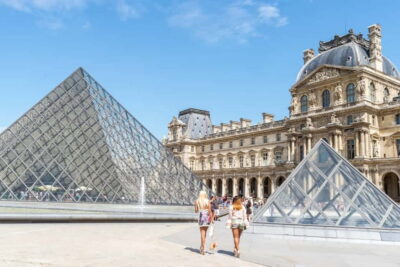
Louvre Museum: Skip-the-Line Small Group Guided Tour
Read our review →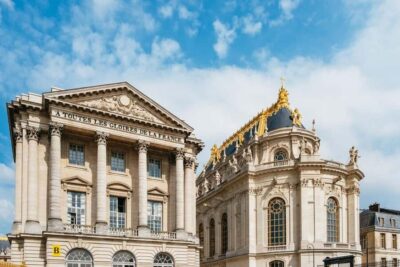
Versailles Skip-the-Line Tour & Gardens Access
Read our review →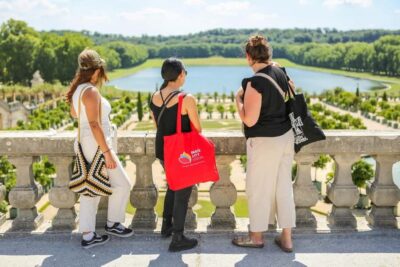
Versailles Guided Tour with Skip-the-Line Entry
Read our review →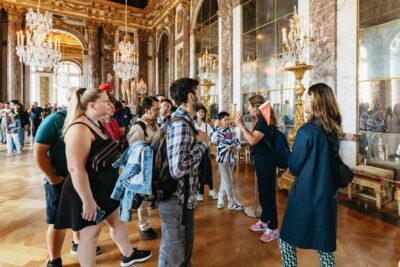
Palace of Versailles Skip-the-Line Guided Tour
Read our review →
Musée d’Orsay Skip-the-Line Tour with Expert Guide
Read our review →
Musée d’Orsay Skip-the-Line Tour with Expert Guide
Read our review →Browse the lists this tour appears in