
Reviewed · MUSéE D'ORSAY TICKETS
The Musée d’Orsay Guided Tour Orsay Museum Semi-Private 6ppl Max
The best thing about this Musée d’Orsay tour is its six-person limit. You can hear the guide, ask why a painting caused a scandal, and stop for a closer look without fighting your way into a large group. Guides such as Eduardo, Liliya, Christophe, Ivana, and Kotryna S have been singled out for clear storytelling, humor, and strong art knowledge.
I like the chronological route, which connects Millet and Realism to Manet, Monet, Renoir, Degas, and Van Gogh. I also like the choice of morning, afternoon, and evening departures, plus private and family-focused upgrades. The main drawback is price: at $144.21 per person, this is a serious splurge, and temporary exhibitions are not included.
Key points at a glance
- Maximum six people: A small group makes it easier to hear, ask questions, and adjust the pace.
- A clear story of modern art: The route explains how Realism and earlier painting led to Impressionism and Post-Impressionism.
- Priority museum entry: Reserved admission saves time, though security checks and short lines can still occur.
- Major works included: Look for Manet’s Luncheon on the Grass, Renoir’s Dance at Le Moulin de la Galette, Monet’s poppies and water lilies, and Van Gogh’s Bedroom in Arles.
- Good family flexibility: A kid-friendly family option and private tour upgrade are available.
- Strong guide choice matters: Past guides including Liliya, Eduardo, Christophe, Ana, Daniel, and Ivana have been praised for making art easy to follow.
Why a small group changes the Musée d’Orsay visit
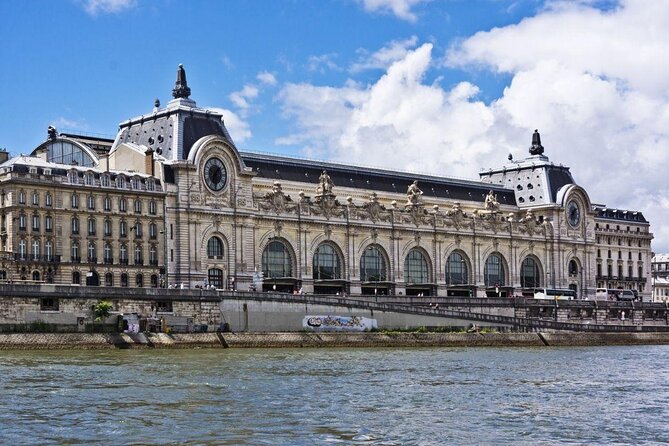
The Musée d’Orsay is easier to love than to navigate. The former railway station is a grand Beaux-Arts building, but its large collection can leave you wandering from one famous canvas to another without understanding how the pieces fit together.
This tour gives you a path. You begin with artists who worked before the Impressionists, then follow the changes in subject, brushwork, color, and public taste. That order matters. Instead of treating Impressionism as a sudden burst of pretty outdoor scenes, you see it as a reaction to older rules about what belonged in serious art.
With no more than six people, the guide can speak in a conversational way. You can ask about a detail in a painting, request clarification, or linger briefly when a work catches your attention. A larger group may cost less, but it can make questions awkward and explanations harder to hear.
The small format also helps inside crowded rooms. You are not trying to keep track of 20 or 30 people while standing in front of a famous canvas. The guide can gather the group, explain the work, and move on before the visit becomes tiring.
More Musee d'Orsay tickets and tours:
- Paris in a Day: Louvre or Orsay, Eiffel Tower, City Walk & Cruise
★ 5.0 · 1,956 reviews - Paris: Musée d’Orsay Entry Ticket and Seine River Cruise
★ 4.6 · 1,344 reviews - Paris: Musée d’Orsay Skip-the-Line Tour with Expert Guide
★ 4.5 · 1,145 reviews
Entering the old railway station
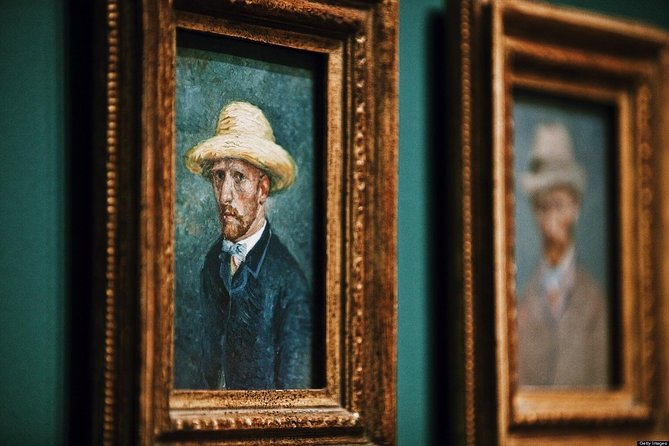
The meeting point is the Musée d’Orsay at 75007 Paris, and the tour ends there. You will need to make your own way to the museum. Hotel pickup and drop-off are not included, so plan on a taxi, Uber, or public transportation.
Reserved entry is included. This is useful at a museum where the outside queue can eat into your limited Paris time. Still, priority entry does not mean you can ignore security. The museum may form short lines, especially when checks are tight or the building is busy.
Bring only what you need. Large bags and suitcases are not allowed inside, and only handbags or small, thin backpacks can pass through security. This is an easy detail to overlook when you are checking out of a hotel or carrying shopping bags.
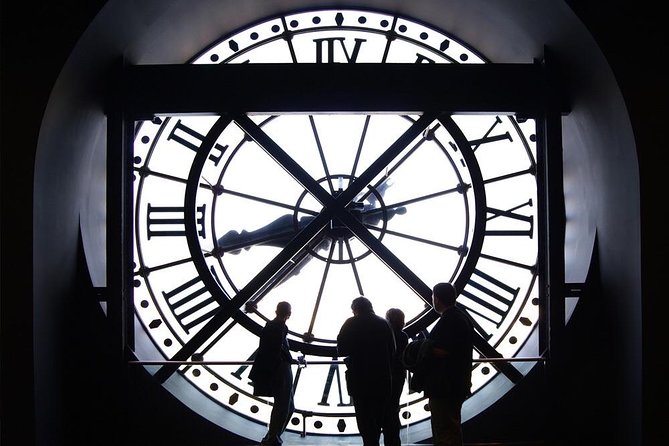
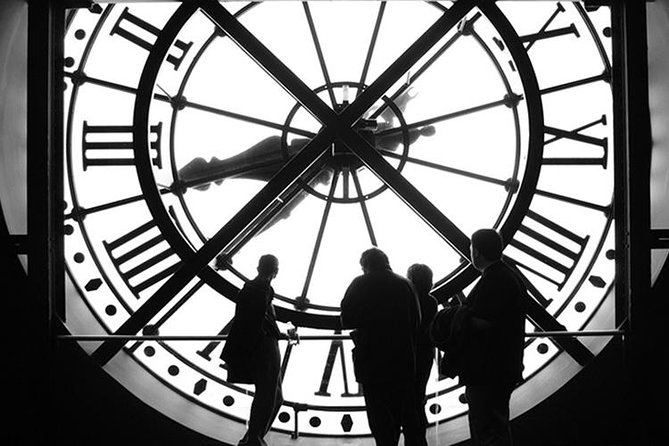
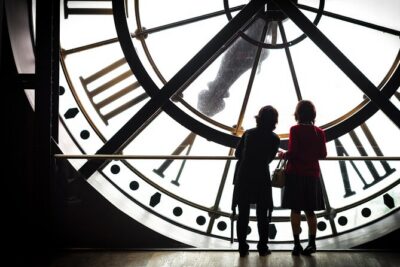
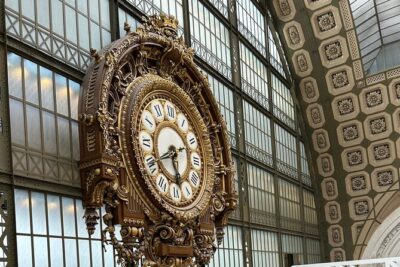
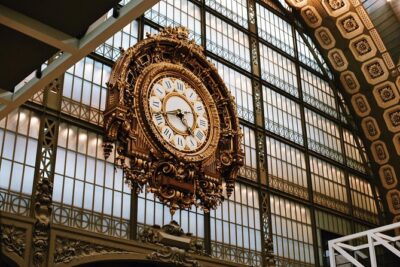
Once inside, take a moment to notice the station itself. The enormous former rail hall gives the museum a character that a standard gallery cannot match. Its clocks, ironwork, long interior views, and curved roof help explain why this is one of Paris’s most memorable places to see art.
From Millet to Manet, the road to Impressionism
The tour generally begins with the artists who prepared the way for the Impressionists. Jean-François Millet’s The Gleaners is an important example. The painting shows rural workers gathering leftover grain, a subject that brought ordinary labor into a setting usually reserved for grander themes.
Your guide can use works like this to explain why subject matter mattered so much. Artists were no longer limited to kings, saints, and mythological scenes. Daily work, city life, leisure, and modern streets began to deserve serious attention.
Édouard Manet pushed those changes further. His Luncheon on the Grass caused a shock not only because of its subject, but because of the way it was painted. The scene does not behave like a polished academic picture. Its figures and setting challenge the viewer, and its directness helps explain why Manet became such an important bridge between older painting and the Impressionists.
This part of the tour is especially useful if you know the famous names but not the order of events. The guide can show you that Impressionism did not appear out of nowhere. It grew from arguments about realism, official taste, modern life, and the freedom to paint what artists actually saw.
Monet, Renoir, and the Impressionist breakthrough
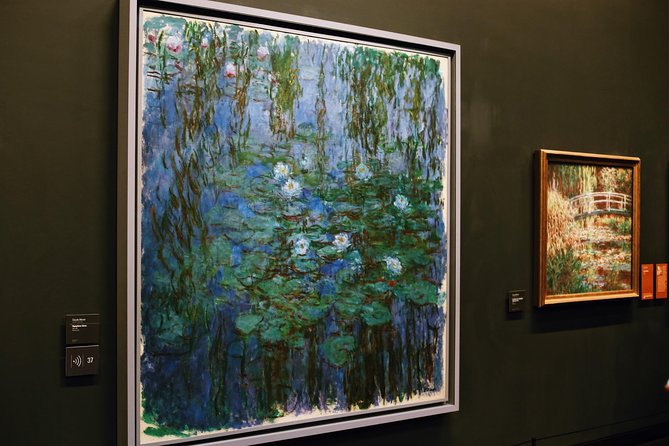
The central section focuses on the painters most people come to the Orsay to see. Claude Monet’s Poppy Field and water lily paintings are likely highlights, provided they are on display and not away on loan or under restoration.
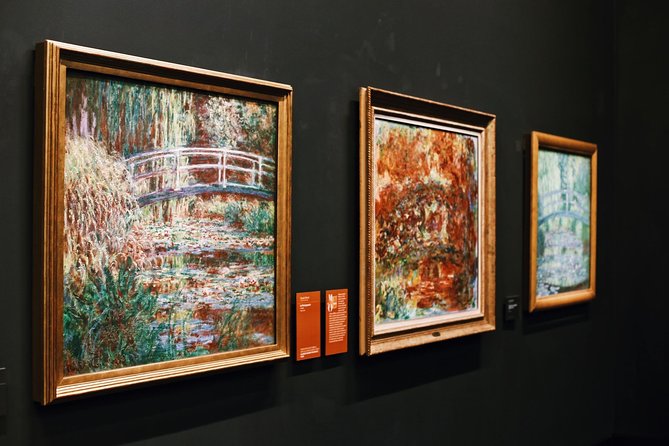
Monet’s work is easy to admire from a distance, but a guide can point out what happens when you look closely. Color replaces some of the careful modeling used in older painting. Brushstrokes remain visible. Light becomes an active part of the subject rather than a simple effect added to it.
Pierre-Auguste Renoir’s Dance at Le Moulin de la Galette gives you a different view of modern Paris. Instead of a formal portrait or historical scene, you see people at leisure, caught in a social moment. The painting’s shifting light and crowded movement can look effortless, but the guide helps you see the decisions behind that effect.
I like this part of the route because it connects technique to everyday experience. You are not just told that Impressionists painted quickly or outdoors. You learn why the approach looked unfinished to some early viewers and why it later changed the way people thought about painting.
Edgar Degas’s ballerinas add another angle. His dancers are not always arranged in neat, centered poses. Cropped views and unusual angles make the scene feel like a quick glimpse rather than a carefully staged display. A guide can help you notice how Degas used composition to suggest movement and modern photography.
More museums and galleries in Paris:
- Paris: Louvre Museum Timed-Entrance Ticket
★ 4.6 · 71,977 reviews - Louvre Museum Masterpieces Guided Tour with Access
★ 4.5 · 12,023 reviews - Paris: Louvre Museum Entry Ticket With Host and River Cruise
★ 4.6 · 9,926 reviews - Les Invalides: Napoleon’s Tomb & Army Museum Entry
★ 4.6 · 9,185 reviews
Van Gogh and the artists who came next
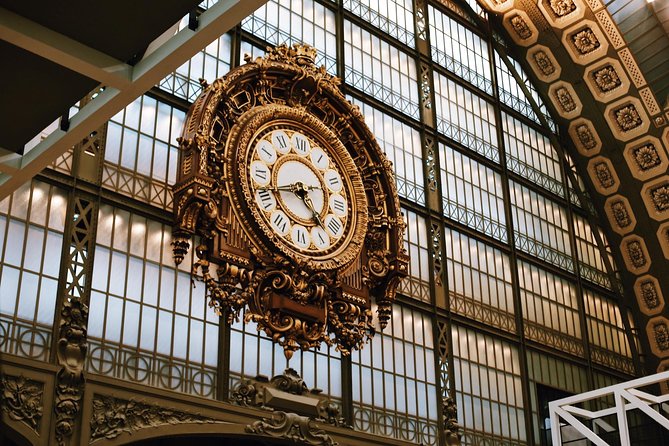
The tour continues beyond the first Impressionists to Post-Impressionist works, including Vincent van Gogh’s Bedroom in Arles. This is a good point to see how artists took Impressionist color and brushwork in new directions.
Van Gogh did not simply copy what he saw. He used strong color, forceful marks, and a personal style to express mood and feeling. Bedroom in Arles appears simple at first, but its tilted space, intense colors, and odd sense of balance give the room a psychological charge.
The guide can also explain that Post-Impressionism was not one single style. Artists who followed the Impressionists went in different directions. Some emphasized structure, some color, and some personal expression. The tour’s value lies in making those differences understandable in a short visit.
This is also where a good guide’s storytelling helps. Several guides, including Liliya, Ivana, Florent, Hugo, Beatrice, and Achille, have been praised for connecting technique with stories about artists, rivalries, scandals, and changing artistic rules. You do not need a degree in art history to follow along.
What the guides add to the experience
Guide quality is the most important variable in a museum tour, and the named guides associated with this experience have different strengths. Eduardo is described as lively and very good at building a timeline. Liliya is praised for making the art easy to understand, especially for people who do not usually feel confident in museums.
Christophe has been a strong choice for families. He keeps a steady pace, answers questions, and makes an effort to include children and teenagers. Lilly has also been praised for helping children of different ages stay involved.
Ivana is known for organizing the visit around the evolution of art, moving through Academic painting, Realism, Impressionism, Cubism, and Neo-Impressionism. Ana has been appreciated for giving people time to absorb the works instead of racing from one room to the next.
Names are not guaranteed when you book, so I would not choose this tour solely to request one guide. Still, these comments give you a useful picture of what the operator aims for: an English-speaking guide who tells stories, explains visual details, and keeps the group moving.
The strongest guides do more than recite dates. They explain where to look, why a painting mattered, and how the artist broke from accepted practice. That is the difference between hearing information and actually seeing more in the artwork.
A realistic two-and-a-half-hour pace
The stated duration is about two to two and a half hours, with the itinerary listing 2.5 hours. That is enough time for the museum’s major works and a helpful introduction to the collection, but not enough to see every room carefully.
You should think of this as a focused first visit. The guide will lead you to major paintings and selected lesser-known works, then explain how they fit the larger story. You may have a little time at the end for independent looking, depending on the pace of your group.
The museum can be very busy. One useful scheduling tip is to avoid Tuesday if you have flexibility. The Louvre is closed that day, which can send more people to the Musée d’Orsay. Morning departures may suit you if you want a fresher start, while an afternoon or evening tour can fit around other sightseeing.
The museum may also close or delay opening without much warning. If opening is delayed by more than an hour, the operator says it will offer an appropriate alternative, but refunds or discounts are not promised in that situation. It is wise not to place an unchangeable dinner reservation immediately after the tour.
Some rooms require quiet or limit speaking. Your guide will explain those rules before you enter. This may mean that part of the commentary happens just outside a gallery, rather than beside the painting itself.
Is $144.21 per person a fair price?
At $144.21 per person, this is not a budget museum visit. You are paying for a professional guide, reserved admission, a small group, and a planned route through one of Paris’s major collections.
The value is strongest if you are a first-time visitor, have limited time, or feel unsure about how to approach art. A guide can prevent you from spending an hour in the museum without finding the works you came to see. The small group also gives you a better chance to ask questions than a large scheduled tour.
The price is harder to justify if you already know the collection well or prefer to move alone. The museum can be visited without a guide, and you may prefer an audio guide or your own book. One less enthusiastic assessment found the small group appealing but felt a larger group with an audio system might offer better value.
For a family of four, the total cost is substantial. Yet families may gain more from the guided route because children can lose interest in a huge museum quickly. The family-focused option may be worth comparing if you are visiting with younger children or teenagers.
Temporary exhibitions are not included. If a special show is the main reason you want to visit, check its admission separately before booking. The standard tour focuses on the permanent collection and the major nineteenth-century works.
Who should book this Orsay tour?
I would recommend it most strongly for:
- First-time visitors to the Musée d’Orsay
- People who want Impressionist and Post-Impressionist highlights in a limited time
- Families who need a guide able to keep children involved
- Art lovers who prefer conversation and questions over a recorded tour
- Visitors who want morning, afternoon, or evening scheduling
- Anyone who values a small group more than the lowest price
I would be more cautious if you want long, quiet periods with each painting. A guided route has a set rhythm, and two and a half hours can pass quickly. You may also prefer another option if you use a wheelchair or have a walking disability, since this activity is not suitable for those needs.
The tour requires at least two people to run. If that minimum is not met, an alternative or full refund is offered. On the other hand, a solo booking may sometimes go ahead and become a private visit, as happened for one person who booked a date with no other participants.
For a private experience, you can upgrade. A kid-friendly family tour is also available, giving you choices beyond the standard semi-private format.
Practical details before you book
You will receive confirmation when you book, and you must provide a mobile phone number with the country code. The activity is near public transportation, but pickup is not included, so allow time to reach the museum and find the meeting point.
Wear suitable clothing for museum entry and keep your bags small. A moderate level of walking and standing is expected. Restroom needs can be handled during the visit, but this is still an active museum tour rather than a seated presentation.
Free cancellation is available if you cancel at least 24 hours before the local start time. Changes or cancellations inside that window are not refunded. If the operator cancels because the minimum number is not met, you receive an alternative or a full refund.
The experience has a 5 rating from 904 reviews, with 99 percent recommending it. That strong record fits the tour’s main strengths: excellent guide feedback, a very small group, and a useful chronological structure. It does not remove the price concern, but it suggests the format works well when the assigned guide is a good match.
Should you book it?
Book this tour if you want the Musée d’Orsay’s major Impressionist works explained in plain English, with time for questions and no more than six people. The best reason to choose it is not simply priority entry. It is the human guidance that connects The Gleaners, Luncheon on the Grass, Monet’s poppies, Renoir’s dancers, Degas’s ballerinas, and Van Gogh’s Bedroom in Arles into one understandable story.
Skip it if you prefer to wander alone, need an accessible tour, or are mainly interested in temporary exhibitions. For everyone else, especially first-time visitors and families, the small group and strong guide focus make the high price easier to defend.
FAQ
How long does the Musée d’Orsay guided tour last?
The tour lasts approximately two to two and a half hours, with the listed duration set at 2.5 hours.
How many people are in the group?
The tour has a maximum of six people. A minimum of two people is required for the tour to operate.
Is museum admission included?
Yes. The tour includes all entrance fees and reserved entry to the Musée d’Orsay.
Is the tour offered in English?
Yes. The experience is offered in English with a professional tour guide.
What artworks might I see?
The usual highlights include Manet’s Luncheon on the Grass, Renoir’s Dance at Le Moulin de la Galette, Monet’s Poppy Field and water lilies, Van Gogh’s Bedroom in Arles, Degas’s ballerinas, and Millet’s The Gleaners. Works can change if a painting is on loan or being restored.
Can I cancel for a full refund?
Yes. You can cancel at least 24 hours before the local start time for a full refund. Cancellations or changes made less than 24 hours before the start are not refunded.
Just added around Paris
- Paris: Croissant Baking Class with a Chef★ 5.0 · 201 reviews
- Cooking Class with a Parisian Chef★ 5.0 · 46 reviews
- Cocktails lessons in Speakeasy★ 4.5 · 72 reviews
- Paris: Choux Pastry and Chocolate Éclair Making Class★ 4.9 · 50 reviews
- Paris: Classic Sites Tour by Vintage Citroen 2CV★ 4.6 · 189 reviews
- Paris: Cheese and Wine Class in a 17th Century Cellar★ 4.8 · 91 reviews
- Paris: Romantic Photoshoot for Couples★ 4.9 · 131 reviews
- Paris: Bread and Croissant-Making Class★ 4.8 · 206 reviews
Musée d'Orsay Tickets, compared.
Paris in a Day: Louvre or Orsay, Eiffel Tower, City Walk & Cruise
Read our review →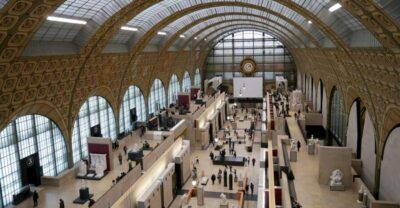
Musée d’Orsay Entry Ticket and Seine River Cruise
Read our review →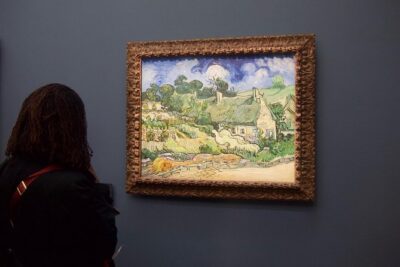
Musée d’Orsay Skip-the-Line Tour with Expert Guide
Read our review →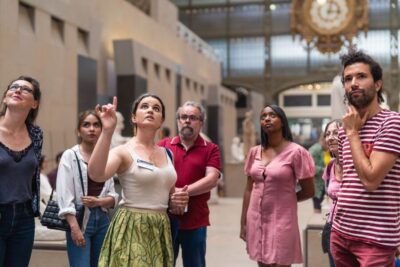
Musée d’Orsay Skip-the-Line Tour with Expert Guide
Read our review →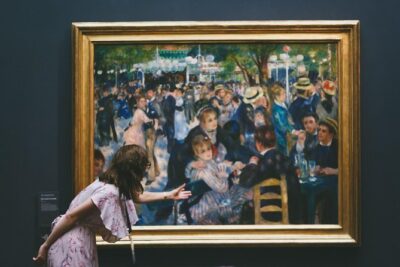
Louvre & Musée d’Orsay Guided Museum Tour Semi-Private 6ppl Max
Read our review →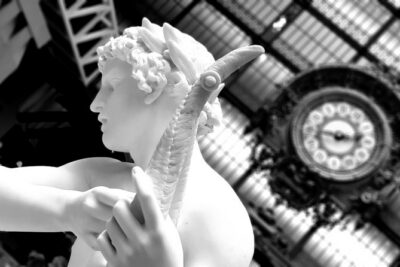
Orsay Museum – Exclusive Guided Tour (Reserved Entry Included)
Read our review →Browse the lists this tour appears in