
Reviewed · COOKING CLASSES
Croissant Baking Class, Mastering the Art with a Pastry Chef
Croissants look simple until you try making them. This three-hour Paris class takes you through the real work: mixing dough, measuring butter, folding layers, rolling rectangles, and shaping crescents. You do not just watch a chef pull pastries from an oven. You handle the dough yourself.
I like the small limit of eight people, which gives you a fair chance to get help at the bench. I also like the relaxed teaching style of chefs such as Leo and Maria, who explain each stage clearly and keep the mood light. The main drawback is that croissant dough needs strength and patience, so this is not a completely easygoing activity. You will knead, roll, and repeat.
- Three hours of hands-on pastry work: You make croissants and pain au chocolat from dough through baking.
- A maximum of eight people: The compact class allows for personal help and practical demonstrations.
- Instruction in English: The process is explained step by step, including butter, flour, folding, and shaping.
- A useful home-baking lesson: You receive recipes and learn the measurements and techniques needed to try again.
- A shared dough system: Dough made by one class can be used by the next after proper proofing, helping the schedule work.
- A generous final result: Past class formats have included four croissants and four pain au chocolat per person.
Starting at Studio Pâtisserie on Rue de Rome
The class begins at Studio Pâtisserie, at 85 Rue de Rome in Paris’s 17th arrondissement. The address is near public transportation and has been easy for participants to find, which matters when you are crossing Paris with a fixed start time and a little pre-class excitement.
This is a meeting-point activity, not a walking tour. You arrive at the studio, take part in the lesson, and finish back at the same place. Plan your route before class, since the experience lasts about three hours and the work begins at the scheduled time.
The studio setting gives the lesson a more personal feel than a large demonstration kitchen. With no more than eight people, you can see the chef’s technique and ask for help when your dough looks too thick, too soft, or simply unlike the chef’s.
The first lesson: why croissant dough is demanding
The opening section introduces the basic ingredients and the logic behind the pastry. You learn why the flour and butter matter, why measurements must be precise, and how the dough changes as you work it.
This is useful because croissants are not forgiving in the way a simple cake can be. The dough must be rolled to the right thickness, and the butter needs to stay in the proper relationship with the dough. The class explains that balance rather than asking you to copy shapes without understanding them.
You also learn about layering. A croissant gets its flaky texture from repeated folding and rolling, not from a single dramatic trick. One class participant described working toward a 16-layer pastry, a detail that shows why the folding stage deserves close attention.
The chef demonstrates each step before you try it. Leo is often praised for his patience, humor, and clear explanations, while Maria is described as friendly and engaging. The exact instructor can vary, but the teaching approach is built around direct help rather than a lecture from across the room.
More cooking classes in Paris:
- Paris Cooking Class and Lunch with Wine plus Market Visit Option
★ 5.0 · 1,024 reviews - Paris Croissant Small-Group Baking Class with a Chef
★ 5.0 · 910 reviews - Paris: French Croissant Baking Class with a Chef
★ 4.9 · 712 reviews
Rolling, folding, and laminating the butter
The hands-on work is the heart of the class. You prepare or handle the dough, work with the butter, and roll the mixture into rectangles for layering. You then fold and roll again to build the thin sheets that give a croissant its crisp outside and soft interior.
This stage takes effort. One of the most useful practical points is that you will roll several different rectangles, not just one. You may need dimensions for the butter, the laminated dough, the final roll, and the pieces used for cutting. If you want to repeat the recipe at home, write those measurements down as you go.
American bakers should also be ready for metric measurements. The class materials and working methods may use metric length, weight, and volume, so a phone conversion tool will help. That small bit of preparation can save frustration when you try to reproduce the pastries in your own kitchen.
I like that the class does not hide the physical side of pastry making. You need enough strength to knead and roll the dough, and the minimum age is 17. This is not a passive tasting with a quick recipe card at the end. You learn by doing the parts that make croissants difficult.
Shaping croissants and pain au chocolat
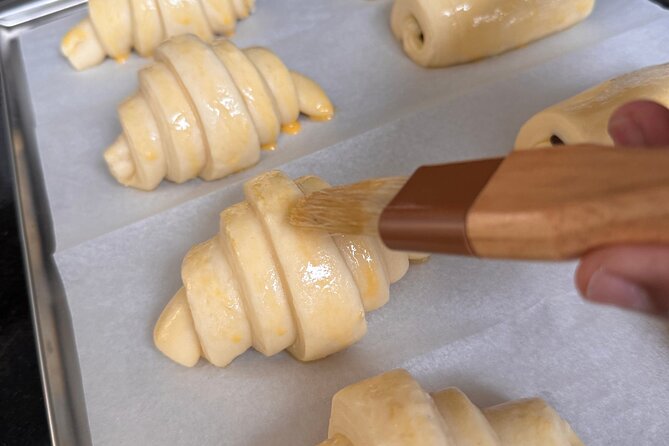
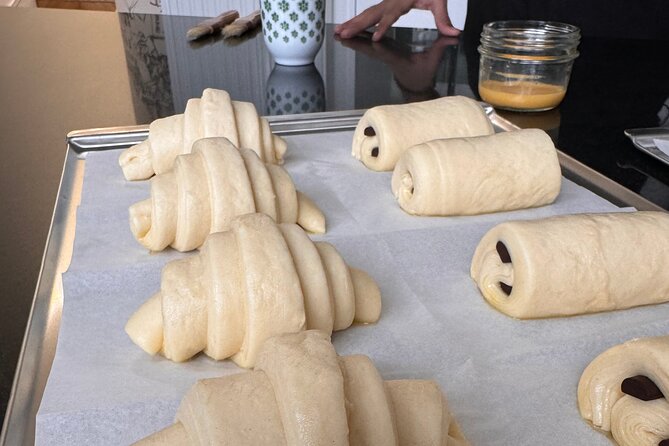
Once the laminated dough is ready, the class moves to cutting and shaping. You learn how rectangles and triangles become the familiar crescent form, and how the same dough can be used for pain au chocolat.
The shaping stage is satisfying because it gives you a clear sense of progress. Earlier, you are handling large, flat pieces of dough. Now you are creating individual pastries that look ready for the oven. The chef can correct the way you cut, roll, or position each piece before baking.
You should not expect every pastry to look perfectly identical. That is part of the value of a hands-on class. You learn what the shape requires, but your own pastries still show the marks of your technique. The important lesson is how to make the layers stay in place and how to form a pastry that can bake evenly.
The class is also social without being built around forced entertainment. You work alongside other bakers, compare shapes, and share the occasional laugh when a croissant takes an unexpected turn. The small group makes conversation easy, while the chef keeps the work moving.
Using properly proofed dough
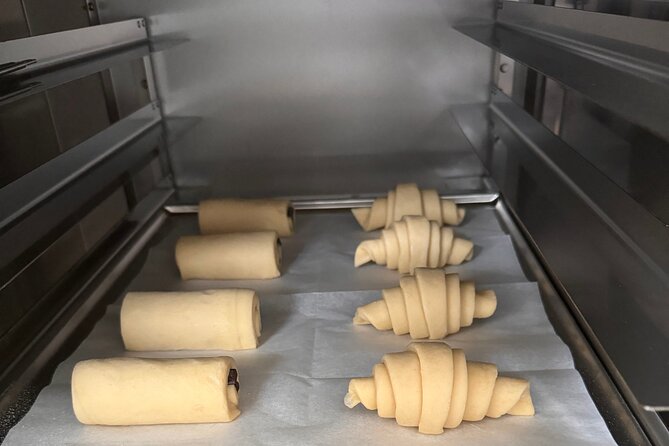
A clever part of the schedule is the use of dough made by a previous class. Croissant dough needs time to proof, and a three-hour session cannot cover every waiting period from start to finish. Using dough from the earlier group means you can work with pastry that is ready for the next stage.
The dough you make may then be used by the following day’s class after it has had the needed time. This system keeps the lesson practical while still showing you how the dough is prepared and handled.
That detail is worth knowing before you book. If you expect to mix a batch, wait through every proofing period, and bake it all within three hours, the schedule works differently. You still learn the full process, but the class uses timing across sessions so you can spend more of your visit actively rolling, folding, and shaping.
More pastry and chocolate tours in Paris:
- Paris: Day or Sunset Cruise with Drink, Ice Cream or Dessert
★ 4.4 · 4,225 reviews - Paris: Montmartre Cheese, Wine & Pastry Guided Walking Tour
★ 4.8 · 2,255 reviews - Award-Winning Paris French Bakery Experience — Le Marais, 4th Arr
★ 4.5 · 1,186 reviews - Paris: Entrance Ticket to the Chocolate Museum
★ 4.1 · 1,105 reviews
Baking and tasting the finished pastries
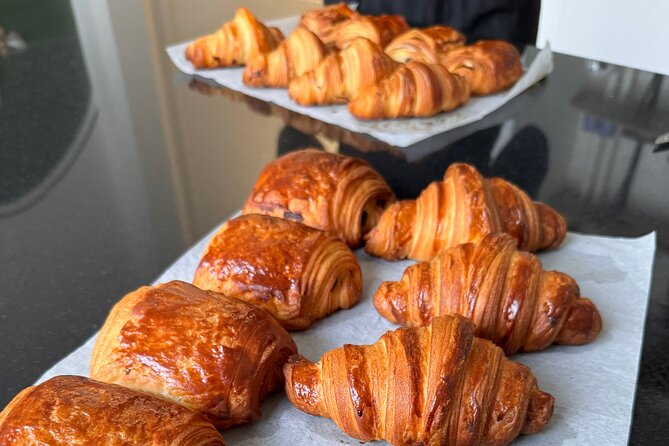
The final part brings the whole lesson together. Your shaped pastries go into the oven, and you get the satisfaction of seeing the layers turn golden. The smell alone makes the earlier work feel worthwhile.
The class has produced a generous amount of pastry for some participants, including four croissants and four pain au chocolat per person. The exact output can depend on the class format and the dough available, so treat that as a useful indication rather than a guarantee. You should, however, expect to taste the results you helped make.
Fresh croissants have a different character from pastries bought earlier in the day. The outside should be crisp, while the inside shows the effect of the layers you built. Pain au chocolat gives you a second shape to practice and a chocolate-filled reward at the finish.
The tasting is also a natural time to talk with the chef and the group. Leo, in particular, is praised for sharing baking advice along with Paris suggestions. That extra conversation gives the lesson a local touch without turning it into a city tour.
What makes the instruction work
The strongest feature here is the teaching. The class is designed for people who may have little or no croissant-making experience, but it does not treat you as if you cannot manage real pastry work.
You get demonstrations, then a chance to try the technique yourself. If your dough needs attention, the instructor can step in. Past participants have singled out patient guidance, clear explanations, humor, and a friendly atmosphere as key parts of the experience.
Leo is repeatedly described as easygoing, funny, and attentive. Maria is also praised for making the class interactive and enjoyable. The names matter because the experience depends heavily on the instructor’s approach, but the available information suggests that the class is not built around one silent demonstration.
The pastry chefs also explain the reasons behind the work. You learn about butter and flour, not just the order of steps. That makes the class more useful after you return home.
Is the $143.92 price good value?
At $143.92 per person, this is not a cheap snack stop. You are paying for about three hours of instruction, ingredients, kitchen use, and a small class rather than simply buying a pastry from a Paris bakery.
The value is strongest if you want a skill-based activity. You get direct practice with the difficult parts of croissant making, plus recipes and measurements that can help you repeat the process later. The small group also matters. A large class might cost less, but you could spend more time watching than working.
The price makes less sense if your main goal is simply to eat excellent croissants. Paris has no shortage of bakeries where you can buy them for a few euros. This class is for learning, handling dough, meeting other bakers, and taking home something you made yourself.
The current rating is 5 out of 5 from 116 ratings, with 100 percent recommending the experience. That points to a very consistent level of satisfaction, especially with the instructors, the clear structure, the relaxed tone, and the taste of the finished pastries. Still, the price and physical effort mean it will not suit every Paris itinerary.
Who should book this class?
I would recommend it for first-time croissant makers, couples, parent and adult child combinations, solo visitors who enjoy meeting people, and small groups looking for a shared activity. It works well when you want a break from museums and monuments without leaving the city.
It is also a good choice for anyone who wants to return home with a practical French cooking skill. Several participants were eager to bake the pastries again, and the class provides the kind of details you need for that attempt.
You should think twice if you dislike repetitive hand work or have limited strength for kneading and rolling. The minimum age is 17, and the activity specifically notes that strength is needed. The class is friendly, but it is still a working pastry lesson.
Service animals are allowed, and the studio is near public transportation. The activity is offered in English, which makes the technical steps easier to follow if you are not comfortable learning baking terms in French.
Simple preparation for a better class
Arrive ready to work. Wear clothing you do not mind using in a kitchen, and avoid planning a tight appointment immediately afterward. The class lasts approximately three hours, and the final baking stage is part of the experience.
Bring a phone or small notebook if you want to record dimensions. The measurements can be easy to forget once you return home, especially the different rectangle sizes used during butter preparation, lamination, final rolling, and cutting.
If you use inches and pounds at home, save a metric conversion tool before class. That small step will make the recipes far easier to use later.
You can also ask questions as you go. The class is set up for personal guidance, so do not wait until the end if the dough feels wrong or your shaping looks uneven. Early correction is much more useful than trying to repair the finished pastry.
Should you book the Paris croissant class?
Book it if you want more than a pastry tasting. The best reasons are the eight-person limit, the direct instruction, the chance to practice lamination and shaping, and the recipes you can use after Paris. The warm teaching style associated with Leo and Maria adds plenty of fun without taking away from the serious baking work.
Skip it if you only want a quick, inexpensive taste of French pastry or if kneading and rolling sound tiring. At $143.92, the experience earns its price through instruction and participation, not through the food alone.
For most visitors who enjoy cooking, this is a strong Paris activity. You leave with a better sense of how croissants are made, a batch of fresh pastries, and a useful memory that does not depend on simply standing in another queue.
FAQ
Where does the croissant baking class take place?
The class starts and ends at Studio Pâtisserie, 85 Rue de Rome, 75017 Paris, France.
How long does the class last?
The experience lasts approximately three hours.
How much does the class cost?
The listed price is $143.92 per person.
Is the class offered in English?
Yes. The experience is offered in English.
How many people can join the class?
The class has a maximum of eight participants.
What pastries will I learn to make?
You learn to make croissants and pain au chocolat, including the dough, butter layering, rolling, cutting, and shaping.
Do I need baking experience?
No previous baking experience is stated as a requirement. The chef explains the process step by step and provides hands-on guidance.
What is the minimum age?
Participants must be at least 17 years old. The activity also notes that strength is needed to knead the dough.
Can I cancel for a full refund?
Yes. You can cancel at least 24 hours before the scheduled start time for a full refund. Cancellations or changes made less than 24 hours before the start time are not accepted for a refund.
Just added around Paris
- Paris at the First Lodges – Ducasse sur Seine dinner cruise★ 4.0 · 165 reviews
- Paris at the First Lodges – Ducasse sur Seine Lunch Cruise★ 4.5 · 70 reviews
- Disneyland® Paris 1 Day with Round-Trip Train Tickets from Paris★ 4.0 · 50 reviews
- Explore speakeasies and hidden bars, sip meet & socialize★ 4.5 · 47 reviews
- Disneyland® Paris Express Shuttle with Admission Ticket from Central Paris★ 3.5 · 172 reviews
- Paris Cheeses and Wines Tour de France with Tasty Games★ 5.0 · 32 reviews
- Musée Orsay Highlights Tour – Best of Impressionism & Hidden Gems★ 5.0 · 27 reviews
- Private Tour: Discover Paris with Local, 3 hours on a Segway★ 5.0 · 71 reviews
Cooking Classes, compared.
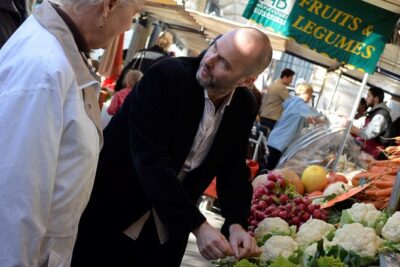
Paris Cooking Class and Lunch with Wine plus Market Visit Option
Read our review →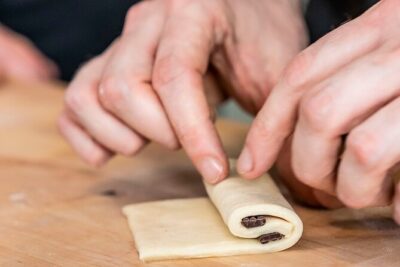
Paris Croissant Small-Group Baking Class with a Chef
Read our review →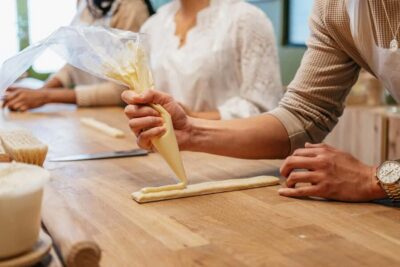
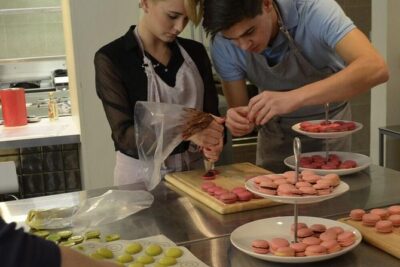
Paris Cooking Class: Learn How to Make Macarons
Read our review →
Paris Evening Cooking Class French Dinner and Market Visit Option
Read our review →
Viator Exclusive: Local Cooking Class & Dinner with View of Nice
Read our review →
Browse the lists this tour appears in