
Reviewed · COOKING CLASSES
Paris French Baking Class Baguettes and Croissants in a Bakery
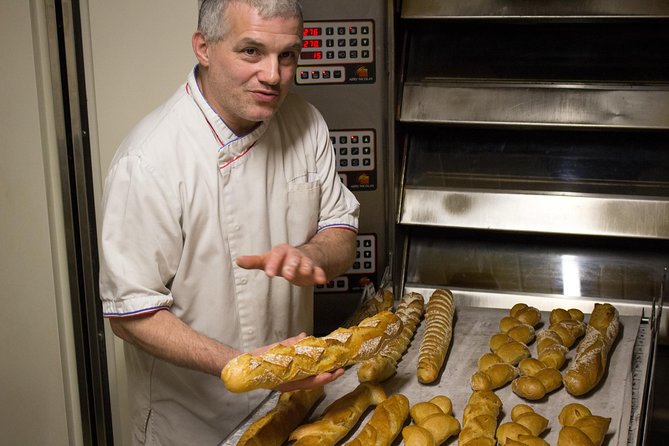
Parisian bread is best understood with your hands, not from behind a bakery window. In this small workshop at Boulangerie Pâtisserie Le Petit Mitron, baker Didier shows you how French bread is made, then puts you to work shaping baguettes and handling croissant dough. The class also includes an English interpreter, often Luz, so you can follow the rapid-fire baking talk.
I like the small group limit of 10, which gives you a real chance to ask questions and get help. I also like the bakery’s unusual approach to flour: Didier mills grain on site and talks about ingredients, additives, equipment, and the history of baguettes and croissants. The main consideration is that this is not an equal split between the two pastries. Most of the hands-on time goes to baguettes, while the croissant portion focuses more on technique, demonstration, and rolling than on making croissants from start to finish.
Key points at a glance
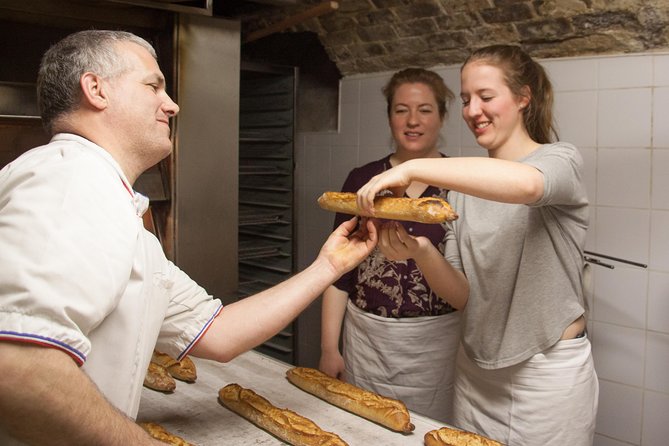
- Work inside a real Paris bakery: The class takes place at Boulangerie Pâtisserie Le Petit Mitron, at 8 Rue Oberkampf in the 11th arrondissement.
- Baguettes get most of the hands-on time: You shape dough, make patterns, and learn how handling affects the final loaf.
- Croissants are part of the lesson: You learn about lamination and roll croissant dough, with pain au chocolat included in some sessions.
- Didier brings the personality: His humor, passion, flour knowledge, and practical tips are a major part of the class.
- English support is provided: The baker may not speak English, but an interpreter guides the session throughout.
- You finish with warm baking: You taste baguettes and pastries, receive recipes, and take home baking know-how.
Inside Le Petit Mitron on Rue Oberkampf
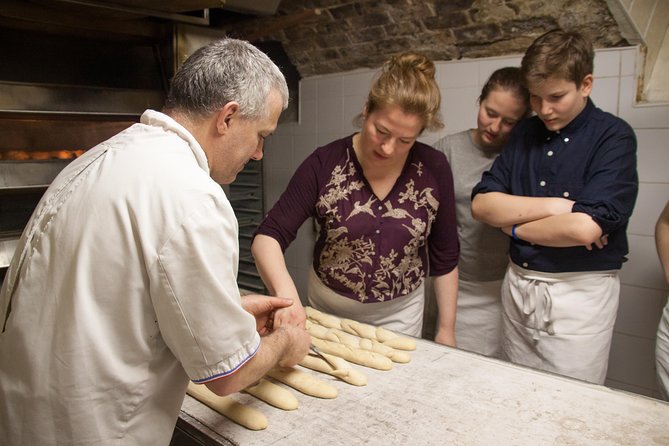
The meeting point is Boulangerie Pâtisserie Le Petit Mitron, at 8 Rue Oberkampf, 75011 Paris. This is not a polished hotel kitchen or a generic cooking studio. You go behind the counter and into a working bakery, which gives the class its strongest sense of place.
The bakery setting matters. You see the tools, ovens, flour, and production space used for everyday French baking. Instead of treating the baguette as a postcard symbol, the lesson shows how much care goes into something Parisians buy routinely.
The class lasts about two and a half hours, with morning and afternoon options. That makes it fairly easy to fit around sightseeing, though you should protect the full block of time. This is not a quick pastry tasting squeezed between two monuments.
The group is capped at 10 people. That is large enough for a social class, but small enough for individual turns and questions. One session may be even smaller. A couple once had the class almost to themselves, which made it feel more like a private lesson.
More cooking classes in Paris:
- Paris Cooking Class and Lunch with Wine plus Market Visit Option
★ 5.0 · 1,024 reviews - Paris Croissant Small-Group Baking Class with a Chef
★ 5.0 · 910 reviews - Paris: French Croissant Baking Class with a Chef
★ 4.9 · 712 reviews
Meet Didier, the baker behind the lesson
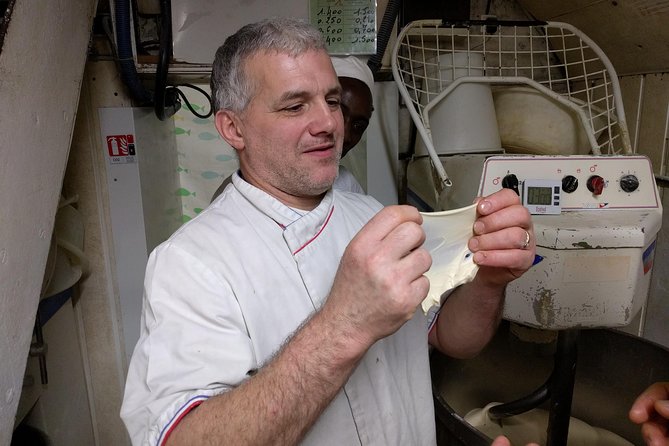
Didier is the central character here. He is described as funny, energetic, and deeply serious about doing things well. He explains the work with plenty of humor, but the substance is there too: flour, ingredients, dough handling, baking time, equipment, and French food traditions all enter the conversation.
He reportedly mills his own flour at the bakery, an unusual detail that gives the lesson more depth than a standard recipe class. You learn why flour behaves differently, how additives can affect bread, and why small changes in technique matter.
Didier does not speak English, so an interpreter is provided. That arrangement may sound awkward on paper, but it is an important part of the class. The interpreter translates the instruction and helps you communicate directly with the baker. The language gap can even add to the lighthearted mood, but you should expect a translated lesson rather than an English-speaking chef.
The interpreter’s role also helps with personal questions. If you have baked before, explain your experience. Didier has been described as willing to adjust his advice to the person in front of him, whether you are an experienced home baker or someone who has never shaped a loaf.
The baguette lesson is the main event
The baguette work gives you the most direct practice. You learn how to handle and shape the dough, then form loaves and add different patterns before they go into the oven. One particularly hands-on moment can involve using the long wooden paddle to help move bread from the oven.
Do not expect a full professional bakery apprenticeship in 150 minutes. Dough preparation and fermentation take time, so the class cannot reproduce every stage from raw ingredients to finished bread within the session. Instead, Didier demonstrates key steps and has you work with dough at the stages that can be taught and completed during the class.
That distinction is important. Some descriptions suggest you make baguettes, but several details point to a class centered on shaping and handling prepared dough. You get useful technique, yet you may not mix a complete batch from scratch.
The lesson moves quickly. You may hear a lot about flour, hydration, shaping, scoring, and baking in a short period. If you already bake at home, you will probably get more from the finer points. If you are new to bread, you may want to take notes or ask the interpreter to repeat a step.
The payoff comes when the loaves are baked. You taste the results while they are warm and take a baguette home. That makes the workshop feel practical rather than purely theatrical. You leave with something you can eat, plus recipes and advice for trying again in your own kitchen.
Croissants, lamination, and pain au chocolat
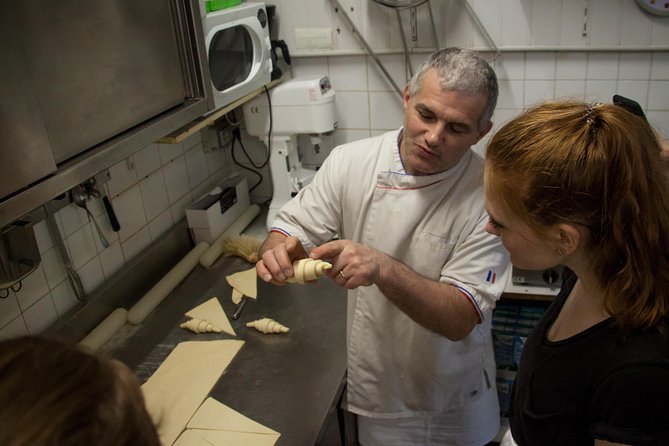
The croissant segment is valuable, but you should set fair expectations. You learn how croissants are made, see the process, and roll or handle laminated dough. Lamination means folding butter into dough in repeated layers, the basic method behind the pastry’s flaky structure.
Some sessions also include pain au chocolat, which adds a welcome variation to the standard croissant lesson. The pastry portion is buttery and delicious, but it is not necessarily a complete from-scratch croissant production class.
One useful detail is that the croissant work may be less hands-on than the baguette work. You may not prepare the dough yourself, and the class cannot cover the full resting and folding schedule that proper croissant dough requires. You are learning the method and practicing selected steps, not leaving with professional-level lamination skills after one afternoon.
For many people, that balance will be fine. The point is to understand the process, see what good dough feels like, and learn enough to attempt it at home. If your main goal is to make croissants from raw ingredients with extensive personal practice, seek a class advertised specifically as a full croissant workshop.
More pastry and chocolate tours in Paris:
- Paris: Day or Sunset Cruise with Drink, Ice Cream or Dessert
★ 4.4 · 4,225 reviews - Paris: Montmartre Cheese, Wine & Pastry Guided Walking Tour
★ 4.8 · 2,255 reviews - Award-Winning Paris French Bakery Experience — Le Marais, 4th Arr
★ 4.5 · 1,186 reviews - Paris: Entrance Ticket to the Chocolate Museum
★ 4.1 · 1,105 reviews
What you taste and take home
The tasting includes baguettes and pastries, with croissants listed as the featured dessert. You eat the results warm, which is exactly when fresh French bread and laminated pastry make the most sense.
You also receive recipes. That is one of the better practical features of the class, since the lesson moves fast and professional bakery equipment is not something most home cooks have. Advice includes ways to work at home when you lack specialized tools.
You take home a loaf of bread, according to the experience details and several accounts of the class. The exact mix of items may vary, so do not assume you will leave with a full box of croissants and baguettes. The lasting benefit is the combination of recipes, technique, and a clearer idea of what to look for in dough.
A good follow-up plan is simple: buy cheese and make a picnic with your bread. The bakery is in the Oberkampf area, and a warm baguette gives you an immediate Paris lunch, not just a souvenir that gets crushed in your luggage.
Why the history and flour talk matter
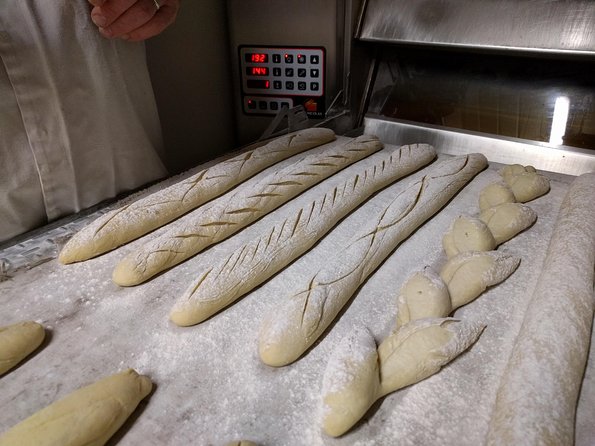
This class is not only about copying hand movements. Didier also explains how baguettes and croissants developed, along with the role of flour and ingredients in French baking. That context helps you understand why a baguette has its familiar shape and crust, and why croissant dough requires more patience.
The flour milling is especially interesting. You are not just told to use a certain ingredient from a recipe. You see that flour is a working material with differences in texture and behavior. For a home baker, this can be more useful than memorizing a single formula.
The history also gives the food a local setting. Parisian bread is part of daily life, and this workshop connects the finished loaf to the people, tools, and habits behind it. That is a better use of two and a half hours than simply buying a croissant and taking a photo.
Who will enjoy this most
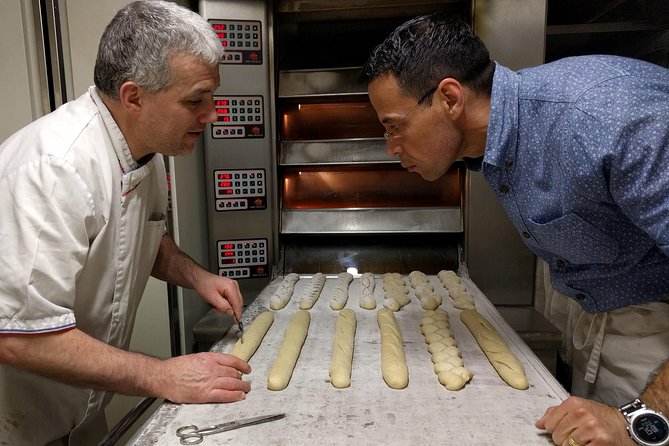
This works well for families with children age 6 and up, provided the children can focus for about two and a half hours. The class has been enjoyed by families with young children, teenagers, grandparents, and adults traveling as a couple.
It is also a good break from museums and monuments. You sit, listen, work with dough, and eat. The pace changes your day without requiring a full-day excursion.
Home bakers should bring curiosity and questions. Even experienced bakers can learn from watching an expert shape dough close up, though beginners should not feel excluded. The instruction is meant to be accessible, and the baker’s humor keeps it from feeling like a technical lecture.
This may not suit you if you have a sensitive airborne allergy. Flour is handled in a bakery environment, and the activity specifically warns against attending with that concern. Minors must be accompanied by an adult.
Is $264.95 a fair price?
At $264.95 per person, this is expensive for a two-and-a-half-hour activity. You are paying for more than ingredients and a snack, but the price still deserves a careful look.
The value is strongest if you want a small, personal lesson in a real bakery, with an experienced baker, an interpreter, hands-on baguette work, tasting, and recipes. The group limit of 10 helps justify the cost. You are not being moved through a large demonstration with no chance to touch the dough.
The value is weaker if you mainly want to eat croissants or if you expect to make several full batches from scratch. A Paris bakery visit and pastry purchase cost far less. You are paying for instruction, access behind the scenes, and the baker’s time.
I would book it for a special Paris day, particularly for a family or a small group that wants an activity everyone can share. I would not book it expecting a professional certification or a full technical course in both baguettes and croissants.
Timing, transport, and booking cautions
The bakery is near public transportation, and the activity begins and ends at the same meeting point. There is no hotel pickup or drop-off, so plan your own route to 8 Rue Oberkampf.
Choose between the morning and afternoon session based on your sightseeing plans, but arrive with enough time to find the bakery. The activity can be canceled if the minimum number is not reached, even after confirmation. If that happens, an alternative or full refund is offered.
There have also been serious communication problems when session times changed. Check your final time and date carefully, especially if the booking platform sends a later update. Do not rely only on an old confirmation email.
Free cancellation is available up to 24 hours before the start time. Changes or cancellations inside that window are not accepted for a refund.
Should you book the Paris baking class?
Book this if you want an authentic, hands-on food activity with a lively baker, a small group, and enough instruction to try French bread at home. The best parts are Didier’s personality, the unusual flour discussion, the baguette shaping, the warm tasting, and the chance to work inside a real bakery.
Go in with accurate expectations. Baguettes receive most of the practical attention, while croissants and pain au chocolat are introduced through demonstration and rolling rather than a complete from-scratch pastry course.
For families, curious beginners, and home bakers who want a personal look at French bread, this is a strong choice. For anyone with a sensitive airborne allergy, a tight schedule, or a strict goal of mastering croissants in one class, I would choose another activity.
FAQ
Where does the baking class meet?
It meets at Boulangerie Pâtisserie Le Petit Mitron, 8 Rue Oberkampf, 75011 Paris, France.
How long does the class last?
The class lasts approximately 2 hours and 30 minutes.
Is the class taught in English?
An English interpreter is provided. The baker may not speak English, but the interpreter supports communication and translates the lesson.
What will I make?
You learn to make baguettes and learn how croissants are prepared. You shape baguettes and handle or roll croissant dough. Some sessions also include pain au chocolat.
Do I get to eat the food?
Yes. Tasting baguettes and pastries is included, and you taste the baking while it is warm.
Can children attend?
The minimum age is 6. Minors must be accompanied by an adult.
Can I cancel for a full refund?
You can cancel up to 24 hours before the experience start time for a full refund. Cancellations or changes made less than 24 hours before the start time are not accepted.
Just added around Paris
- Explore Hidden bars and Speakeasies in Paris★ 5.0 · 79 reviews
- Paris Private Custom Tour with a Local Guide, Hidden Gems & Highlights★ 5.0 · 293 reviews
- Paris: Experience Segway Top Highlights Small Group 2 Hours★ 5.0 · 75 reviews
- Seine River Evening Cruise with Music (Drink Options)★ 3.5 · 321 reviews
- Eiffel Tower Tour & River Cruise with Summit Option★ 4.0 · 215 reviews
- Paris Evening City of Lights Small Group Bike Tour & Boat Cruise★ 5.0 · 97 reviews
- Paris Eternelle Notre-Dame Virtual Reality Tour★ 4.5 · 50 reviews
- Escape Game in the Covered Passages in Paris★ 5.0 · 79 reviews
Cooking Classes, compared.
Paris Cooking Class and Lunch with Wine plus Market Visit Option
Read our review →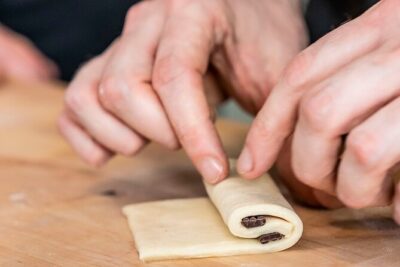
Paris Croissant Small-Group Baking Class with a Chef
Read our review →
Paris Cooking Class: Learn How to Make Macarons
Read our review →
Paris Evening Cooking Class French Dinner and Market Visit Option
Read our review →
Viator Exclusive: Local Cooking Class & Dinner with View of Nice
Read our review →
Browse the lists this tour appears in