
Reviewed · WWI BATTLEFIELD TOURS
WWI Somme Battlefields Day Trip from Paris
The most powerful part of this day is not a grand museum or a famous monument. It is the moment you walk through the preserved trenches at Beaumont-Hamel, then look across the same open ground where Canadian soldiers faced machine-gun fire. Nearby, the vast Lochnagar Crater shows the physical force of the war in a way no book can.
I like the small group of up to eight and the two-hour drive each way in an air-conditioned minibus. That setup gives you room to ask questions and lets guides such as Will, Aaron, Matthew, and Olivier adjust the conversation to your interests. I also like the mix of solemn memorials, a major museum experience, and the beautiful Cathedral of Amiens.
The drawback is the pace. You cover a lot of ground in one long day, with many short visits and several cemeteries. If you want time to read every panel or study each museum collection, this schedule may feel tight. Lunch is not included, and the restaurant stop has received mixed marks for speed, seating, and food choice.
Key points to know before you book
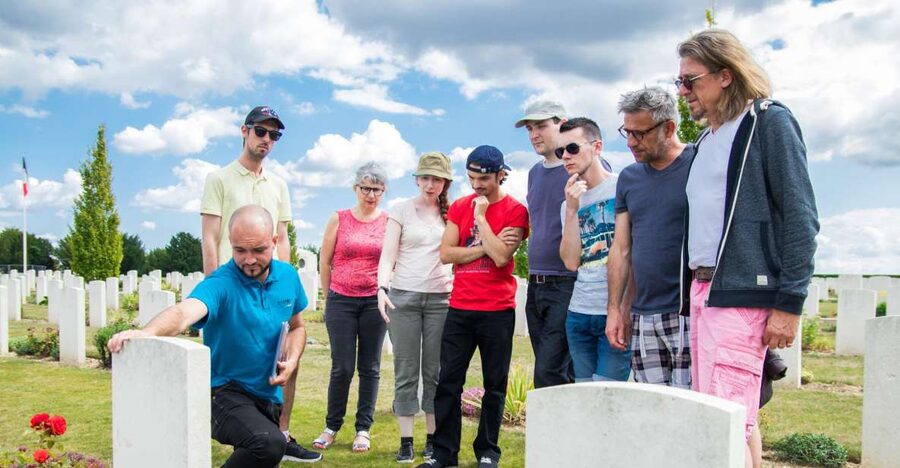
- Walk through preserved First World War trenches: Beaumont-Hamel offers one of the clearest physical links to the soldiers who fought here.
- See the huge Lochnagar Crater: Thirty tons of explosives created this enormous scar beneath the German position.
- Travel in a group of eight or fewer: The small van makes a remote battlefield day far easier than trying to connect these sites on your own.
- Hear Australian and Canadian stories: Villers-Bretonneux, the Sir John Monash Centre, and Beaumont-Hamel add national perspectives to the wider story.
- Pair war sites with Amiens Cathedral: The final stop gives the day a striking change of mood and architecture.
- Allow eleven hours: With roughly four hours on the road, this is a serious day trip rather than a quick side outing.
Why the Somme makes a strong day trip from Paris
Paris can fill every hour with museums, cafés, and grand boulevards. The Somme offers a very different day: quiet fields, military cemeteries, low earthworks, memorials, and small towns shaped by the First World War.
The two-hour drive to the region is part of the bargain. It is not glamorous sightseeing time, but the comfortable minibus matters when you have a full schedule ahead. The vehicle is air-conditioned, and the small group lets you settle into conversation with the guide and the other passengers.
This tour works best if you want the major Somme sites in one organized outing. The battlefield area is spread across northern France, and many important places are not practical to connect by public transport in a single day. A guide also gives the sites a clear sequence, from the memorials and craters to the museums and cemeteries.
The tone is respectful rather than theatrical. Guides including Will, Marrie, Philippe, Matthew, Aaron, Oliver, Sarah, and Jonathan have been praised for clear explanations, local knowledge, humor used at the right moments, and space for quiet reflection. That last point matters. The subject is grim, and a guide who talks without pause can make the day tiring.
More WWI Battlefield Tours in Northern France
- Somme Battlefields Small-Group Day Trip with John Monash Centre from Paris
★ 4.5 · 270 reviews - Somme Battlefields from Paris with Australian memorial & Amiens Cathedral
★ 5.0 · 228 reviews - Private Round Trip Transfer to Vimy Ridge from Arras
★ 5.0 · 164 reviews
Thiepval Memorial begins the story
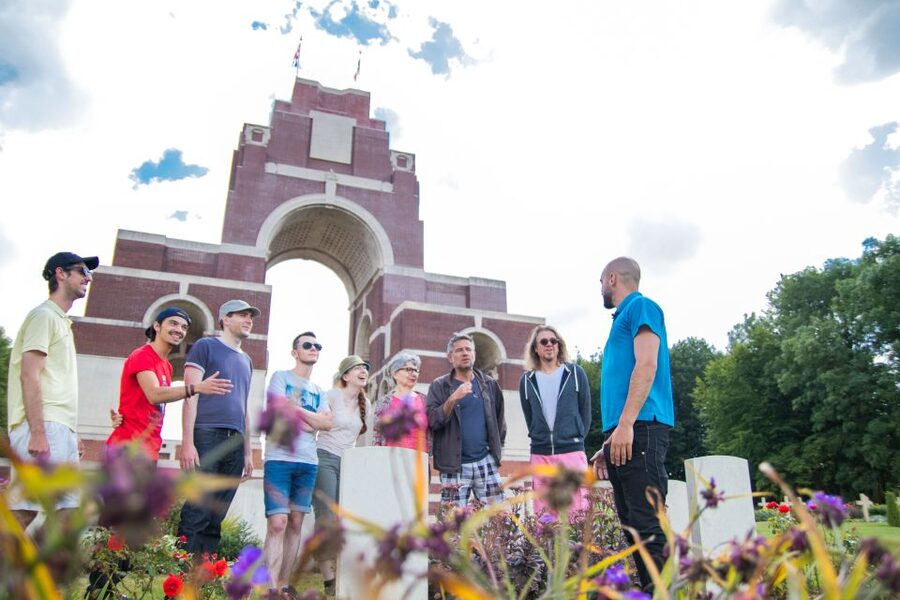
After the drive from Paris, the first listed visit is the Thiepval Memorial, usually for about 30 minutes. This is an important opening stop because it introduces the scale of the Somme losses before you begin walking among trenches and cemeteries.
You will need to use this time carefully. Thirty minutes is enough to see the memorial and absorb the setting, but not enough for an unhurried study of every detail. If your interest is strongly focused on military names, unit records, or the design of the memorial, you may wish for more time here.
The guide’s explanation is especially useful at the start of the day. Without context, a sequence of monuments can blur together. With a clear account of what happened in this part of the front, the later visits begin to connect.
Lochnagar Crater makes the battlefield physical
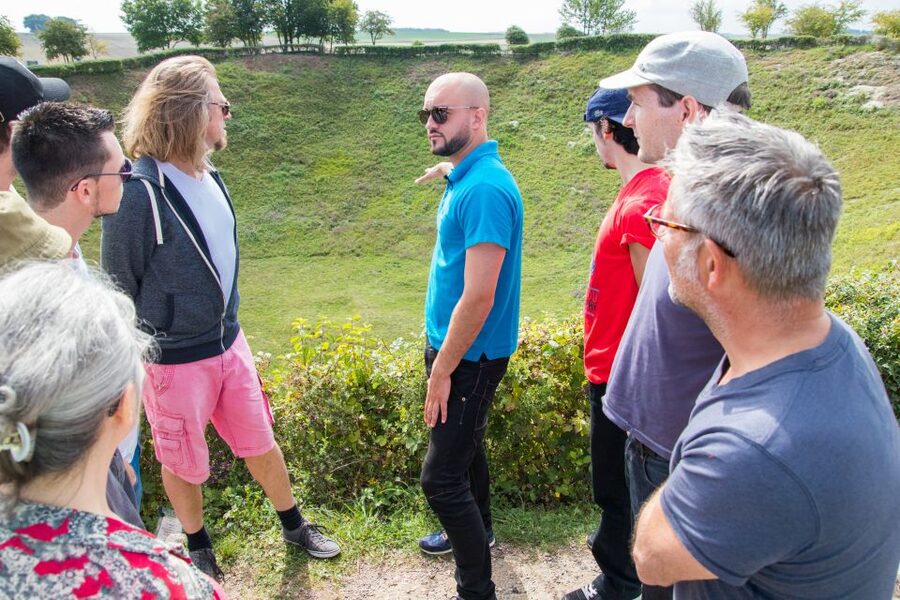
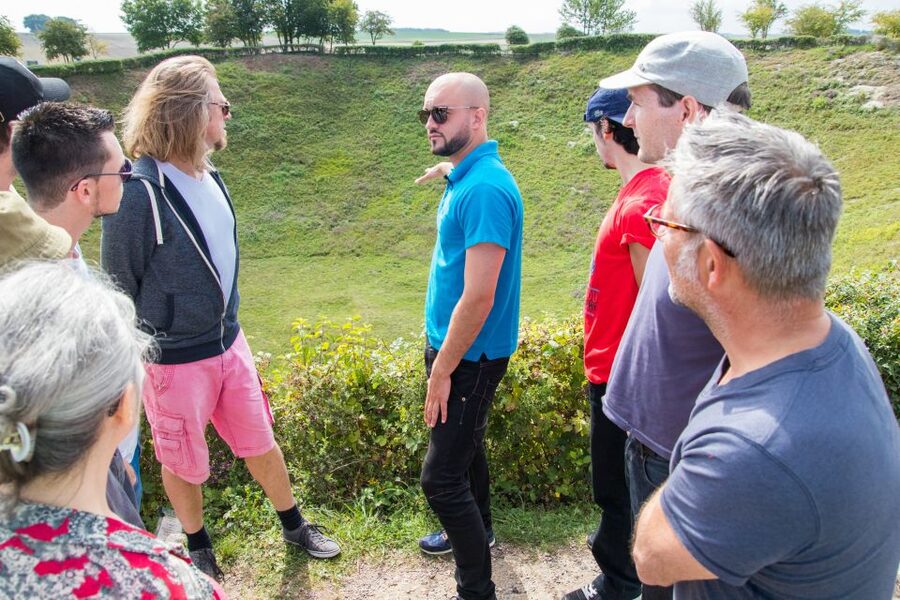
A short drive brings you to Lochnagar Crater, where British tunneling companies placed 30 tons of explosives beneath German dugouts. The blast created the huge crater you see today.
This is one of the tour’s best stops because it gives the war a physical scale. Photographs and maps can explain underground mining, but standing beside the crater makes the force of the explosion easier to grasp. You are not simply looking at a marker. You are looking at ground permanently altered by the battle.
The guided visit lasts about 30 minutes. That is enough to understand the event and take in the site, though not enough for a long independent walk. Wear shoes suited to grass and uneven ground, especially in wet weather. Tours operate rain or shine, so a waterproof layer is sensible.
Beaumont-Hamel lets you enter the trenches
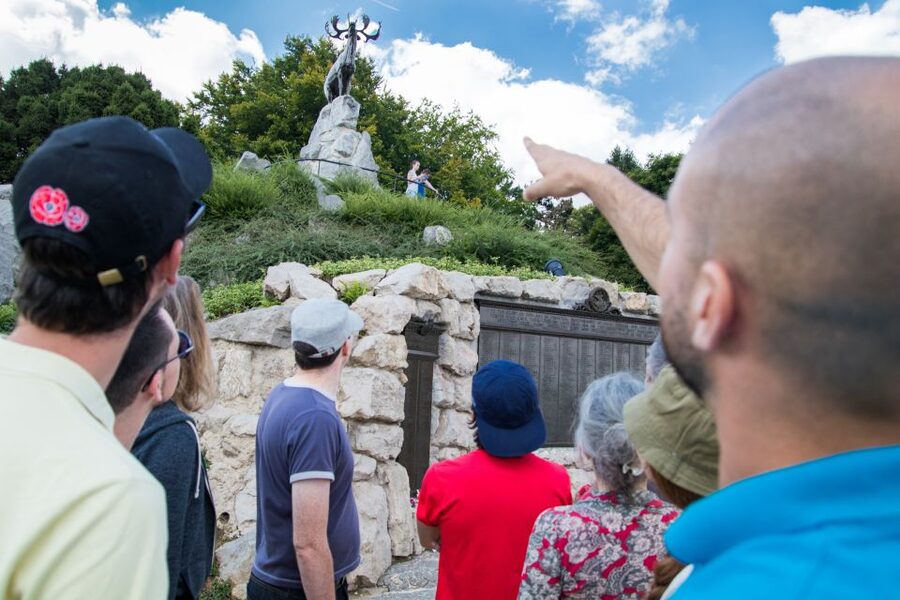
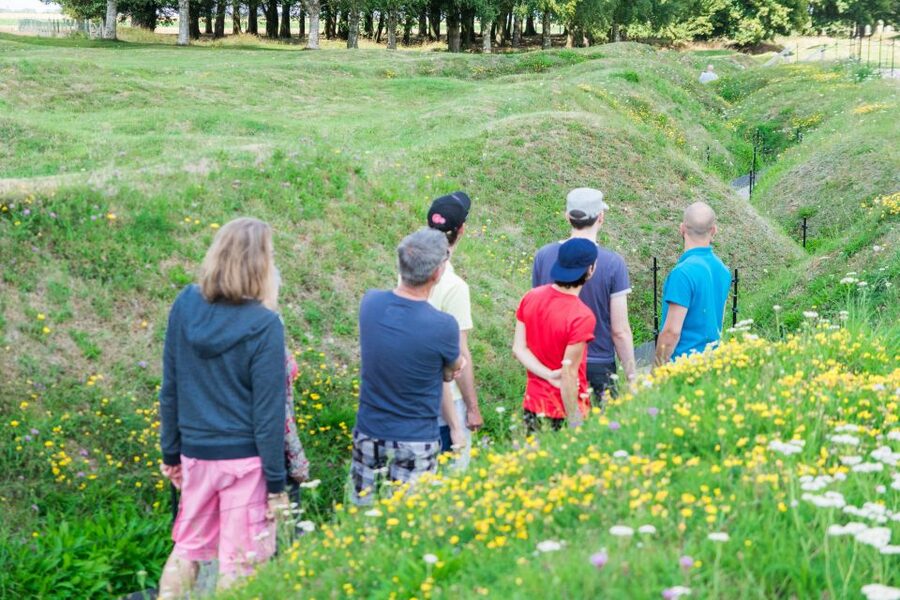
At the Newfoundland Memorial in Beaumont-Hamel, you walk through preserved First World War trenches associated with Canadian soldiers. This is often the most immediate stop of the day because the trenches narrow the distance between a modern visitor and the men who lived and fought there.
The ground also helps explain the conditions. You can see how close opposing positions could be and how little protection the soldiers had once they left the trench. One particularly useful feature of a guided visit is the chance to ask about the terrain, movement, and battle plan instead of viewing the site as a collection of isolated objects.
The scheduled visit is about 30 minutes, which may feel short if you want to explore the memorial grounds and museum displays at length. One useful tip is to decide in advance what matters most to you. If you are visiting because of Newfoundland or Canadian family history, tell the guide early. The small group format may allow the conversation to become more personal.
Same trip, a completely different kind of day:
- Entrance Ticket Nausicaa, the biggest aquarium in Europe
★ 3.5 · 1,135 reviews - Lille Driving Tour by Convertible Citroen 2CV
★ 4.9 · 711 reviews - Nausicaá National Sea Center: Full-Day Entry Ticket
★ 4.5 · 541 reviews - Unique Tour of Lille by Convertible 2CV – 1h00
★ 5.0 · 470 reviews
Lunch is practical, not a highlight
The tour stops at a local restaurant for lunch, but food is not included in the $271 price. The published schedule assigns only a brief period to the meal, so do not expect a long French lunch with several leisurely courses.
The restaurant has been described as tasty but informal. Conditions can vary, and one account noted a busy service, outdoor seating, cold wind, and limited food choices. I would treat lunch as a necessary pause rather than a central reason to book the trip. Bring patience, and consider having a small snack with you if you dislike rushed meals.
Villers-Bretonneux brings the Australian story forward
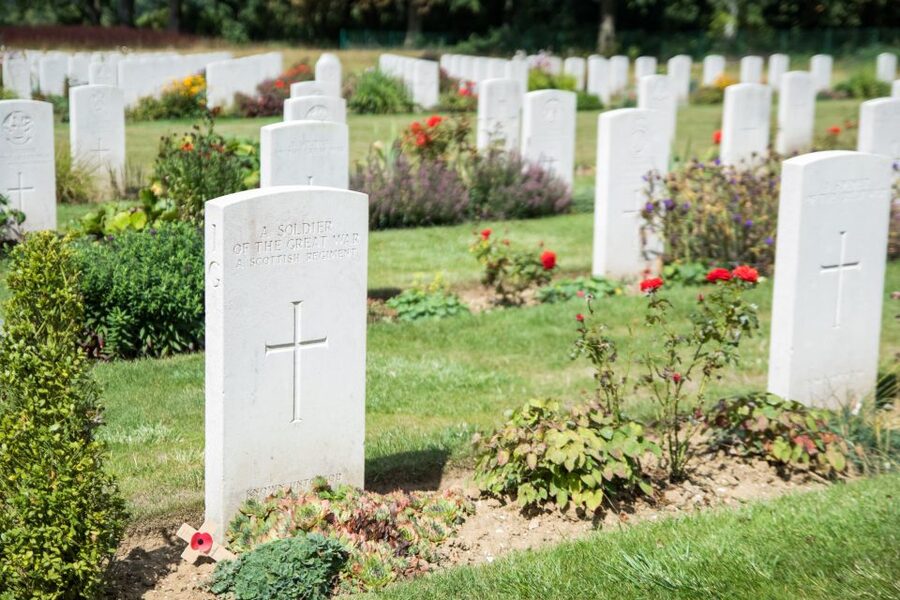
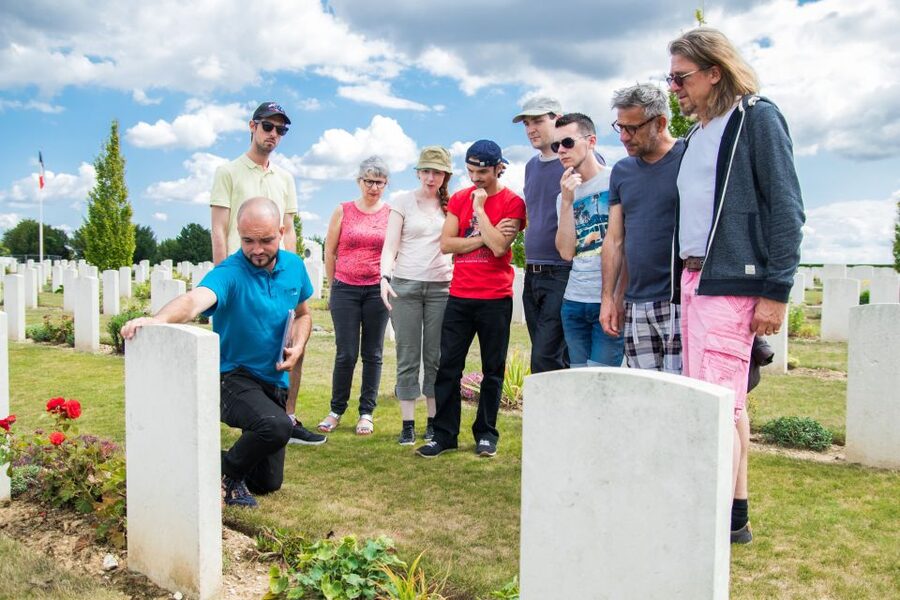
The Commonwealth military cemetery at Villers-Bretonneux is another quiet place to pause. Row after row of graves carries the weight of the war, including the familiar wording for unidentified soldiers, Here lies a soldier known only to God.
For Australian visitors, this section can be especially meaningful. Several guides have tailored the day toward Australian involvement when that was important to the group, and family connections have sometimes shaped the route. One guide even helped a family place a poppy beside an ancestor’s name at the John Monash Centre.
You do not need an Australian connection to value the stop. The cemetery makes the human cost visible, while the next visit adds military context.
The Sir John Monash Centre adds sound and detail
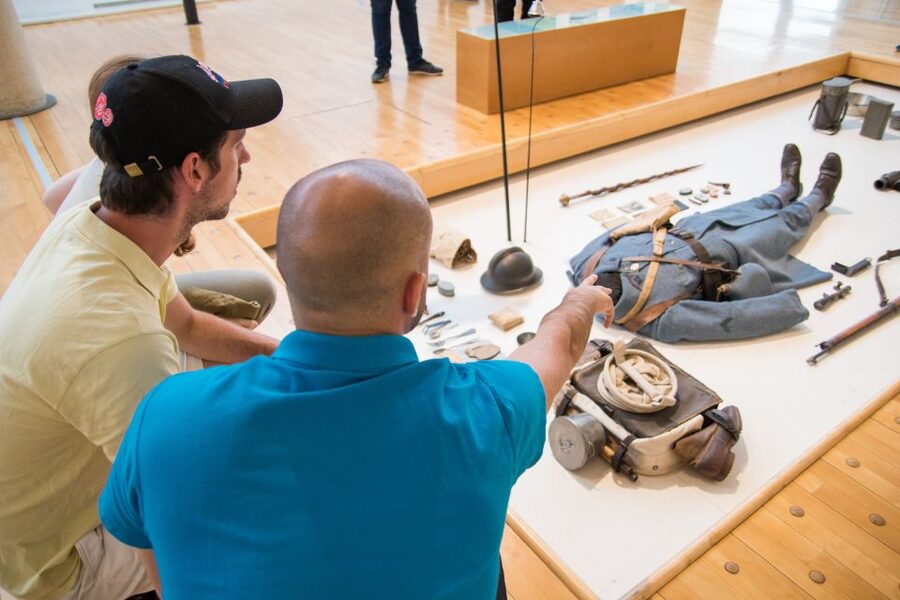
Plan on about an hour at the Sir John Monash Centre. It focuses on the Australian experience of the Great War and uses uniforms, artillery, war posters, personal belongings, and other material to build a clearer picture of the men who served.
This is one of the strongest museum portions of the day, particularly if you want more than monuments and open fields. It helps explain how Australian troops fit into the wider Allied effort and why Villers-Bretonneux holds such importance in Australian memory.
There is one point to watch when comparing this tour with other Somme visits. The advertised information also refers to the Great War Museum in Péronne, but the listed route includes the Sir John Monash Centre instead. One recent itinerary changed between the two, and the Monash Centre was used in place of the Péronne museum. If seeing Péronne’s wider collection is essential to you, confirm the exact plan before booking.
In the event of an exceptional closure, the Sir John Monash Centre may be replaced by the Historical Museum of Péronne. That alternative could offer a broader collection and a different national balance, but the exact experience will not be identical.
Pozieres keeps the schedule moving
Pozieres receives a shorter visit of about 10 minutes. It is not a full museum stop, but it adds another piece to the battlefield story and reinforces how much ground the day covers.
This is also where the schedule can begin to feel compressed. You will see several memorials and cemeteries in succession, and not every stop allows a long independent exploration. The advantage is breadth. The cost is depth.
I would not choose this tour if your plan is to spend half a day at one site with a notebook and archival material. I would choose it if you want a guided introduction to several important locations and need transport between them.
Amiens Cathedral changes the mood
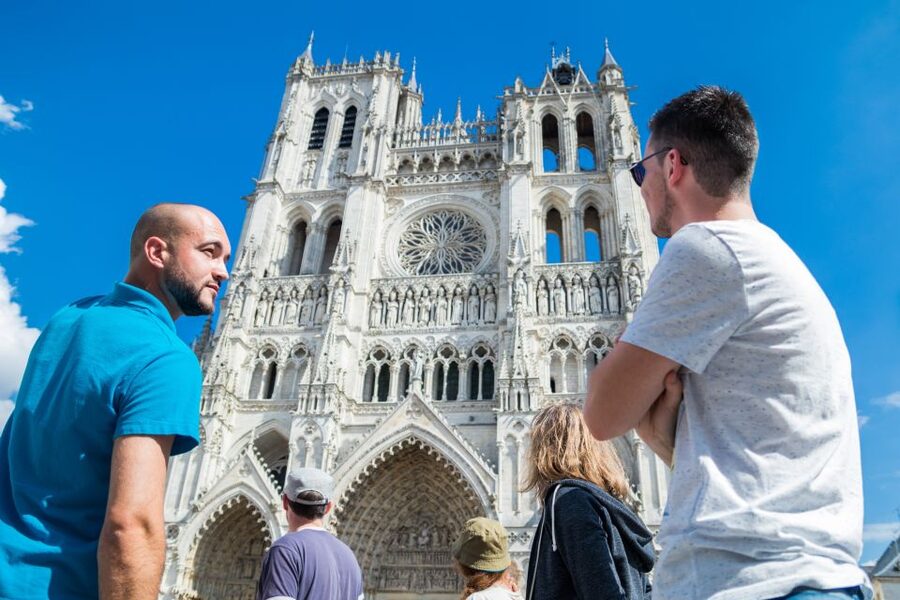
The final major visit is Notre Dame Cathedral in Amiens, a 13th-century building described as the largest cathedral in France. After hours focused on military loss, the cathedral offers a completely different form of history: soaring Gothic architecture, stone carving, and a civic religious space that has endured for centuries.
The visit lasts about 30 minutes, so think of it as a strong glimpse rather than a full cathedral study. You can admire the scale and design, but you will not have unlimited time for every chapel, detail, or display.
I like this ending because it prevents the day from closing on a cemetery alone. The change in subject gives you a chance to reset before the drive back to Paris. It also makes the trip more than a military-history circuit, though some people would prefer that time to go to another battlefield museum.
What the $271 price really covers
At $271 per person, this is not a cheap excursion. The value comes from what is bundled into a long, difficult-to-organize day: an English-speaking guide, air-conditioned transport, entrance fees, and a maximum group size of eight.
The four hours of driving are important to the calculation. You are paying to have someone else handle the route between scattered sites, explain the significance of each place, and get you back to Paris on schedule. One independent visitor described the battlefield route as overwhelming to manage alone, and that is a fair point.
The price is easier to justify if you have limited time in France, a family connection to the Somme, or a strong interest in military history. It is harder to justify if you mainly want a relaxed countryside outing or a long cathedral visit. Lunch costs extra, and the day’s short museum visits mean the value depends heavily on how much you appreciate guided interpretation.
Timing, meeting point, and practical advice
The day starts at Café Dada Ternes in Paris. Arrive at least 15 minutes before departure. The grey minibus is expected about 10 minutes before the scheduled start, and departures are described as punctual.
The full outing lasts about 11 hours. Expect an early start, two long road sections, and a return to the same area in Paris. The small van is more comfortable and personal than a large coach, but you are still spending much of the day in transit.
Bring comfortable walking shoes, a rain layer, and water. The tour runs in all weather. Some visits take place outdoors, and conditions at the memorials can be windy, wet, or muddy.
The guide language is English. The quality of the experience depends partly on communication style, and one person found a guide’s accent difficult to follow. Most of the named guides received strong praise for clear explanations and friendly conversation, but if you have hearing difficulties or need extra time with historical terms, sit near the front and ask questions when needed.
Free cancellation is available up to 24 hours before departure, and you can reserve while paying later. Those policies help if your Paris schedule is still changing, but the main decision remains the length and subject of the day.
Who should book this Somme trip?
I recommend it most strongly for people who want a serious introduction to the First World War battlefields without renting a car or building a complicated route. It suits military-history readers, descendants of soldiers who fought in the Somme, and visitors who want to understand Australian, Canadian, British, and Commonwealth involvement.
It also works for families. One parent or grandparent can focus on the history while younger visitors gain a clearer sense of place by walking the trenches and seeing the crater. The subject is difficult, so younger children may find the cemeteries and stories heavy.
You should think twice if you dislike early starts, long drives, short stops, or emotionally serious sightseeing. You should also check the exact museum plan if the Péronne collection matters more to you than the Australian focus at the Sir John Monash Centre.
Should you book it?
Book this tour if you want the Somme’s major memorials, trenches, crater, cemetery, museum, and Amiens Cathedral in one carefully organized day. The eight-person limit and strong guide tradition make the price reasonable for visitors who value explanation and personal attention.
Skip it if you want a slow, single-site visit or a long museum session. For everyone else, this is a moving and practical way to leave Paris for a day, see ground that still carries the marks of war, and return with a more grounded understanding of what happened here.
FAQ
How long is the WWI Somme Battlefields trip from Paris?
The tour lasts 11 hours, including the journey between Paris and the Somme region.
What is the group size?
The tour is limited to eight people, allowing the guide to answer questions and provide more personal attention.
What transport is provided?
You travel in an air-conditioned minibus with an English-speaking guide.
Is lunch included?
No. Food is not included in the tour price, and lunch is taken at a local restaurant.
Which battlefield sites are visited?
The route includes Thiepval Memorial, Lochnagar Crater, Beaumont-Hamel Newfoundland Memorial, Villers-Bretonneux Commonwealth Military Cemetery, the Sir John Monash Centre, and Pozieres Memorial.
Do I visit Amiens Cathedral?
Yes. The tour includes a visit of about 30 minutes to Notre Dame Cathedral in Amiens.
Is the Great War Museum in Péronne included?
The supplied route lists the Sir John Monash Centre rather than the Great War Museum in Péronne. If the Monash Centre is exceptionally closed, the Historical Museum of Péronne may be used instead.
Where does the tour begin?
The meeting point is Café Dada Ternes in Paris. You should arrive at least 15 minutes before departure.
What happens if it rains?
Tours operate rain or shine. Wear suitable footwear and bring weather protection because several visits take place outdoors.
More Day Trips in Northern France
- Disneyland® Paris 1-Day Ticket
★ 4.6 · 49,412 reviews - Normandy D-Day Sites & Cemetery Day Trip from Paris with Lunch
★ 5.0 · 6,877 reviews - From Nice: French Riviera in One Day
★ 4.5 · 5,215 reviews - Day Trip to Mont-Saint-Michel from Paris
★ 4.5 · 4,876 reviews
Just added around Northern France
- Private guided tour by electric bike taxi★ 4.7 · 168 reviews
- Lille: 24, 48 or 72-Hour City Pass & 24-Hour Transportation★ 4.3 · 205 reviews
- NO DIET CLUB – LET’S GET THICK IN Lille !★ 4.8 · 93 reviews
- Musee Somme 1916 Admission Ticket★ 4.5 · 105 reviews
- Private Round Trip Transfer to Vimy Ridge from Arras★ 5.0 · 164 reviews
- Private battle of Dunkirk Operation Dynamo Tour★ 5.0 · 99 reviews
- Somme Battlefields from Paris with Australian memorial & Amiens Cathedral★ 5.0 · 228 reviews
- Somme Battlefields Small-Group Day Trip with John Monash Centre from Paris★ 4.5 · 270 reviews
WWI Battlefield Tours, compared.
Normandy Battlefields Tour – American Sites (A3)
Read our review →
Somme Battlefields Small-Group Day Trip with John Monash Centre from Paris
Read our review →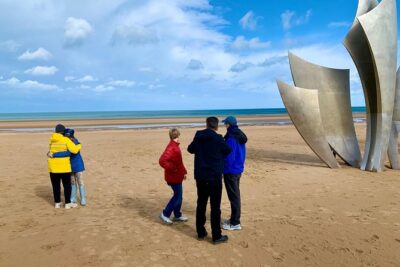
Normandy Battlefields D-Day Private Trip with VIP Services from Paris
Read our review →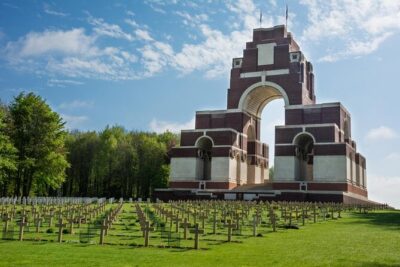
Somme Battlefields from Paris with Australian memorial & Amiens Cathedral
Read our review →
Full-Day US Battlefields of Normandy Tour from Bayeux (A3LST)
Read our review →
Full-Day Canadian Battlefields & sites Normandy Tour from Bayeux
Read our review →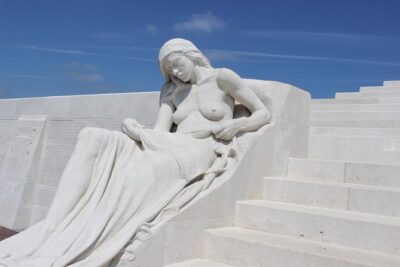
Browse the lists this tour appears in