
Reviewed · WINE TOURS
Beaujolais Half Day Wine Tasting Tour
Beaujolais is at its best when you compare two sides of the region in one morning: the polished Château de Pizay and a smaller family winery where the winemaker explains the work firsthand. The first stop uses all five senses in an interactive wine lesson, while the second puts you closer to the people and soil behind the bottles.
I especially like the small group of no more than eight, which keeps the minivan friendly and makes questions easy. I also like the contrast between the self-guided tasting at Pizay and the more personal family visit, a useful way to see how different wine estates present themselves.
The main caution is that this is a tasting tour, not a full cellar-and-vineyard tour. Some of your time at Pizay is self-directed, and lunch, bottled water, hotel pickup, and hotel drop-off are not included.
Key points to know before you book
- Two sharply different winery visits: Château de Pizay offers a polished, hands-on wine lesson, while the family estate feels more intimate and direct.
- A strong introduction to Beaujolais: You pass through the famous wine route and appellations such as Morgon, Fleurie, and Juliénas.
- Small and sociable: The shared minivan carries up to eight people, making it easier to chat and ask questions than on a large coach.
- More than red wine: Tastings can include white, rosé, and many styles of Beaujolais red, though Gamay and fruit-forward reds dominate.
- A useful half-day from Lyon: The tour lasts about four hours and returns to the Bellecour meeting point, leaving the rest of your day free.
- Bring a refillable bottle: Bottled water is not supplied, but you can refill your own bottle during the outing.
Why this four-hour trip is a good way to meet Beaujolais
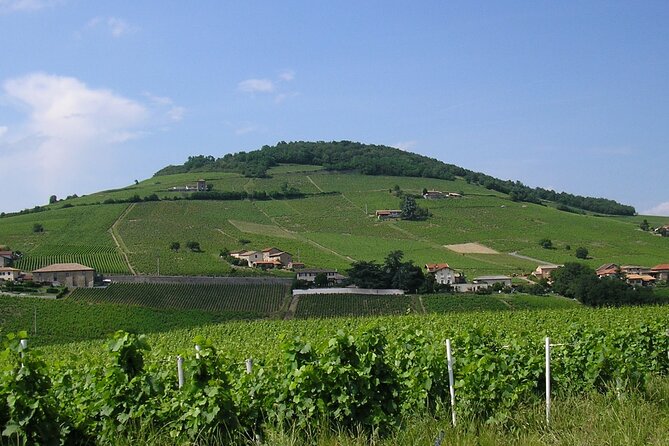
Beaujolais lies north of Lyon, close enough for an easy morning in the countryside without giving up your whole day. That matters if you have only a short stay in Lyon, or if you want wine country without renting a car.
The tour begins at 9:00 a.m. outside the Lyon Tourist Office and Convention Bureau on Place Bellecour. You board an air-conditioned minivan and head north with a driver-guide. The roads take you through the Beaujolais wine country and past well-known appellations including Morgon, Fleurie, and Juliénas.
I like the shape of the morning. You get a little regional geography, a little wine education, two tastings, and changing views from the road. It is not a long technical wine course, but it gives you enough background to understand why Beaujolais is more than the young, light wine often associated with the region.
The group size is a real advantage. With a maximum of eight people, you can hear the guide without a microphone and usually get a chance to ask about the wine, villages, or local traditions. Guides including Rachel, Clémence, François, Raphaëlle, and Yann have been praised for their warmth, organization, and grasp of both Lyon and the Beaujolais area.
Guide quality matters here because some of the driving time is part of the experience. The strongest guides use the road to explain the villages, grape varieties, geology, and history. A few visitors have found that some guides spoke while driving or corrected too quickly, so the experience can depend on who leads your departure and how comfortable you are with a guide whose English may vary.
More Wine Tours in Burgundy
- Burgundy Bike Tour with Wine Tasting from Beaune
★ 5.0 · 674 reviews - Dijon: La Cave du Palais Burgundy Wine Tasting Experience
★ 4.8 · 400 reviews - From Lyon: Golden Stones Beaujolais Wine Tasting Tour
★ 4.7 · 387 reviews
Château de Pizay turns tasting into a lesson
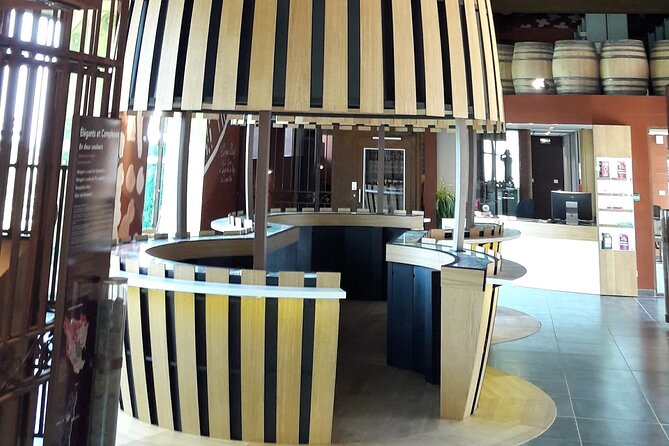
The first stop is Les Vins du Château de Pizay, a grander wine estate with a one-hour oenosensory experience. That word sounds fancy, but the idea is simple: you learn about wine by using your eyes, nose, mouth, and sense of touch rather than sitting through a lecture.
The experience moves through a series of stations. You explore features such as acidity, tannin, sweetness, aroma, and texture, then test your understanding with a quiz. One account describes eight stations, while the full tasting can include around a dozen wines. You may taste wines from several Beaujolais villages and compare white, rosé, and red examples.
This is especially useful if you are new to wine. Instead of being told that a wine is acidic or tannic, you get a chance to notice those qualities yourself. The format turns wine vocabulary into something you can feel and taste.
The château setting adds plenty of visual appeal. You have time in the gardens and vineyard area for photos, with indoor portions available when the weather is hot. The estate has been described as polished and pristine, a sharp contrast with the smaller winery later in the morning.
There is one important tradeoff. The Pizay session is partly self-guided and self-served. You move through the displays and pour samples from the available stations rather than having a wine expert explain every glass. Some people enjoy the freedom and the quiz. I can also understand wanting a person to pour each wine, explain its origin, and answer questions as you go.
If you prefer a structured tasting with a sommelier or winemaker at your elbow, this stop may feel impersonal. If you like learning at your own speed, it is one of the most memorable parts of the outing. The hands-on format helps beginners, and the range of samples gives experienced wine drinkers a useful chance to compare villages.
The Beaujolais wine route supplies the scenery
Between the two tastings, the minivan follows the Beaujolais Wine Route. This is not simply dead time between stops. The route passes through celebrated appellations such as Morgon, Fleurie, and Juliénas, with vineyards, villages, and rolling countryside outside the windows.
The exact views vary with the season and route, but the drive gives you a feel for the area’s scale and character. You see why a wine label from Beaujolais can tell you more than just the grape. Village and cru names reflect different growing areas, soils, slopes, and local traditions.
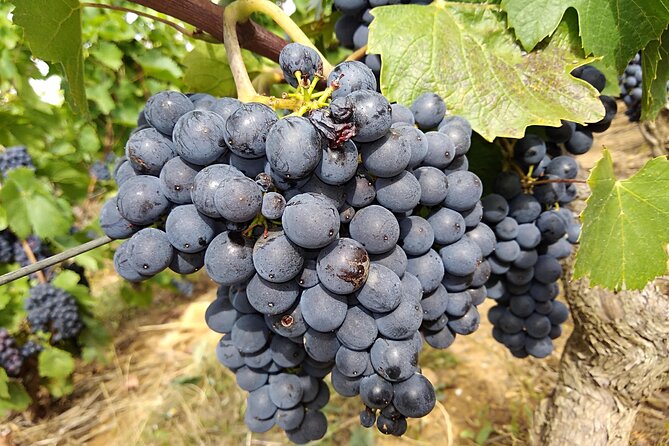
Gamay is the key grape here, and you should expect plenty of it. Beaujolais reds tend to be fresh, fruity, and lighter on their feet than a full-bodied Cabernet. If you prefer powerful, heavily aged reds, this may not be your favorite style. If you enjoy bright fruit, easy drinking, and differences between villages, the region can be a pleasant surprise.
The route also helps correct the idea that all Beaujolais tastes the same. The tastings may include Beaujolais, Beaujolais-Villages, and wines from individual crus. You can compare the results rather than relying on a label or reputation.
The guide’s commentary makes a difference during this part of the trip. Rachel has been praised for adding information about Lyon as well as the wine area. Clémence and François have also been singled out for explaining the terroir, history, and winemaking process in a clear way. Still, do not expect a continuous lecture every mile. Some of the value is simply being driven through the countryside without having to navigate.
A family winery brings the human side
The second stop is a family-run winery in Beaujolais. This visit is free of the separate admission charge because it is part of the tour, and it usually feels less formal than Pizay.
Here you meet the winemaker or owner and taste the estate’s wines. The setting can be a small village or hilltop estate, and the conversation focuses on how the family works with the land, protects quality, and balances tradition with business needs.
This is the part I would look forward to most if I wanted personal contact. The owner-led presentation gives the bottles a sense of place. You are not just sampling wine from a dispenser. You are hearing about the family, the soils, the stages of production, and the decisions that shape the final bottle.
One visit has included an explanation and demonstration of soils and how they affect wine. Another has included information about a château whose viticulture history reaches back to the 1500s. The exact family estate can vary, but the contrast with Pizay is the point: one stop teaches you through a designed activity, and the other connects you with the producer.
The small winery also tends to offer a more guided tasting. The winemaker can explain what is in your glass and respond to questions about the estate. Several people have preferred this personal format to the first stop.
Do not assume that you will tour every cellar, barrel room, or vineyard parcel. The visit is mainly about meeting the producer and tasting the estate’s wines. If a behind-the-scenes cellar walk is essential to you, this half-day tour may leave you wanting more.
Same trip, a completely different kind of day:
- Small-Group Full-Day Tour of Côte de Nuits, Côte de Beaune Vineyards and Beaune Historical District
★ 5.0 · 364 reviews - Beaune: Wine Tasting at Château de Pommard
★ 4.4 · 277 reviews - From Beaune: Burgundy Day Trip with 14 Wine Tastings
★ 4.8 · 248 reviews - Burgundy Grand Crus Route Day Tour – 14 Wines Tastings in Domains
★ 5.0 · 223 reviews
What you may taste, and what you probably will not
The tasting program can be broader than the usual Beaujolais image. Along with red wine, you may sample white and rosé, plus wines from different villages and cru areas. Some outings have included more than a dozen samples across the two estates.
That variety is helpful because it lets you compare style, color, aroma, acidity, tannin, and fruit. The Pizay lesson makes those comparisons easier for beginners, while the family winery adds the producer’s own explanation.
Still, this is not a tour built around every major French grape. Gamay is the heart of Beaujolais, so expect many fruit-forward reds rather than deep Cabernet Sauvignon, heavy Syrah, or broad Bordeaux blends. A few people have found the wines less exciting than expected, while others have come away with a new respect for the region.
My advice is to arrive curious rather than determined to find a big, oaky red. Beaujolais often rewards a different preference: freshness, lively fruit, and wines that suit a relaxed meal. You do not need advanced tasting skills, and you do not need to pretend to like every sample. The point is to find out what changes from one village or producer to another.
Because alcohol is served, the legal rule matters. The experience is listed for ages 12 to 99, but alcohol consumption in France is forbidden for anyone under 18. Parents and guardians must make sure younger participants comply, and everyone should taste responsibly and in moderation.
Price, timing, and what the half-day gives you
At about $119.48 per person, the price is not bargain-basement, but it covers transport from Lyon, a driver-guide, two winery experiences, and the wine tastings. For someone without a car, that combination can be good value because you avoid arranging rural transportation and can sample wine without driving afterward.
The strongest value comes from the small group and the two different formats. You are not paying for one quick tasting room stop. You are getting a guided route through Beaujolais, an interactive introduction at Pizay, and a producer-focused visit at a family estate.
The value is less convincing if you want a long lunch, extensive vineyard walking, or a private wine consultation. Lunch is not included, and four hours passes quickly once driving and both visits are counted. Plan a meal before or after the tour rather than expecting food at the estates.
Hotel pickup and drop-off are not included either. You need to reach Place Bellecour for the 9:00 a.m. departure, and the tour ends back at that same meeting point. The starting point is near public transportation, which makes it practical if you are staying in central Lyon.
A mobile ticket is provided, and the shared tour is offered in English. Most people can take part, but the tour operator does not promise that every part of the experience is adapted to every mobility need. If that is important for you, ask before booking.
Free cancellation is available if you cancel at least 24 hours before the start time. Changes or cancellations made within 24 hours are not accepted for a refund.
Who should book this Beaujolais outing?
I would choose this tour if you are staying in Lyon, want a manageable introduction to French wine country, and prefer a small shared group to a large bus. It also suits couples, solo visitors, and friends who want a social morning with a chance to meet people from different places.
It is a particularly good fit for wine beginners. The Pizay tasting quiz gives you a way to learn by doing, and the family winery shows how that knowledge connects to real bottles and real producers.
You should think twice if your ideal wine day includes a long lunch, a private guide, extensive cellar access, or hours of walking through the vines. This is a compact educational outing, not an all-day estate tour.
Should you book it?
Book it if you want to get out of Lyon without renting a car and like the idea of two contrasting wine experiences. The best parts are the small group, the beautiful drive through Morgon, Fleurie, and Juliénas, the hands-on tasting at Pizay, and the direct contact with a family producer.
Skip it if a self-guided tasting sounds frustrating or if you want every glass presented by a wine expert. For most visitors who want a practical first look at Beaujolais, though, the balance is right: enough wine, enough countryside, and enough explanation to make the region feel real without taking over your entire day.
FAQ
Where does the tour begin?
It begins at the Office du Tourisme et des Congrès de la Métropole de Lyon, Place Bellecour, 69002 Lyon, France.
What time does the tour start?
The tour starts at 9:00 a.m.
Where does the tour end?
It ends back at the meeting point at Place Bellecour.
How long does the experience last?
Plan on approximately four hours.
How many people can join the tour?
The shared tour has a maximum of eight participants.
Is transportation included?
Yes. Transport is provided in an air-conditioned minivan with a driver-guide.
Is hotel pickup or drop-off included?
No. You must reach the meeting point, and the tour returns there at the end.
Is lunch included?
No. Lunch is not included.
Is bottled water provided?
No. You can bring a reusable bottle and refill it during the tour.
Can anyone under 18 drink the wine?
No. Alcohol consumption in France is forbidden for people under 18. The experience is listed for ages 12 to 99, and legal guardians must ensure compliance.
Is the tour offered in English?
Yes. The experience is offered in English.
Can I cancel for a full refund?
Yes, if you cancel at least 24 hours before the scheduled start time. Cancellations or changes made less than 24 hours before departure are not refunded.
Just added around Burgundy
- Chablis and Burgundy Wine Tour Run by Sommelier with Lunch★ 5.0 · 88 reviews
- Hameau Duboeuf, 1st theme park on Vine and Wine in Europe★ 4.5 · 63 reviews
- Beaujolais & Perouges Medieval Town (9:00 am to 5:15 pm – Small Group Tour Lyon★ 5.0 · 53 reviews
- Beaujolais wine tour from Lyon half day★ 5.0 · 103 reviews
- Beaujolais Crus Wines & Castles (2:00 pm – 6:30 pm) – Small Group Tour from Lyon★ 5.0 · 37 reviews
- Beaujolais Segway Tour with Wine Tasting★ 5.0 · 98 reviews
- Guided tour of the Chablis Vineyards by e-bike★ 5.0 · 37 reviews
- Chardonnay Masterclass – Wine tasting in Dijon★ 5.0 · 91 reviews
Wine Tours, compared.
Moulin Rouge Cabaret Show Ticket with Champagne
Read our review →
Authentic Parisian Gourmet Food Tour with 10 Local Dishes & Wines
Read our review →
Loire Valley Castles Day Trip from Paris with Complementary Wine
Read our review →
River Garonne Cruise with Glass of Wine and Canelé
Read our review →
Montmartre Hill French Gourmet Food and Wine Tasting Walking Tour
Read our review →
Montmartre Cheese, Wine & Pastry Guided Walking Tour
Read our review →
Paradis Latin Cabaret Show with Optional Champagne
Read our review →Browse the lists this tour appears in