
Reviewed · WINE TOURS
Bordeaux: Wine Masterclass with Cheese and Charcuterie Board
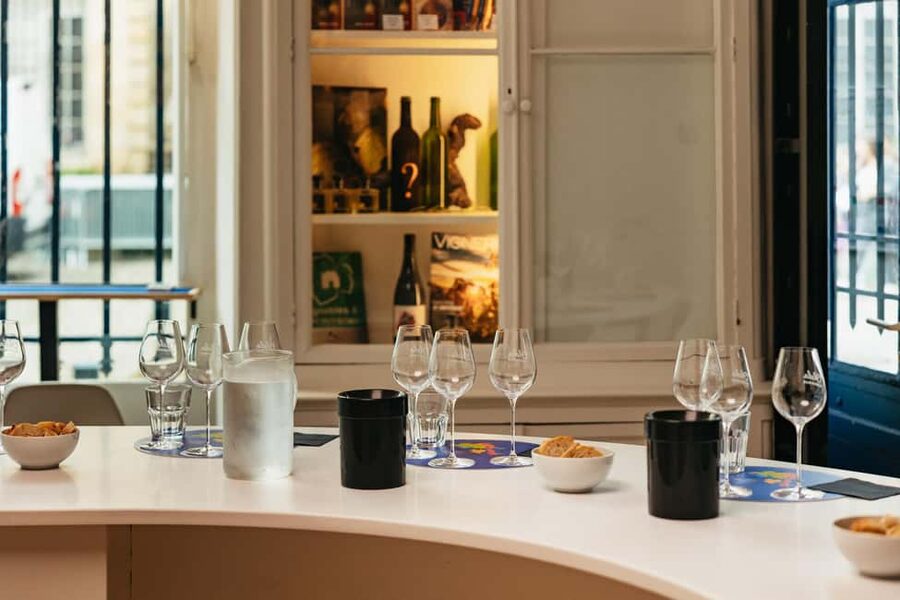
Bordeaux wine can feel like a locked room if you do not know the language on the label. This 90-minute class gives you the key: a clear tasting method, a look at Bordeaux’s left and right banks, and six wines served with local cheese and charcuterie. It takes place at Olala Bordeaux, just a short walk from the Grand Théâtre.
I like the step-by-step sensory lesson, which teaches you how to look, smell, and taste instead of simply handing you a glass. I also like the lineup: one white, three regional single-grape reds, then two more polished wines, including a Bordeaux grand cru. The main drawback is that the wines and timing can change, so this is an introduction rather than a fixed tasting menu.
I especially value the relaxed teaching style. Guides named Antoine, Hugo, Anna, Enzo, Vincent, and others have led these sessions, and the strongest theme is clear: the class is friendly, funny, and easy for beginners to follow. At $53 per person, the amount of instruction, wine, and food makes this a solid city-center buy, though serious collectors may want a longer vineyard visit.
Key points to know before booking
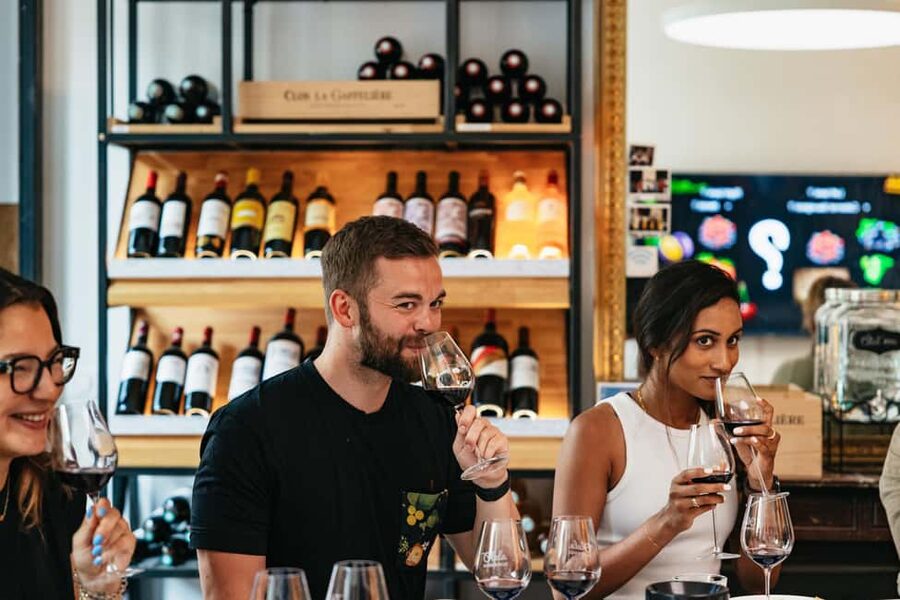
- Six Bordeaux wines: Taste one white and five reds, ending with wines from the left and right banks, including one grand cru.
- A real tasting lesson: Learn a universal method for judging appearance, aroma, and flavor rather than simply sipping.
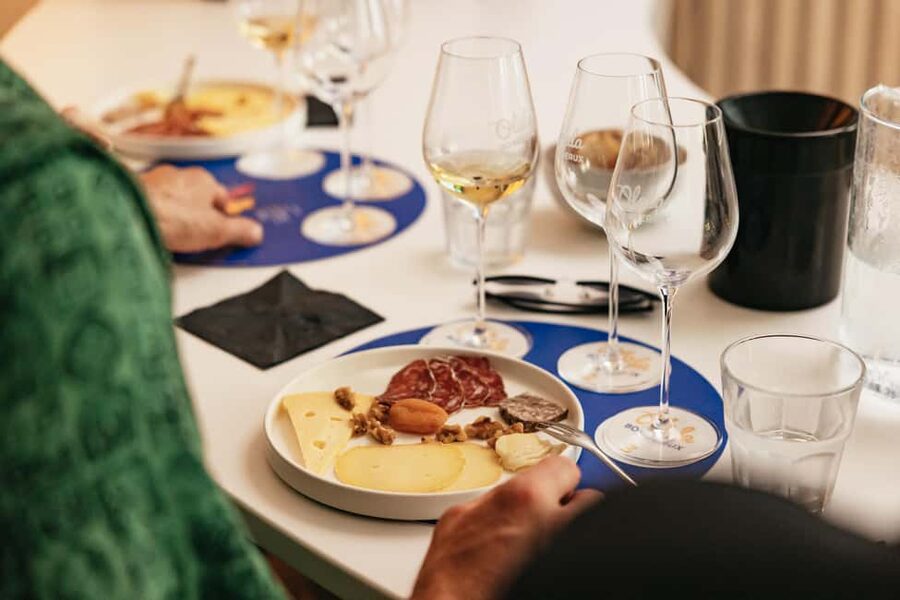
- Food is part of the class: A board of local cheese and charcuterie, plus baguette and water, accompanies the wines.
- Central Bordeaux setting: Olala Bordeaux is about five minutes from the Quinconces tram stop and close to the Grand Théâtre.
- Beginner-friendly instruction: The explanations cover terroir, appellations, vinification, aging, storage, and service without assuming much prior knowledge.
- A focused 90 minutes: It fits neatly into a day of sightseeing, but the short format cannot cover every Bordeaux appellation in detail.
Why this class helps you understand Bordeaux
Bordeaux wine is often less about a single grape than about place, rules, and blending. A bottle label may point to an appellation or a bank of the Gironde rather than plainly telling you what is in the glass. This class gives you a working map before you head to a vineyard or order a bottle with dinner.
The session begins with the basic vocabulary. You learn about terroir, grape varieties, appellations, classification, winemaking, aging, storage, and wine service. These are not just fancy terms. They explain why two reds from the same broad region can taste very different and why Bordeaux wines are often blended.
I like this approach because it gives you something useful to do with the information. Instead of hearing a long lecture about vineyards, you apply each idea to the wines in front of you. The class also suits different levels. Complete beginners get a starting point, while people who already drink wine can use the left-bank and right-bank comparison to sharpen their understanding.
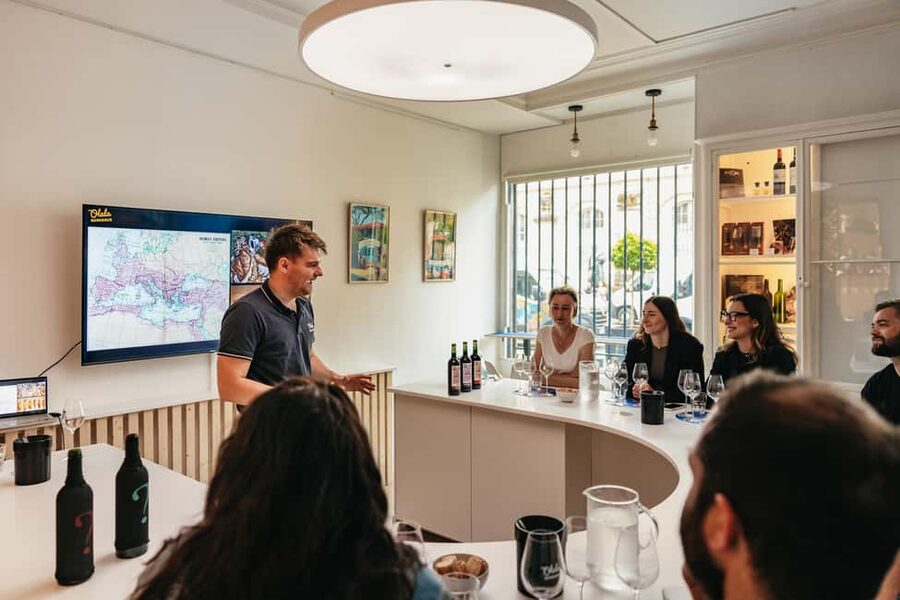
The setting helps. You are not sitting in a large coach or racing between several estates. You settle into a wine bar and tasting space near the heart of Bordeaux. That makes this a good first activity in the city, especially if you want context before booking a full-day excursion to the vineyards.
More Cheese Tastings in Bordeaux
- Professional – Bordeaux Wine and Cheese Tasting with a walking tour
★ 5.0 · 218 reviews - Tasting of 6 Bordeaux wines and pairing charcuterie & cheese
★ 5.0 · 199 reviews - Introduction to Bordeaux wines paired with cheeses & charcuterie
★ 5.0 · 175 reviews
The first glass teaches you how to taste
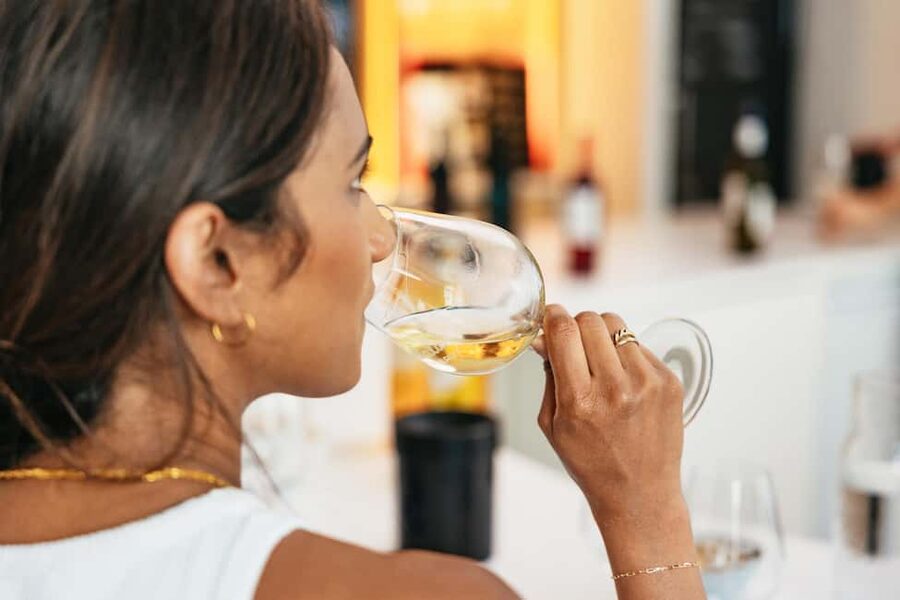
Your first pour is a white wine. It is used to wake up your senses and introduce the class method.
You are guided through the main steps of tasting: looking at the wine, smelling it, and tasting it with attention. The point is not to perform like a sommelier. It is to notice what is actually in the glass and to separate aroma, texture, and flavor in your own mind.
This part received especially strong praise from people who enjoyed the sensory work. An aroma sample kit has also been used in the class, giving you a practical way to connect familiar smells with what you detect in wine. That can be more helpful than hearing a list of tasting notes and wondering how anyone came up with them.
I would pay close attention here, even if you are mainly interested in red wine. The tasting method carries through the rest of the class. By the time the reds arrive, you have a simple routine instead of five or six unrelated glasses.
The white wine is also a useful change of pace. Bordeaux is famous for red wine, so beginning with white gives the lesson a wider frame. It shows that the class is about tasting and regional wine culture, not just pouring a series of heavy reds.
Three single-grape reds show how style changes
Next come three glasses of regional red wines made from single grape varieties. This is one of the more useful parts of the session because Bordeaux is well known for blending.
Tasting single-grape examples helps you notice each variety’s character before the guide explains how producers combine them. You can compare structure, aroma, body, and finish without having to guess which element comes from which grape. The guide also explains why blending is common in Bordeaux.
This is where the class moves from facts to taste. You hear about regional red grapes, then test those differences yourself. A good guide will invite questions and keep the language plain. The instructors who have led this experience, including Enzo, Hugo, Anna, Antoine, and Vincent, are described as warm and engaging rather than formal or stiff.
The class has worked well for people with little wine experience because you are not expected to identify every aroma or name every grape. You can simply describe what you notice. The lesson is about building confidence, not passing an exam.
There is one limitation. The exact wines may vary, so you should not book this expecting a specific bottle or a guaranteed vintage. The quality is intended to remain consistent, but the selection is flexible. For most people, that is a fair trade because the teaching matters more than memorizing six labels.
Left bank and right bank make the final comparison
The last two wines are fine Bordeaux wines, one from the left bank and one from the right bank. One of them is a Bordeaux grand cru.
This comparison gives the class its strongest sense of place. You are not only tasting two good reds. You are learning that Bordeaux contains distinct wine areas with different traditions and styles. The guide connects the glasses to regional geography, classification, and production.
The grand cru is likely to be the most anticipated pour, and it provides a useful reference point. Still, I would not treat it as the only reason to book. A single prestigious wine cannot explain Bordeaux by itself. The real value comes from tasting it beside the other wines and using the method you learned at the start.
A blind tasting may also be included as part of the class. You test your new skills without seeing the answer first, then discuss what you noticed. This adds a bit of play to what could otherwise become a very serious lesson.
The final comparison is especially useful if you plan to visit Saint-Émilion or another wine area afterward. Several participants have left feeling more ready for a vineyard tour because they understood the basic terms and had practiced tasting before arriving. I would book this class early in a Bordeaux stay if you plan to spend more time on wine later.
More Wine Tours in Bordeaux
- Bordeaux: Cité du Vin Entry Ticket and Wine Tasting
★ 4.6 · 3,885 reviews - Bordeaux: River Garonne Cruise with Glass of Wine and Canelé
★ 4.5 · 3,630 reviews - From Bordeaux: Afternoon Saint-Emilion Wine Tasting & snack
★ 4.8 · 1,581 reviews - Medoc or Saint Emilion Wine Tasting and Chateau from Bordeaux
★ 5.0 · 1,415 reviews
Cheese, charcuterie, and baguette make the lesson more grounded
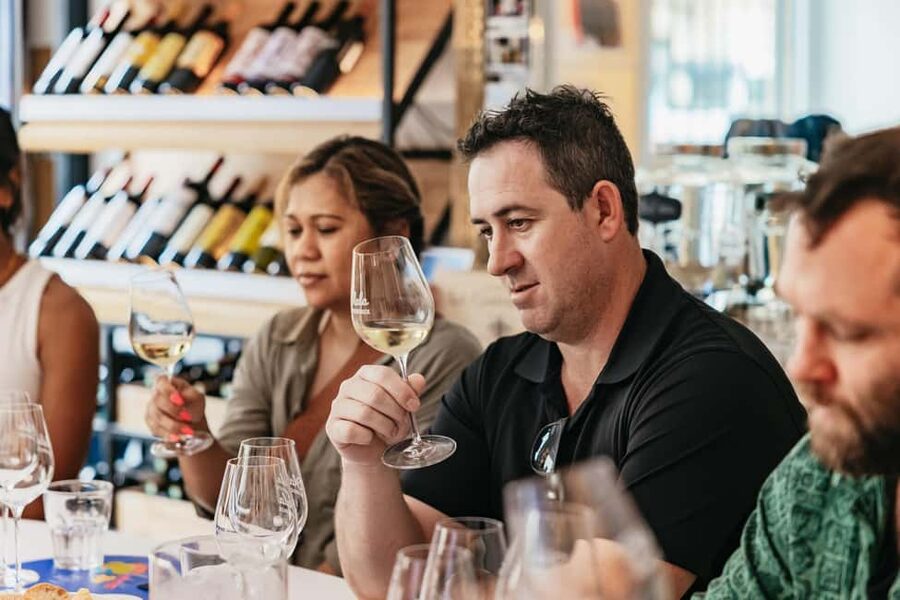
The wine comes with a board of local cheese and charcuterie, along with baguette and water. This is not merely a snack placed beside the glasses. It gives you a simple introduction to food and wine pairing.
You can see how salt, fat, texture, and stronger flavors affect the wine. The food also keeps the class comfortable, particularly since six wines are served in 90 minutes. Portions and wine service are designed for tasting, not for a full meal, so you should still eat beforehand if you arrive hungry.
The pairing adds a useful local touch. You are tasting Bordeaux in Bordeaux, in a wine bar near the city’s main theater district, rather than learning about the region in a generic classroom. The combination of bread, cheese, cold cuts, and regional wines makes the experience feel tied to daily French food culture.
I also like that the board breaks up the technical material. Wine classes can become dense when they move through classifications and production methods. A bite of cheese gives you a practical reason to discuss balance and pairing, and it keeps the atmosphere social.
Do not expect a formal gastronomic meal. The food is there to support the tasting and teach basic pairing. That is the right way to think about it when comparing this with a restaurant lunch or a full vineyard estate visit.
What you learn about making and storing wine
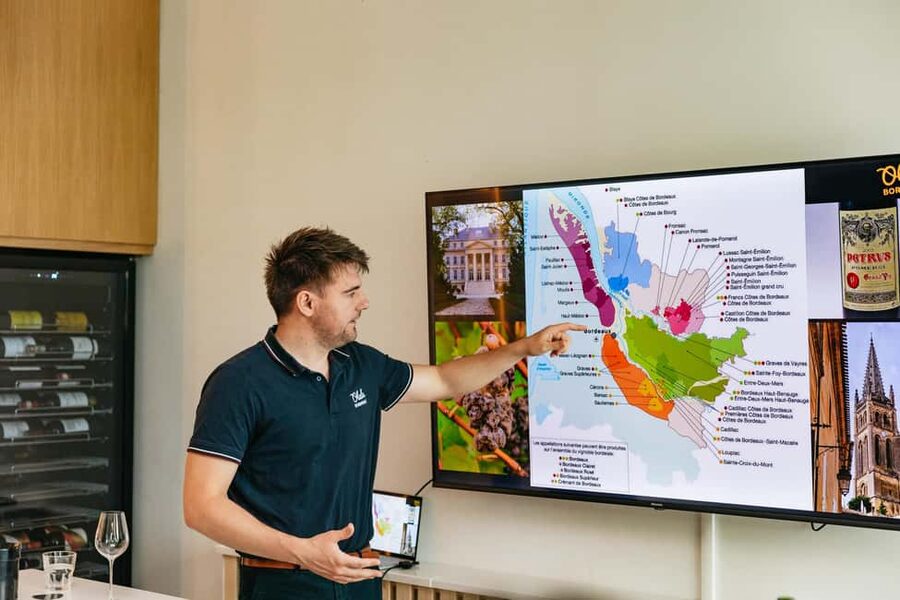
The class covers vinification, or winemaking, followed by aging and storage. These subjects matter because wine changes well beyond the moment grapes are harvested.
You learn how production choices affect the finished drink and why aging can alter a wine’s character. Storage and service are included too, which is helpful for anyone who buys bottles but is unsure how to keep or present them.
The instruction appears to be visual as well as spoken. One session was praised for its visual material, and the room is set up for tasting and teaching. That matters in a class with unfamiliar French terms. Seeing an idea while hearing it can make it easier to remember.
The guide also explains wine service. You are not simply told to swirl a glass because it looks sophisticated. You learn the purpose behind the basic steps and how to approach a wine with more care.
I would keep your expectations sensible. Ninety minutes is enough for a well-shaped introduction, not a full professional wine course. You will leave with useful foundations, but you will not cover every producer, vintage, appellation, or classification in Bordeaux.
The central location works well with a day in Bordeaux
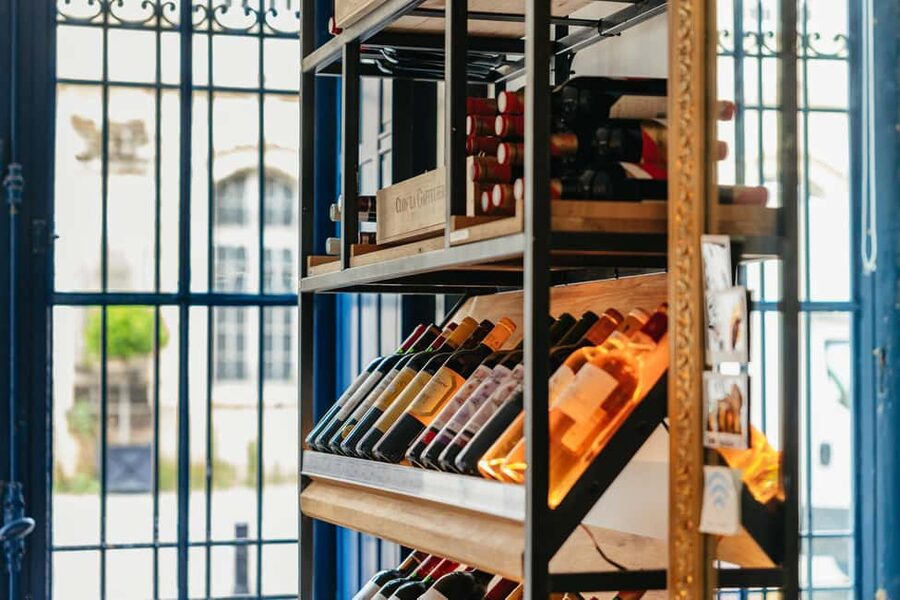
The meeting point is Olala Bordeaux, about five minutes from the Quinconces tram stop. Tram lines B, C, and D serve the area, making it easy to reach from other parts of the city.
The location near the Grand Théâtre is a real advantage. You can pair the class with a walk through central Bordeaux, a meal, or an evening performance. It also avoids the time and cost of traveling to a vineyard for a short tasting.
That convenience comes with a tradeoff. You are learning inside a city wine bar, not standing among vines or touring a cellar at a château. If your priority is seeing the vineyards, production rooms, and countryside, choose a separate estate excursion. If your priority is understanding what you taste and staying in Bordeaux, this format is more efficient.
The central setting also makes the class useful in poor weather or on a packed sightseeing day. You do not need to give up half a day for transport. The 90-minute schedule leaves room for museums, shopping, or a walk along the river.
Who will get the most from the $53 price
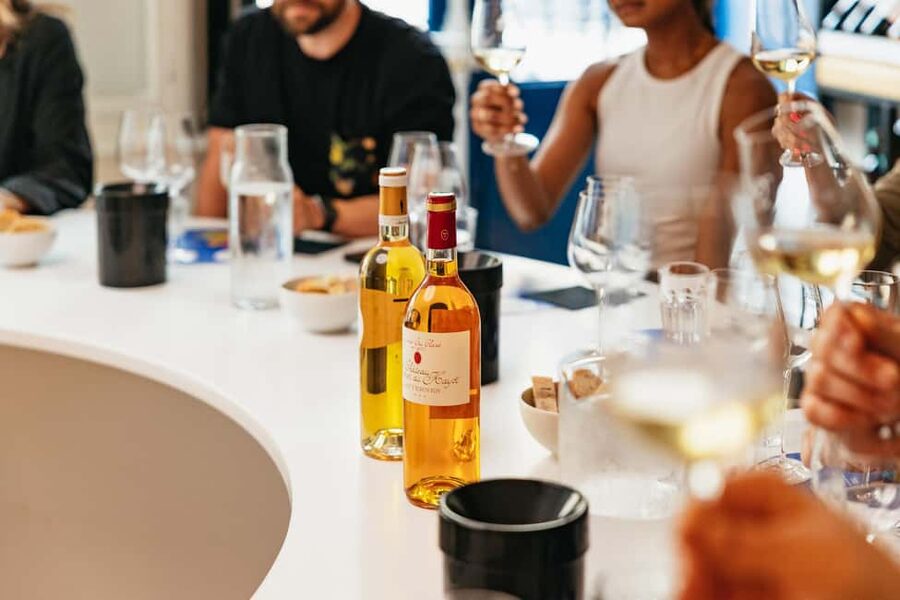
At $53, the price covers the wine guide, six wines, the cheese and charcuterie board, baguette, water, and printed information. I consider that good value for a central Bordeaux activity, especially because the class is instructional rather than a simple flight of pours.
The strongest value comes from the explanation. If you only want to drink Bordeaux wine, you can find less expensive ways to order a glass. If you want to understand what you are drinking, learn a tasting method, and compare regional styles in one sitting, the price makes more sense.
I would recommend it to:
- First-time visitors who want an introduction before visiting the vineyards
- Couples or friends looking for a relaxed indoor activity
- Beginners who feel intimidated by French wine labels
- Wine drinkers interested in left-bank and right-bank differences
- People who enjoy food pairing as part of a tasting
I would be more cautious if you want a long technical seminar, a guaranteed list of rare wines, or a countryside setting. The wines and schedule can change, and the class is aimed at broad understanding rather than specialist study.
The activity is not suitable for children under 16, and unaccompanied minors are not allowed. Pets are not permitted. The guide can teach in English or French, so check that your preferred language is available when booking.
Practical timing and booking advice
The class lasts 90 minutes, with start times depending on availability. I would avoid scheduling it immediately before a train, flight, or fixed reservation, since you want a little breathing room around the meeting time.
You can cancel up to 24 hours ahead for a full refund, and the reserve-now, pay-later option can help if your Bordeaux plans are still moving. Those terms are useful for a city break where weather, day trips, and restaurant bookings may change.
Wear whatever you would normally wear for a city outing. This is a seated class in a wine bar, not a muddy vineyard walk. The main thing is to arrive ready to pay attention, taste slowly, and ask questions.
Should you book this Bordeaux wine class?
I would book it if you want a clear, friendly introduction to Bordeaux wine without leaving the city. The class gives you a sensible progression from tasting basics to grape character, blending, regional comparison, and food pairing. It also gives you enough vocabulary to make a vineyard visit more rewarding later.
I would skip it only if you already know Bordeaux well or if your main goal is a château visit among the vines. For most visitors, the combination of six wines, local food, an English or French-speaking guide, and a central location is a strong use of 90 minutes.
Book this early in your stay if wine is a major reason for visiting Bordeaux. You will have more time afterward to use what you learned at dinner, in a wine shop, or on a trip into the surrounding region.
FAQ
How long does the Bordeaux wine masterclass last?
The class lasts 90 minutes.
How many wines are included?
You receive one white wine and five red wines, for a total of six wines.
Is a Bordeaux grand cru included?
Yes. The final part includes two fine wines, one from the left bank and one from the right bank, with one of them being a Bordeaux grand cru.
What food is served with the wine?
The experience includes a cheese and charcuterie board, baguette, and water.
Where is the meeting point?
Meet at Olala Bordeaux, about a five-minute walk from the Quinconces tram stop. Tram lines B, C, and D serve the stop.
Can children or pets attend?
Children under 16 are not allowed, and unaccompanied minors and pets are not permitted.
More Workshops in Bordeaux
- Bordeaux: Introduction to Bordeaux Wines Tasting Workshop
★ 4.8 · 196 reviews - Bordeaux Wine Masterclass: Blending workshop with appetizer
★ 5.0 · 113 reviews - Bordeaux Wines Masterclass paired with cheeses & charcuterie
★ 5.0 · 110 reviews - Workshop Bordeaux wine tasting: 4 reds & charcuterie pairing
★ 5.0 · 72 reviews
Just added around Bordeaux
- Bordeaux : Unforgettable Saint Emilion Half Day Wine Tour★ 4.5 · 131 reviews
- From Bordeaux: Full-Day St Emilion Wine Tasting Tour★ 4.8 · 280 reviews
- Bordeaux:Wine Masterclass & Blending workshop with appetizer★ 4.8 · 54 reviews
- Bordeaux: Guided Food and Wine Tour with Tastings★ 4.9 · 41 reviews
- Workshop Bordeaux wine tasting: 4 reds & charcuterie pairing★ 5.0 · 72 reviews
- Bordeaux: Sightseeing by Side Car★ 5.0 · 143 reviews
- Welcome to Bordeaux: Private Walking Tour with a Local★ 4.4 · 116 reviews
- Bordeaux : Must-See Attractions Walking Tour★ 4.8 · 30 reviews
Wine Tours, compared.
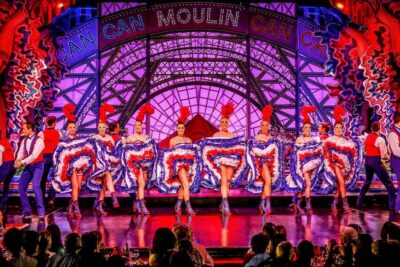
Moulin Rouge Cabaret Show Ticket with Champagne
Read our review →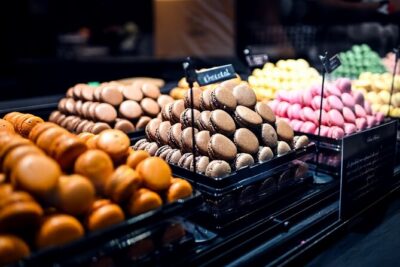
Authentic Parisian Gourmet Food Tour with 10 Local Dishes & Wines
Read our review →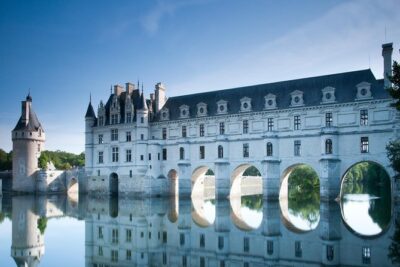
Loire Valley Castles Day Trip from Paris with Complementary Wine
Read our review →
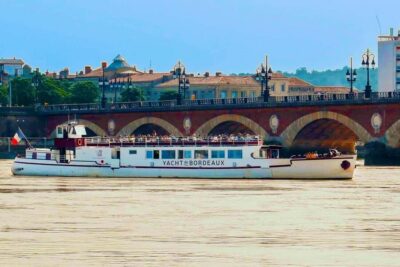
River Garonne Cruise with Glass of Wine and Canelé
Read our review →
Montmartre Hill French Gourmet Food and Wine Tasting Walking Tour
Read our review →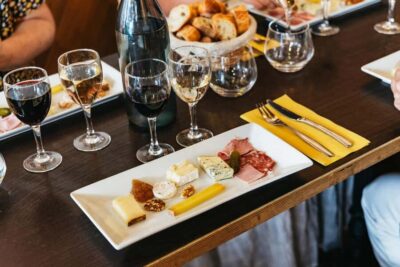
Montmartre Cheese, Wine & Pastry Guided Walking Tour
Read our review →
Paradis Latin Cabaret Show with Optional Champagne
Read our review →Browse the lists this tour appears in