
Reviewed · COOKING CLASSES
Paris: Macaron Baking Class for Families and Kids
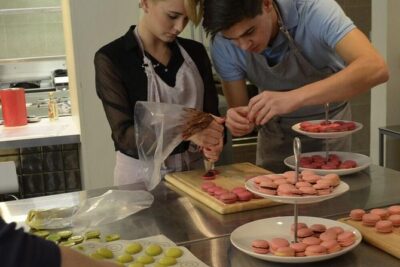
The most charming part of this Paris activity is that the whole family can take part, from young children to grandparents. The class is hands-on: you pipe the shells, choose colors and fillings, and leave with a box of macarons you helped make. Families with children as young as five have taken part, and older relatives can join in too.
I like the small group size of up to eight, which gives the chef time to guide each child without turning the session into a noisy production line. I also like the practical format: measurements are prepared before you arrive, so you spend your two hours on the fun parts rather than waiting for ingredients to be weighed. The main caution is that one shared batch may mean fewer macarons for some participants, especially when the class is full.
Key points to know before booking
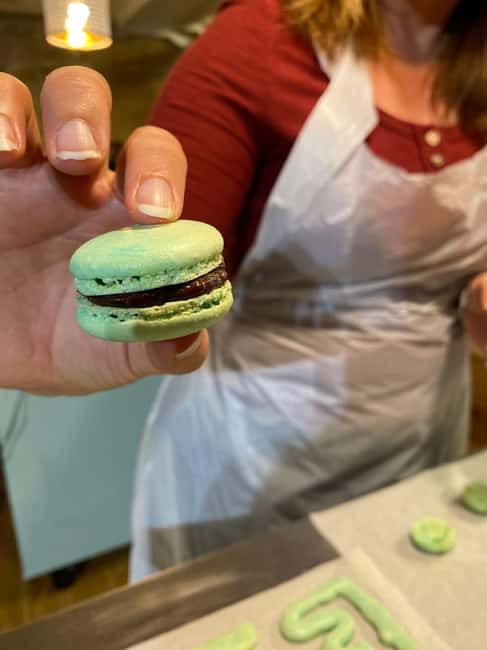
- You make real macarons: Mix, pipe, garnish, and fill the shells instead of watching a demonstration.
- The class suits mixed ages: Children, teenagers, adults, and grandparents can all take part.
- Instructors are especially good with children: Nadia, Nelly, Clementine, Caroline, Yasmine, Jade, and Tanishq are among the teachers praised for patience and clear explanations.
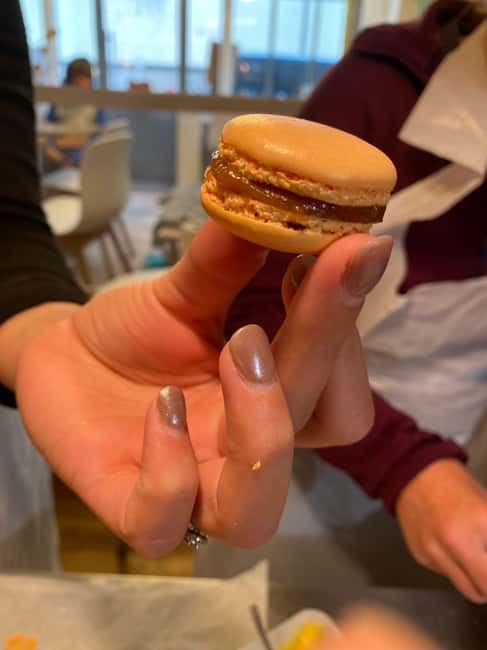
- You take your baking home: Your finished production is packed in a box at the end of the two-hour session.
- It is held at a new, well-equipped atelier: Baked in Paris has a large kitchen, two bathrooms, and modern equipment.
- Arrive on time: After 20 minutes, your class may be compromised because the schedule is shared with other families.
A Paris pastry class built around participation
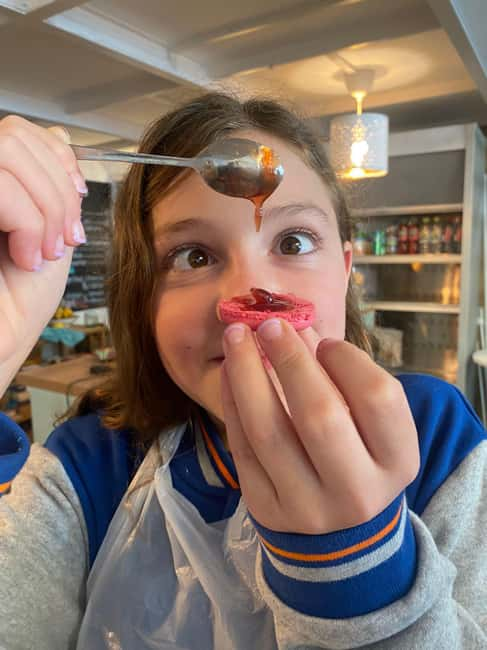
Macarons look simple in a pastry case, but they are fussy little things. The shells depend on careful mixing, the right piping pressure, and enough patience to get the texture right. That makes this class more satisfying than a simple decorating session. You get a glimpse of why French pastry takes precision, while the chef keeps the work manageable for beginners.
The class begins with ingredients already measured. This is a smart choice for families. Young children can lose interest while an adult weighs almond flour and sugar, but they are happy to mix, squeeze a pastry bag, and choose decorations. You still learn the method, yet the class keeps moving.
You will work through the main stages of macaron making:
- Combining the prepared ingredients
- Mixing the batter to the proper consistency
- Piping uniform rounds onto trays
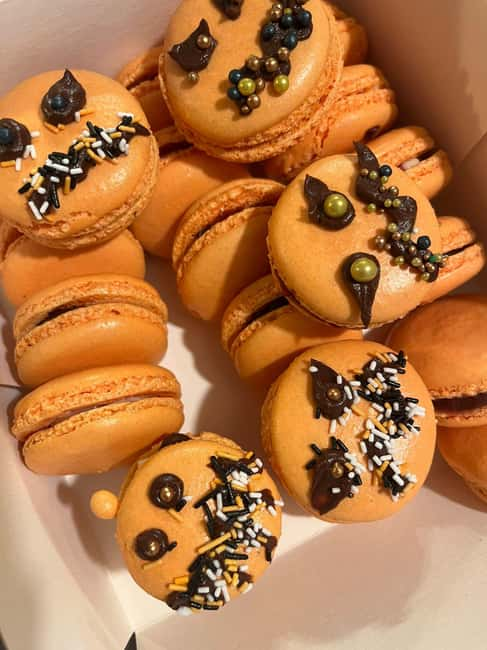
- Adding garnish and color
- Preparing or selecting fillings
- Allowing the macarons to bake before assembling them
The precise order and amount of hands-on work can depend on the pace of your group. If time allows, the chef may show you how to make a ganache, custard cream, or another filling. That extra demonstration is worth asking about at the beginning, especially if the adults in your group want more technical pastry instruction.
More cooking classes in Paris:
- Paris Cooking Class and Lunch with Wine plus Market Visit Option
★ 5.0 · 1,024 reviews - Paris Croissant Small-Group Baking Class with a Chef
★ 5.0 · 910 reviews - Paris: French Croissant Baking Class with a Chef
★ 4.9 · 712 reviews
What happens during the two-hour class
The first part is a short introduction to the ingredients and method. You may also hear some background about macarons. The history lesson is kept brief enough for children, while adults still get useful context about the pastry they are making.
Next comes the mixing. This is one of the stages where the prepared measurements help. The chef can focus on showing you how the mixture should look and feel rather than sending the group through a long weighing exercise. Children can help stir under supervision, and the instructor can adjust the pace for the youngest members of the family.
Piping is usually the part children anticipate most. The pastry bag requires a little control, but the instructor can demonstrate the correct pressure and motion before everyone tries. Expect some shells to be more even than others. That is part of the fun, and the finished filling helps turn small imperfections into perfectly enjoyable treats.
You may have choices of colors and fillings. One family worked with seven filling options, while another group enjoyed choosing its own combinations. The exact selection can vary, but the chance to personalize the macarons gives children a clear creative role.
The shells then go into the oven. Since macarons require baking time, the chef may use this pause to explain common mistakes, answer questions, or demonstrate a filling. The finished macarons are assembled and packed for you to take home. The class is designed to produce something edible, not just a practice batch that stays behind in the kitchen.
Why the instructors matter for families
A pastry class can be technically sound and still fail with children if the teacher talks over their heads. Here, the instructors repeatedly earn praise for keeping both adults and children involved.
Nadia is particularly good at adjusting the tone for mixed ages. She has taught families with children around five, six, seven, nine, and older, while still giving adults useful baking tips. Nelly has also been praised for working patiently with children and explaining each step clearly in English.
Clementine is another strong fit for families. She has kept children as young as four engaged with age-appropriate jobs while making sure older children and adults had enough to do. Caroline has been praised for helping children feel proud of their finished treats, and Yasmine is noted for simple instructions and a patient manner.
The instructors do not seem to treat children as spectators. A two-year-old may need close adult supervision, but the wider family can still enjoy the session. One family with a toddler and older children found the teacher able to make the activity work for everyone. That is a useful distinction: this is not a drop-off children’s workshop, and it is not an adults-only pastry lesson. It is a shared family activity.
The new Baked in Paris atelier on rue Buffon
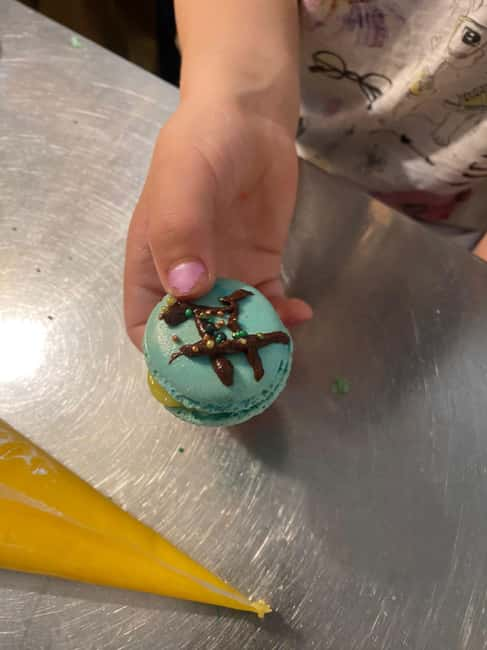
The class takes place at Baked in Paris, 31 rue Buffon, in the Ile-de-France region. The atelier is on the left side of a large blue door, behind frosted glass. Go inside and ask for the pastry chef.
The location instructions are unusually specific, which matters in Paris, where a workshop can be easy to miss from the street. Look for the blue door and the frosted glass rather than relying only on the street number.
Inside, you will find a large cooking studio with two bathrooms and modern kitchen equipment. The space is set up for practical work rather than a formal demonstration from a distance. One small comfort note: a participant found the room chilly, so a light extra layer could be sensible.
You should arrive early enough to find the entrance and settle your family. After 20 minutes of delay, the class may be seriously affected because the chef has to keep to a fixed schedule. With children, snacks and shoes can take longer than expected, so build in a little breathing room.
More pastry and chocolate tours in Paris:
- Paris: Day or Sunset Cruise with Drink, Ice Cream or Dessert
★ 4.4 · 4,225 reviews - Paris: Montmartre Cheese, Wine & Pastry Guided Walking Tour
★ 4.8 · 2,255 reviews - Award-Winning Paris French Bakery Experience — Le Marais, 4th Arr
★ 4.5 · 1,186 reviews - Paris: Entrance Ticket to the Chocolate Museum
★ 4.1 · 1,105 reviews
How much baking do you actually do?
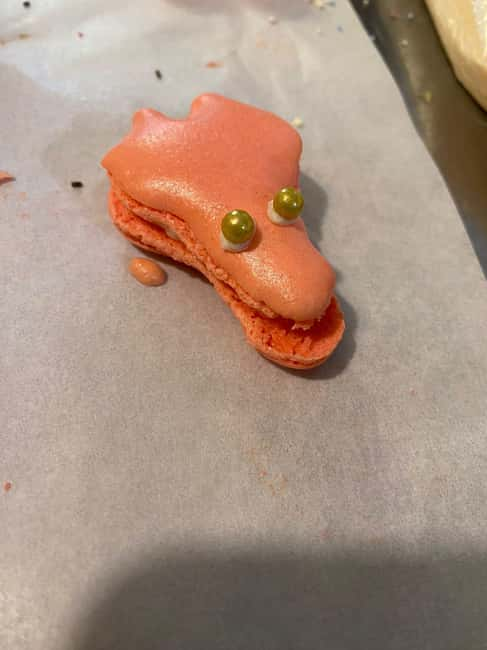
This is a hands-on class, but it is important to understand the format. The chef prepares the measurements in advance, then you mix the ingredients, pipe the shells, and garnish the macarons. The group generally works from one batch of batter, which is divided among the participants.
That arrangement keeps the class within two hours and avoids wasting time. It also means the final quantity may not feel perfectly equal if several families share the oven. One family noted that the group made one batch together and divided it among four participants, with the amount each person took home not matching the share of class space they occupied.
This is the main practical weakness of the experience. If your child expects a large personal box, set expectations before you arrive. You are paying for instruction, shared preparation, and a finished portion, not for an individual professional-sized production run.
The upside is that the macarons are reported to be plentiful enough for families to enjoy and take home. The class also gives you a recipe card in at least some sessions, along with tips that can help you repeat the process at home. Ask about the recipe card and filling demonstration at the start if those details matter to you.
Is $112 a person a good value?
At $112 per person, this is not a cheap snack stop. It is a two-hour pastry workshop with an English-speaking chef, a small group capped at eight, kitchen use, ingredients, and a box of macarons to take away.
The price makes the most sense when every member of the family has a ticket and takes part. An adult cannot simply bring along an unticketed relative to watch. The rules require one adult per family to participate with their own ticket, and family members without tickets cannot remain in the space as spectators.
For a family already planning a food activity in Paris, the value is solid. You are paying for a guided experience, not just a tasting, and the children have a real job at nearly every stage. The finished sweets also replace part of what you might have spent on a pastry stop afterward, though I would not book the class solely to save money on macarons.
The small group limit improves the value. A class of eight gives the chef a reasonable chance to correct piping technique, answer questions, and help a child who makes a mistake. The instructors’ work with younger children is one of the strongest reasons to choose this class over a more general cooking lesson.
Free aprons are provided. Souvenir aprons are also available for cash or Venmo, but buying one is optional.
Who will enjoy this class most?
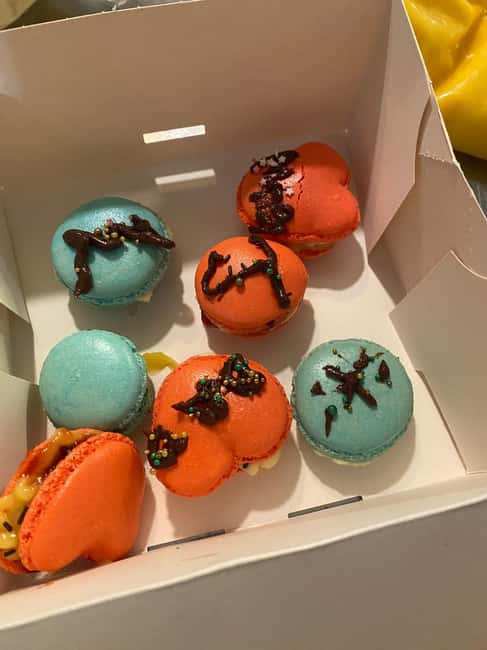
This is a strong choice for families with children roughly five and up, especially if you want a break from museums and major monuments. It works well for a grandparent trip, a parent and child outing, or a group of siblings with different interests.
Children who like crafts, baking, decorating, or making gifts will have plenty to do. A ten-year-old can learn useful technique, while a younger child can help with simpler tasks. Teenagers may appreciate the chance to make something fashionable and distinctly French without being treated like small children.
Adults who already bake should not expect a long professional course. The instructor may cover ganache, custard cream, or another garnish if the group moves quickly, but the main goal is an accessible family session. You will learn useful basics, not complete a pastry-school curriculum.
The class is also a good rainy-day plan. It gives your family two indoor hours, a shared task, and a sweet result. It can be a welcome change after a week of sightseeing, when everyone needs to sit down and do something together.
Allergies, young children, and other practical details
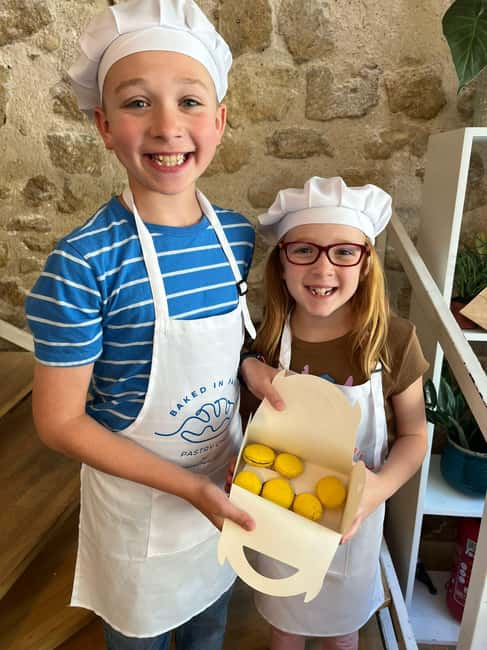
Macarons contain almonds and eggs. Tell the chef about allergies before the class starts. The supplied information does not promise substitute ingredients, so do not assume the recipe can be changed safely.
Children under five must be watched by an adult. Since unticketed family members cannot stay to watch, plan carefully around toddlers and babies. If a very young child is coming, the accompanying adult should be ready to supervise rather than expect the child to manage every stage independently.
The class is taught in English, and the group is limited to eight participants. The two-hour duration includes the practical work and the packing of your finished macarons. Starting times vary, so check availability when booking.
You can cancel up to 24 hours before the class for a full refund. The reserve-now, pay-later option lets you hold a place without paying immediately, which can help while you are still arranging a Paris itinerary.
A good break from the major Paris sights
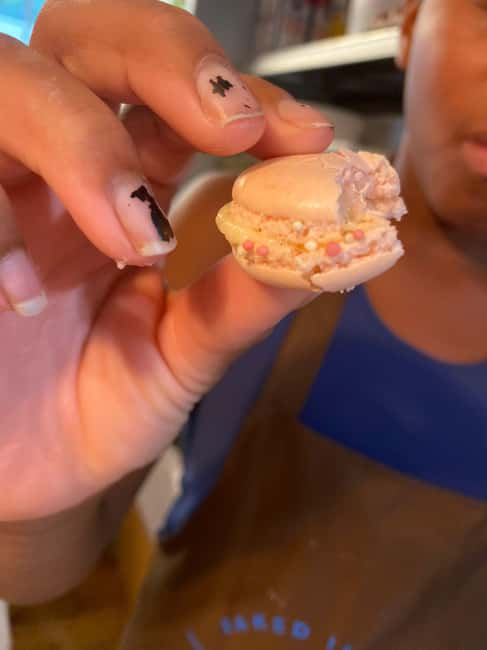
The rue Buffon setting gives you a chance to step away from the usual sightseeing rhythm. You are not standing in line, crossing a crowded museum, or trying to keep children quiet in front of a painting. Instead, your family works at a kitchen counter and shares a task with a clear finish.
That change of pace is a big part of the appeal. One family described the class as a highlight after two weeks in Paris, while another nearly canceled because of tiredness and was glad to go. I can see why: the activity asks for attention, but not the kind of concentration that makes children feel they are in school.
You also leave with something that has a story attached to it. A box of macarons from a shop is easy to buy, but macarons you piped with your children become a small reminder of the trip. The recipe and technique may even give you a project to try at home.
Should you book Paris: Macaron Baking Class for Families and Kids?
I would book this class if you want a hands-on Paris activity that works for several generations. The combination of prepared ingredients, friendly English-speaking instructors, a small group, and a take-home box keeps the session practical and family friendly.
I would hesitate only if you want a private class, a large quantity of macarons, or advanced pastry training. The shared batch can affect how many treats each person takes home, and the class requires every participating family member to hold a ticket.
For most families, the strongest reason to book is the balance. Children get to do real pastry work, adults learn enough to repeat the process, and nobody has to arrive as an experienced baker. Arrive early, disclose allergies, keep young children supervised, and think of the macarons as part of the reward rather than the whole purchase.
FAQ
Where is the macaron class held?
It is held at Baked in Paris, 31 rue Buffon, in the Ile-de-France region. The atelier is on the left of a large blue door, behind frosted glass. Go inside and ask for the pastry chef.
How long does the class last?
The class lasts two hours. Starting times vary, so check availability for the date you want.
Is the class taught in English?
Yes. The instructor is an English-speaking pastry chef, and English is the listed language for the activity.
Can young children participate?
Yes, children can participate, but children under five must be watched by an adult. One adult per family must participate with their own ticket, and family members without tickets cannot stay inside to watch.
Do I take macarons home?
Yes. You leave with your finished production in a box. The exact quantity can depend on how the shared batch is divided among the group.
What allergens are in the macarons?
The macarons contain almonds and eggs. Tell the chef about any allergies before the class starts.
Just added around Paris
- Paris at the First Lodges – Ducasse sur Seine dinner cruise★ 4.0 · 165 reviews
- Paris at the First Lodges – Ducasse sur Seine Lunch Cruise★ 4.5 · 70 reviews
- Disneyland® Paris 1 Day with Round-Trip Train Tickets from Paris★ 4.0 · 50 reviews
- Explore speakeasies and hidden bars, sip meet & socialize★ 4.5 · 47 reviews
- Disneyland® Paris Express Shuttle with Admission Ticket from Central Paris★ 3.5 · 172 reviews
- Paris Cheeses and Wines Tour de France with Tasty Games★ 5.0 · 32 reviews
- Musée Orsay Highlights Tour – Best of Impressionism & Hidden Gems★ 5.0 · 27 reviews
- Private Tour: Discover Paris with Local, 3 hours on a Segway★ 5.0 · 71 reviews
Cooking Classes, compared.
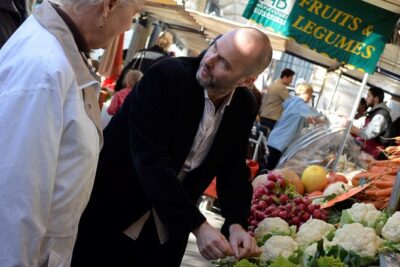
Paris Cooking Class and Lunch with Wine plus Market Visit Option
Read our review →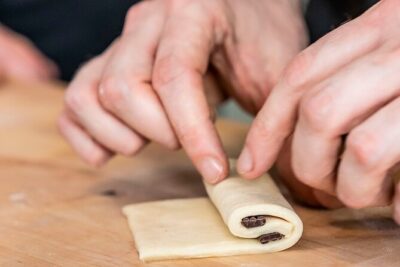
Paris Croissant Small-Group Baking Class with a Chef
Read our review →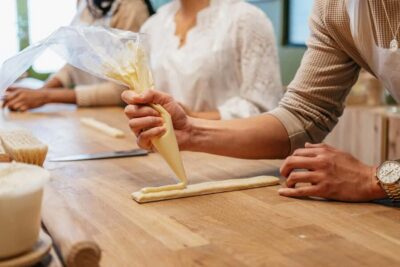
Paris Cooking Class: Learn How to Make Macarons
Read our review →
Paris Evening Cooking Class French Dinner and Market Visit Option
Read our review →
Viator Exclusive: Local Cooking Class & Dinner with View of Nice
Read our review →
Browse the lists this tour appears in