
Reviewed · WINE TOURS
Bordeaux:Wine Masterclass & Blending workshop with appetizer
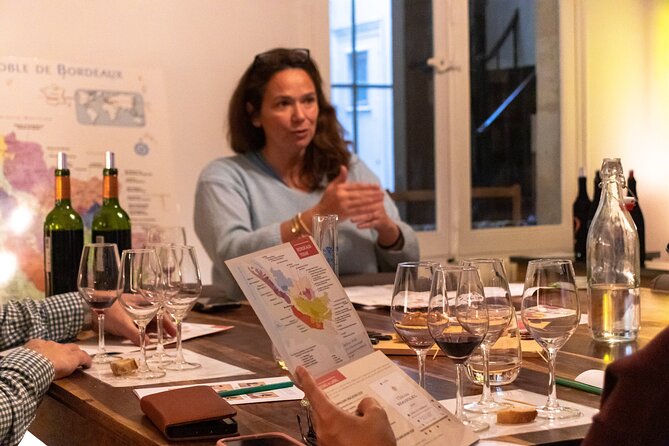
Bordeaux’s best wine lesson may be the one that lets you taste before you worry about getting the vocabulary right. In this 90-minute workshop, you compare single-varietal and blended wines, then make your own cuvée while a professional educator explains what is in your glass and why it matters.
I like the small group limit of 12, which leaves room for questions, and the mix of six wines with bread, cheese, sausage, and dark chocolate. The main consideration is that a very small class can feel more personal than comfortable, especially if you prefer to listen rather than answer tasting questions aloud.
Key points to know
- Six wines in one focused session: Taste white and red wines, single-varietal examples, blends, and a famous Bordeaux wine in a blind tasting.
- You make a cuvée: The blending workshop turns Bordeaux’s most important winemaking idea into something you can test yourself.
- Classic apéritif included: Fresh bread, sausage, cheese, and dark chocolate give you useful food pairings, not just wine samples.
- Beginners are welcome: The class starts with basic tasting skills, helping you feel less awkward when ordering wine in a restaurant.
- Central Bordeaux meeting point: Meet at À La Française, 3 Rue d’Enghien, at 10:25 a.m. for the 10:30 start.
- Best for curious adults with decent mobility: Pets are not allowed, and the activity is not suitable for people with mobility impairments.
Why this Bordeaux wine class works
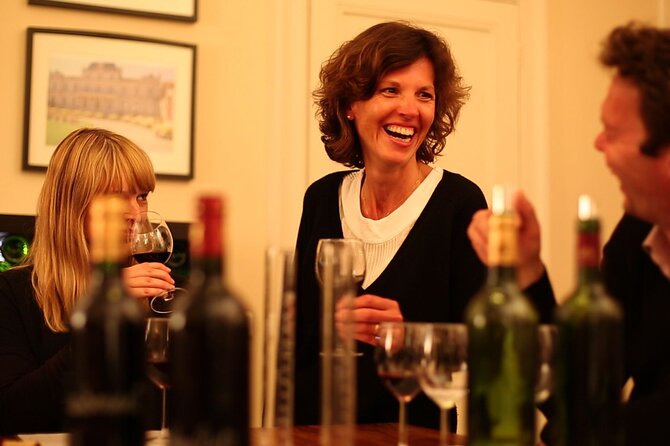
A vineyard excursion can show you vines, cellars, and handsome châteaux. This class does something different. It gives you a clear explanation of how Bordeaux wine is tasted, compared, and blended, all without taking most of your day.
That makes it useful early in a Bordeaux visit. After 90 minutes, you should have a better feel for the difference between a wine made from one grape and a wine built from several grapes. You will also have a few simple questions to ask when you later read a wine list or visit a shop.
The lesson is taught in English by a professional wine educator. The tone is meant to be casual rather than formal, which matters if wine language makes you nervous. You are not expected to arrive knowing the difference between the Left Bank and Right Bank, or to identify every aroma in the glass.
The class has earned a 4.8 rating from 54 reviews, with especially strong praise for the teaching and the small-group format. One recent pair found the class more informative than two earlier Left Bank and Right Bank wine tours, which is a useful clue about its strength: it explains the ideas behind Bordeaux wine rather than simply taking you from one estate to another.
More Wine Tours in Bordeaux
- Bordeaux: Cité du Vin Entry Ticket and Wine Tasting
★ 4.6 · 3,885 reviews - Bordeaux: River Garonne Cruise with Glass of Wine and Canelé
★ 4.5 · 3,630 reviews - From Bordeaux: Afternoon Saint-Emilion Wine Tasting & snack
★ 4.8 · 1,581 reviews
Meeting at 3 Rue d’Enghien
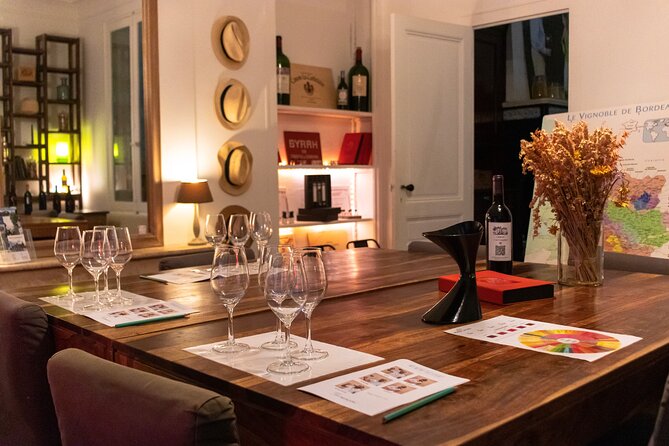
You meet at À La Française’s apartment at 3 Rue d’Enghien, 33000 Bordeaux. Arrive by 10:25 a.m. for the 10:30 start.
This is a meeting-point class, not a hotel pickup or countryside excursion. You will need to make your own way to the address, so allow time to find the apartment entrance and settle in. The central location makes it easy to combine with sightseeing in Bordeaux before or after the session, but the supplied information does not promise transportation from hotels or visits to vineyards.
The setting also helps set expectations. You are going to a small indoor tasting workshop, not a grand château. That is good news if you want a focused lesson and bad news if your main goal is photographs among vines.
Because the group can include as many as 12 people, the instructor has enough space to lead a proper discussion without turning the morning into a lecture hall. Groups may be smaller. One class had only two participants, which meant plenty of time for questions but also made the discussion feel more direct and personal.
Starting with white wine and tasting basics
The session begins with a welcome glass of white wine. This is a smart opening because white wine gives the instructor an easy way to introduce the mechanics of tasting before moving into Bordeaux’s more famous reds.
You will learn how to look at the wine, smell it, taste it, and compare your impressions. The goal is not to turn you into a sommelier in an hour and a half. It is to give you a method you can use again.
That method has real value. Many people understand whether they like a wine but struggle to explain why. A guided tasting helps you separate sweetness, acidity, body, fruit character, and other sensations. You do not need perfect answers. The point is to notice more and feel less intimidated.
The class is designed for beginners, but experienced wine drinkers can still benefit from the comparison format. It is easier to understand a wine when another glass is beside it, rather than tasting one bottle in isolation and trying to remember it later.
Bordeaux grapes, with Merlot and Cabernet Sauvignon
The next part introduces the main grape varieties associated with Bordeaux, including Merlot and Cabernet Sauvignon. This is the foundation for understanding why Bordeaux bottles can taste so different even when they come from the same broad region.
You taste two single-varietal wines before the blending exercise. These examples give you a direct comparison. Instead of hearing only that one grape is softer or another is more structured, you can taste the contrast for yourself.
The single-varietal stage is especially useful because Bordeaux is best known for blends. A bottle labeled by its estate or appellation may contain several grapes, and the final style depends on how those grapes work together. Tasting them separately first makes the later blend easier to understand.
Do not expect a full lesson on every Bordeaux appellation, château, vintage, or classification in 90 minutes. The value here is clarity. You learn the basic building blocks before the class asks you to think like a blender.
More Workshops in Bordeaux
- Bordeaux: Introduction to Bordeaux Wines Tasting Workshop
★ 4.8 · 196 reviews - Bordeaux: Wine Masterclass with Cheese and Charcuterie Board
★ 4.9 · 184 reviews - Bordeaux Wine Masterclass: Blending workshop with appetizer
★ 5.0 · 113 reviews - Bordeaux Wines Masterclass paired with cheeses & charcuterie
★ 5.0 · 110 reviews
The hands-on cuvée blending workshop
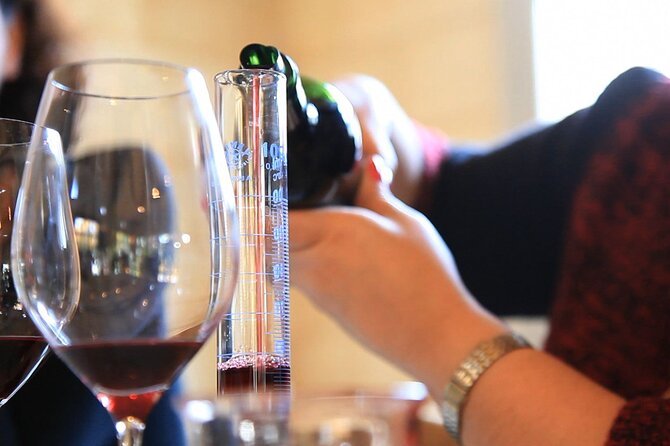
The most distinctive part of the class is the blending session. You taste two blended wines prepared in front of you and then create your own cuvée.
This is more useful than it may sound. Bordeaux blending is not simply a matter of mixing wines until they taste stronger. Each grape can bring a different quality to the final wine. A blender is looking for balance, structure, fruit, texture, and a style that works as a whole.
You get to test that idea with your own palate. A blend that sounds promising on paper may not taste as good once the wines meet. Another combination may seem plain at first but become more balanced with a small adjustment.
The exercise turns an abstract winemaking term into something practical. It also gives you a better reason to compare wines carefully. You are no longer tasting only to decide if a wine is pleasant. You are asking what role each wine might play in a larger cuvée.
The class does not say that you take a bottle of your blend home, so do not book it expecting a finished souvenir wine. The reward is the experiment and the understanding it gives you.
A blind tasting to finish the wine lesson
The class includes a blind tasting of a famous Bordeaux wine. You try to guess where it comes from.
This adds a little fun and removes the influence of the label. Without seeing the name, price, estate, or appellation, you have to rely on what is in the glass. That is a useful reminder that wine tasting is partly observation and partly judgment, not a test of whether you can recognize an expensive name.
The blind tasting also pulls together the earlier lessons. You have already worked with grape varieties, compared single wines with blends, and practiced describing what you notice. Now you apply those skills without being told the answer in advance.
Do not worry about guessing correctly. The educational value is in the discussion that follows and in seeing how a professional approaches the wine.
Cheese, sausage, bread, and dark chocolate
Wine tasting on an empty stomach is rarely a good idea. This class includes a French apéritif with fresh bread, sausage, cheese, and dark chocolate.
The food is not a full lunch, and lunch is listed as optional rather than included. Think of the platter as a substantial snack that supports the tasting. It gives you something to eat between wines and lets you test simple pairings as the class goes along.
The range of food is also practical. Cheese and sausage are classic partners for Bordeaux reds. Bread refreshes your palate. Dark chocolate brings a richer, sweeter contrast that can change how you notice the wine.
You will also have a chance to discuss your tasting profile with the guide. That can help connect the technical lesson to your own preferences. If you like softer, fruitier wines, you may respond differently to a structured Cabernet Sauvignon blend than someone who prefers firmer, drier wines.
The food is one reason the $53 price feels reasonable. You are not paying only for six small pours. You are also getting instruction, a guided comparison, a hands-on activity, and an apéritif in a small group.
What the small-group format feels like
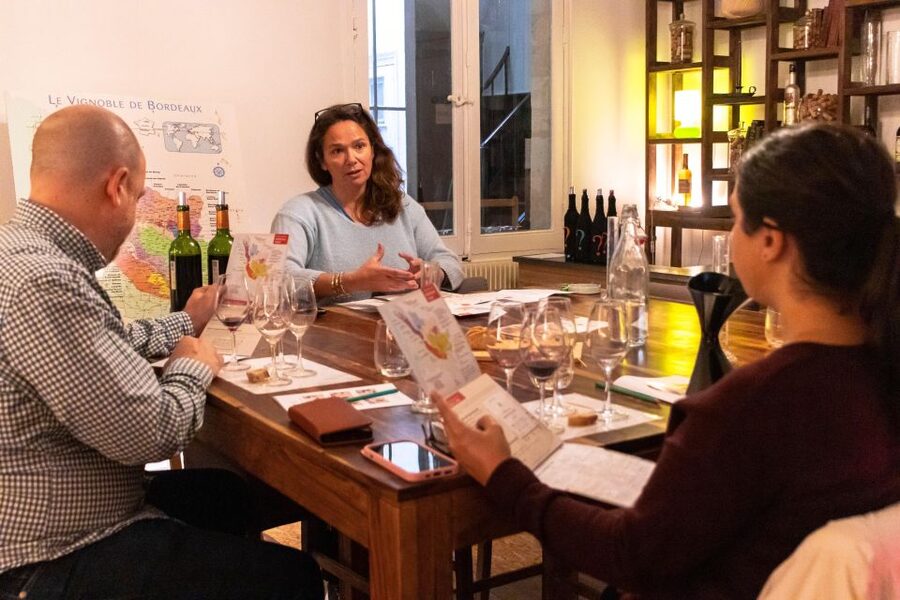
The maximum group size is 12, though the class may be smaller. A compact group is a real advantage for wine education because you can ask questions as soon as something is unclear.
A small class also lets the educator watch the pace. If the group wants more detail about grape varieties or blending, there is more room to pause than there would be in a large tasting room.
There is one important tradeoff. In a group of only two or three, the instructor may ask each person for an answer before moving on. Most people will find that encouraging. If you are shy about describing smells and flavors, it can feel like the spotlight is on you.
The tasting is supposed to be friendly and there are no officially right or wrong answers about personal impressions. Still, one participant felt discouraged by the way answers were handled in a very small class. My advice is simple: book this if you are willing to speak up a little, but know that the experience may feel more interactive than a quiet, sit-back tasting.
Is $53 good value?
At $53 per person, this is priced above a simple bar tasting but below the cost and time commitment of many countryside wine outings.
The value depends on what you want. If you mainly want to drink six wines, the price may seem high. If you want a structured lesson that improves how you taste, the blending activity and professional instruction make the cost easier to justify.
You are also getting food, which matters in Bordeaux. The apéritif is not a meal, but it adds comfort and gives you a chance to explore pairings. The 90-minute length is another plus. You can fit this into a morning without losing an entire day to transportation.
On the other hand, the price does not include lunch, and you are not visiting a vineyard or château. If your dream Bordeaux experience involves vineyard views, cellar tours, and a long country lunch, spend your money on a different type of outing.
The best value comes for first-time wine learners and people who want to understand Bordeaux before buying bottles or visiting estates.
Practical limits and booking details
The class is offered in English, with a live guide. French language instruction is not included.
Pets are not allowed, and the activity is not suitable for people with mobility impairments. The supplied details do not describe specific accessibility arrangements, so contact the provider before booking if you have any concern about the apartment setting or movement during the session.
There must be at least two participants for the activity to operate. If only one person books, the class may be cancelled and the customer will receive a full refund.
You can cancel up to 24 hours in advance for a full refund. A reserve-now, pay-later option is also available, which helps if your Bordeaux plans are still moving around.
Who should book this Bordeaux workshop?
I would choose this class for:
- A first-time visitor who wants Bordeaux wine explained without a full-day tour
- A beginner who feels unsure about tasting language
- A wine lover who wants to understand blending, not just sample bottles
- A couple or small group that enjoys talking through food and wine
- Anyone with a free morning and an interest in French apéritif customs
I would look elsewhere if you want a vineyard visit, a full lunch, transportation into the wine country, or a long technical seminar. The class is compact and urban. Its strength is the teaching format, not the setting.
Should you book it?
Book it if you want to leave Bordeaux with a better way to taste wine, a basic grasp of Merlot and Cabernet Sauvignon, and a hands-on feel for how blends are made. The six wines, food platter, blind tasting, and small group make $53 a fair price for a focused morning.
Go in expecting a friendly but interactive class. You may be asked for your impressions, especially in a tiny group. If that sounds enjoyable, this is one of the more efficient ways to turn Bordeaux wine from a confusing subject into something you can actually discuss, compare, and enjoy.
FAQ
How long does the Bordeaux wine workshop last?
The activity lasts 90 minutes. It begins at 10:30 a.m. and ends at 12:00 p.m.
Where does the workshop meet?
Meet at À La Française’s apartment, 3 Rue d’Enghien, 33000 Bordeaux. You should arrive by 10:25 a.m.
How many wines are included?
Six French wines are included in the tasting. The session includes white and red wine, two single-varietal wines, blended wines, and a blind tasting of a famous Bordeaux wine.
Is food included?
Yes. A French apéritif platter with fresh bread, sausage, cheese, and dark chocolate is included. Lunch is not included, though an optional lunch may be available.
Is the class offered in English?
Yes. The activity includes a live English-speaking wine educator.
Can I cancel for a refund?
You can cancel up to 24 hours in advance for a full refund. A reserve-now, pay-later option is also available.
Can one person attend alone?
The activity requires at least two participants to operate. If only one person books, the class may be cancelled and a full refund will be provided.
Just added around Bordeaux
- Bordeaux : Unforgettable Saint Emilion Half Day Wine Tour★ 4.5 · 131 reviews
- From Bordeaux: Full-Day St Emilion Wine Tasting Tour★ 4.8 · 280 reviews
- Bordeaux: Sightseeing by Side Car★ 5.0 · 143 reviews
- Bordeaux: Guided Food and Wine Tour with Tastings★ 4.9 · 41 reviews
- Workshop Bordeaux wine tasting: 4 reds & charcuterie pairing★ 5.0 · 72 reviews
- Welcome to Bordeaux: Private Walking Tour with a Local★ 4.4 · 116 reviews
- Bordeaux : Must-See Attractions Walking Tour★ 4.8 · 30 reviews
- Bordeaux: St-Emilion and Medoc Wine Day Tour with Lunch★ 4.8 · 64 reviews
Wine Tours, compared.
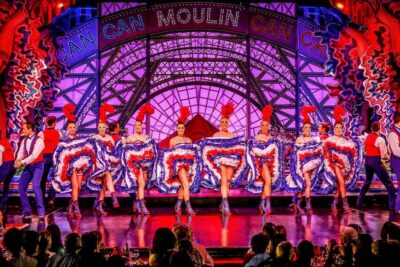
Moulin Rouge Cabaret Show Ticket with Champagne
Read our review →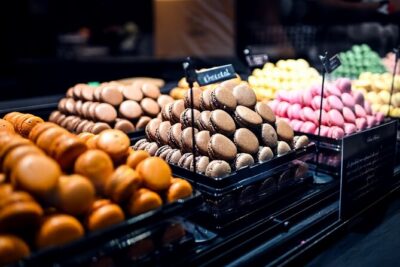
Authentic Parisian Gourmet Food Tour with 10 Local Dishes & Wines
Read our review →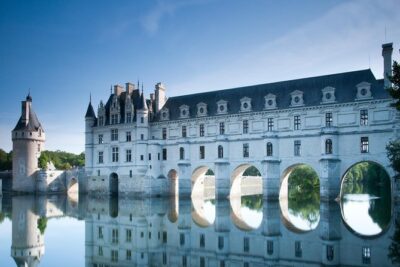
Loire Valley Castles Day Trip from Paris with Complementary Wine
Read our review →
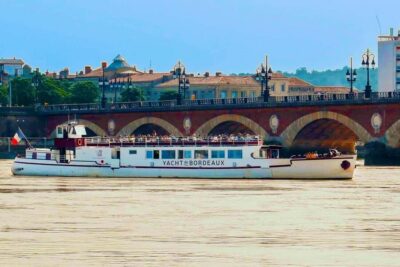
River Garonne Cruise with Glass of Wine and Canelé
Read our review →
Montmartre Hill French Gourmet Food and Wine Tasting Walking Tour
Read our review →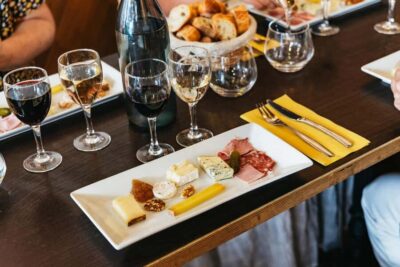
Montmartre Cheese, Wine & Pastry Guided Walking Tour
Read our review →
Paradis Latin Cabaret Show with Optional Champagne
Read our review →Browse the lists this tour appears in